a barn, of sorts

barn_01

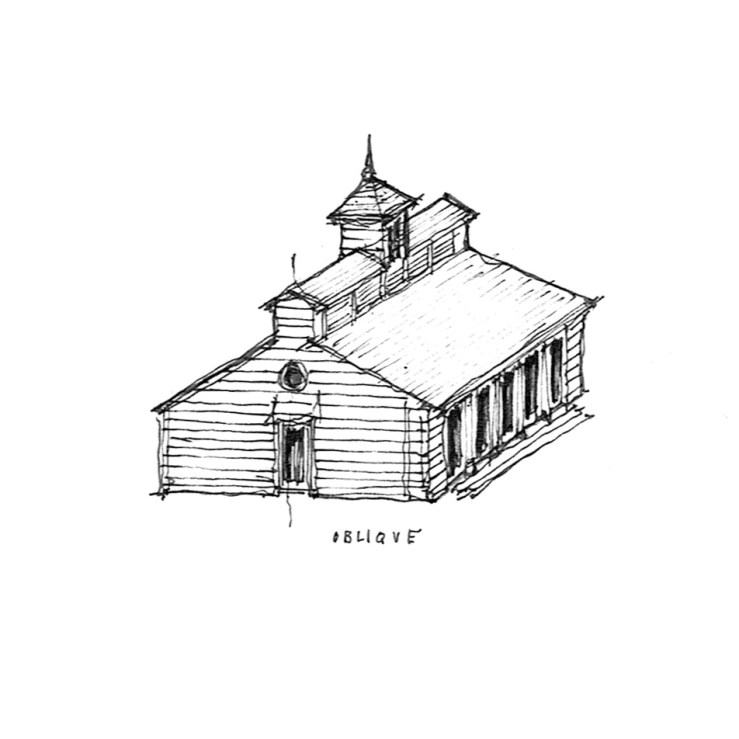
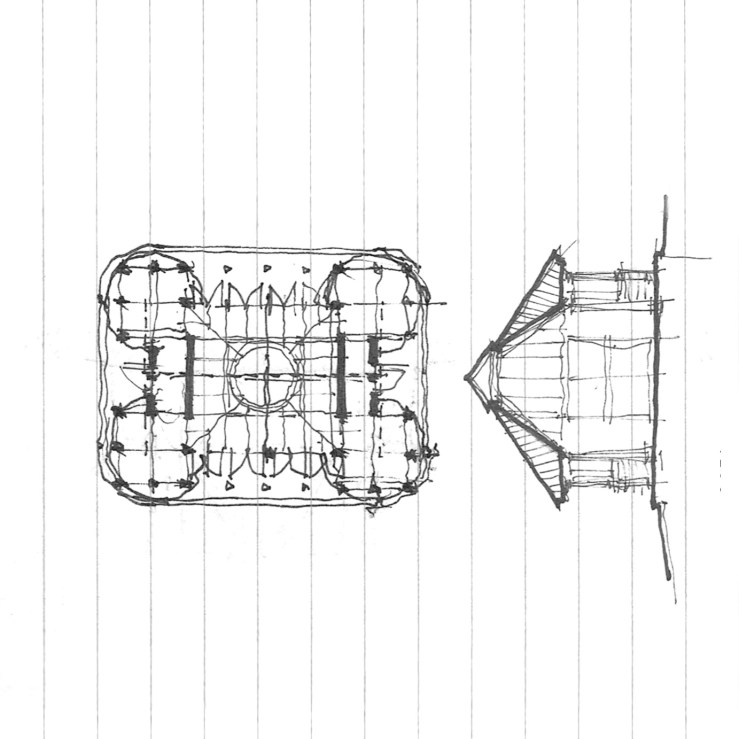
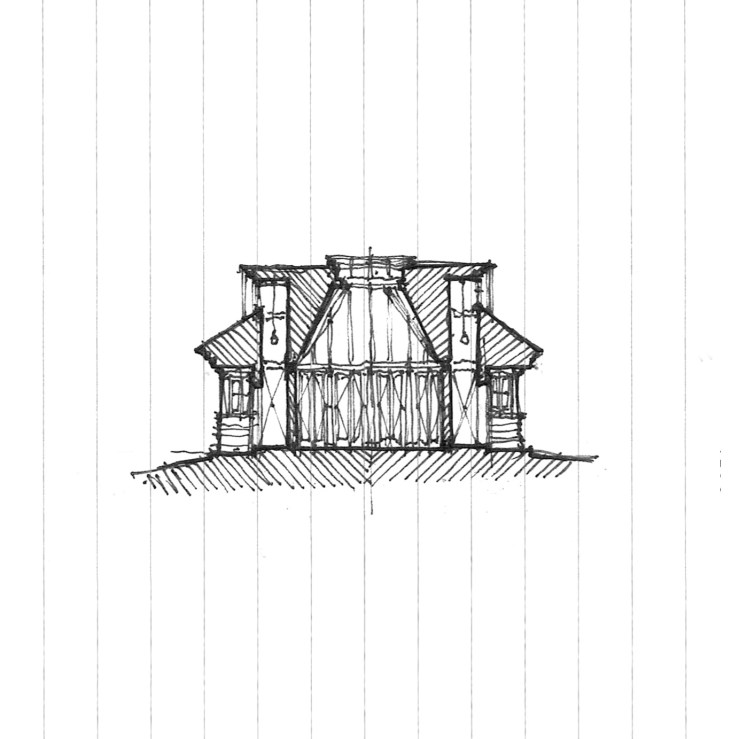
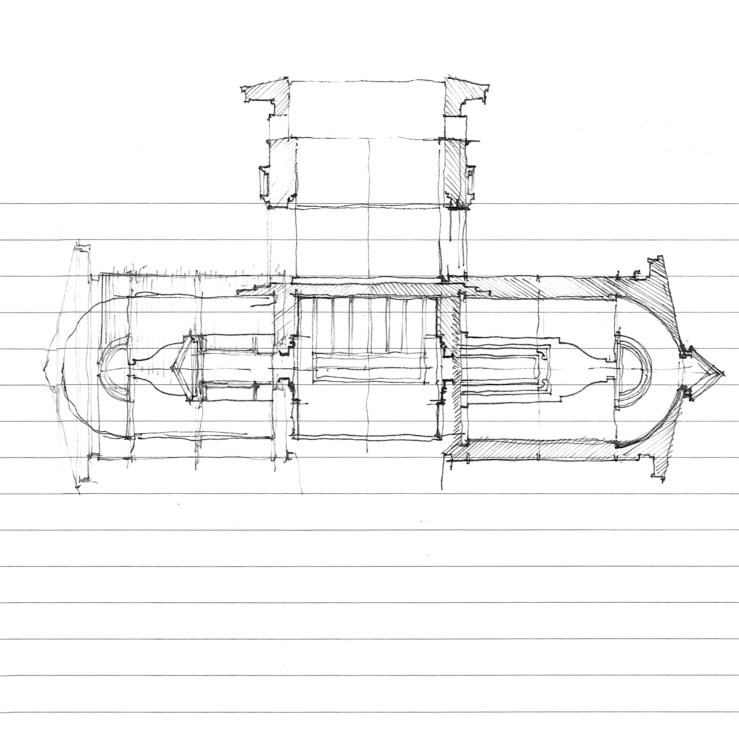
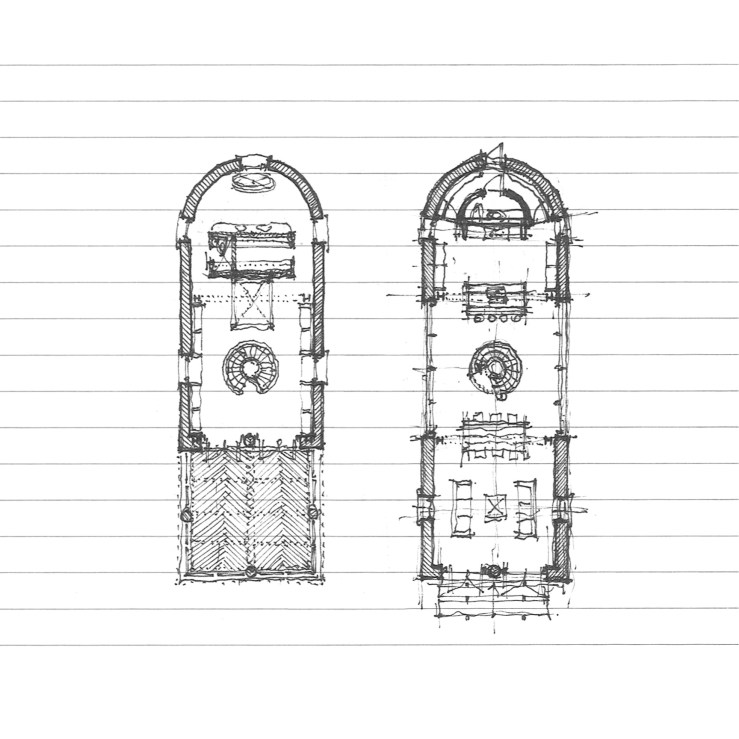
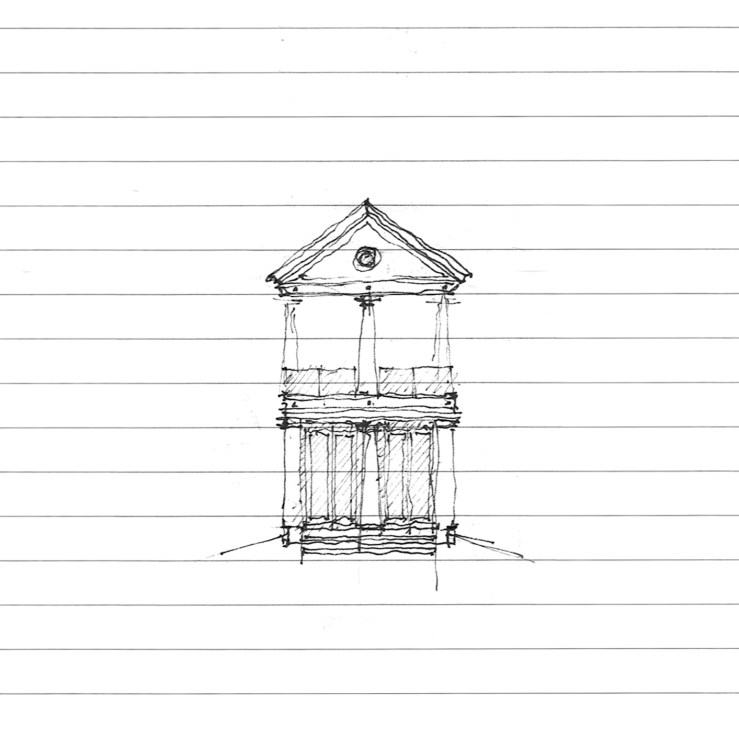
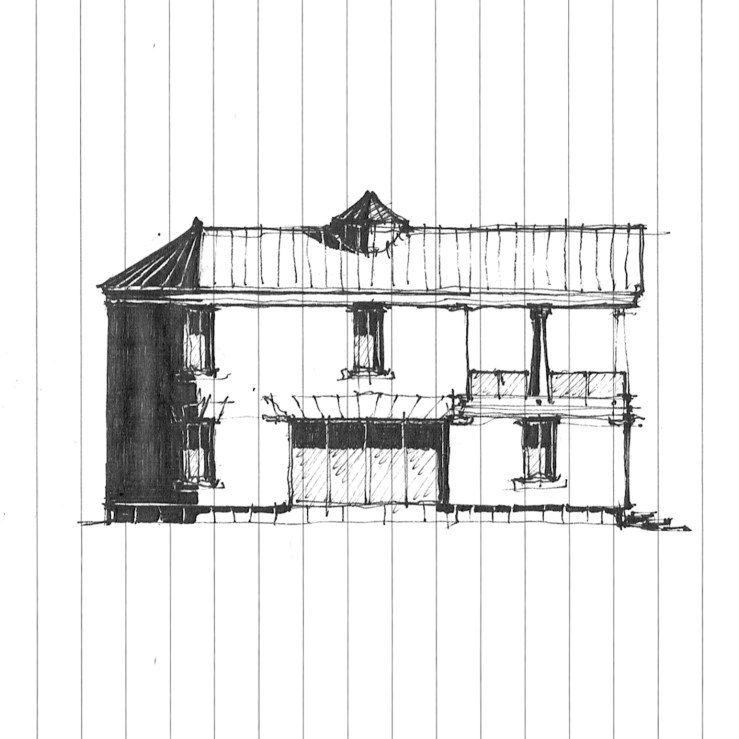
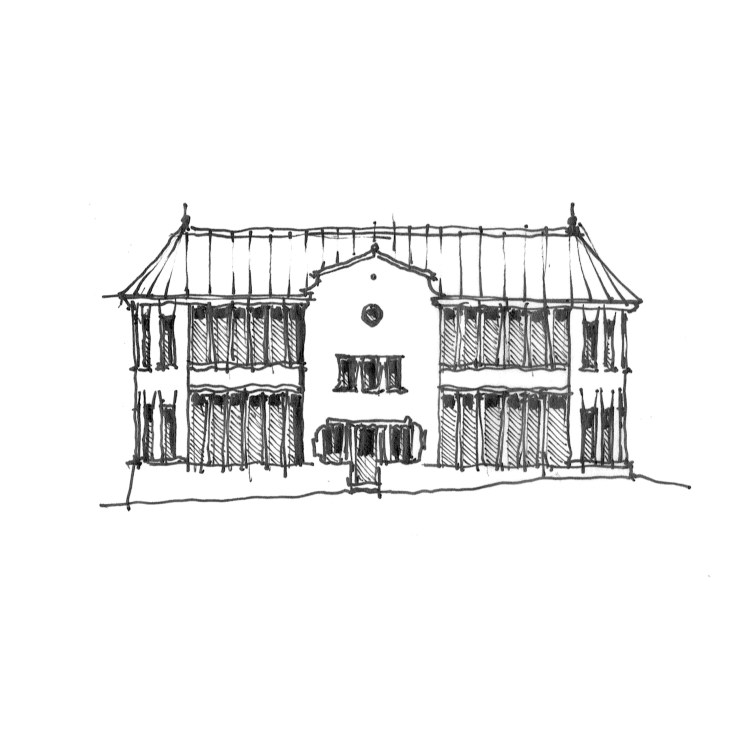
Taking cues from the myriad of agricultural and vernacular forms I spotted on my trip up Yosemite-way the other week, this small square structure features a prominent gable on two ends, with a raised, ventilated mini-gable at the center bay, and a lantern above that on the center bay.  The eaved sides are treated as small colonnades, with single doors running each length.

barn_02

barn_03

barn_04

nine-square staircase

two-gables_05

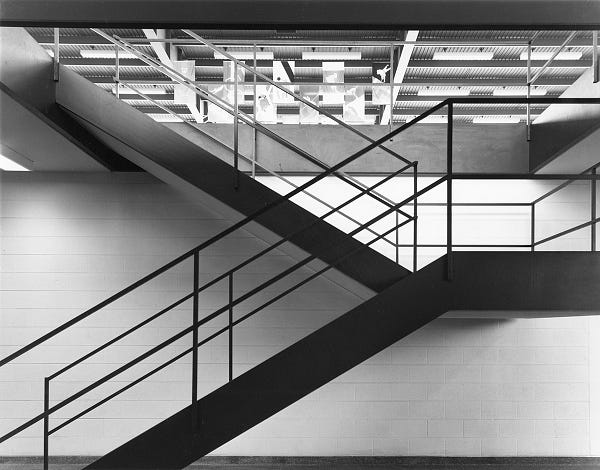
This is a piece of a larger puzzle, the basic parti of which is sketched above.  The stair is located centrally in the square plan, and is itself a nine-square plan.  Tectonically, the stair is supported on a peristyle of Tuscan pilasters, while the stair proper is takes its details from Mies’ Crown Hall at IIT, and tall fireplaces occupy three sides (their form, a take on Schindler’s Kings Road House.

two-gables_04

two-gables_03

turrets and gables

gablesturrets_04

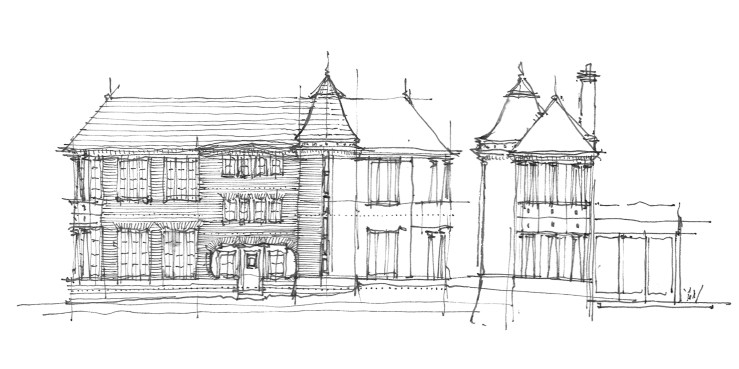
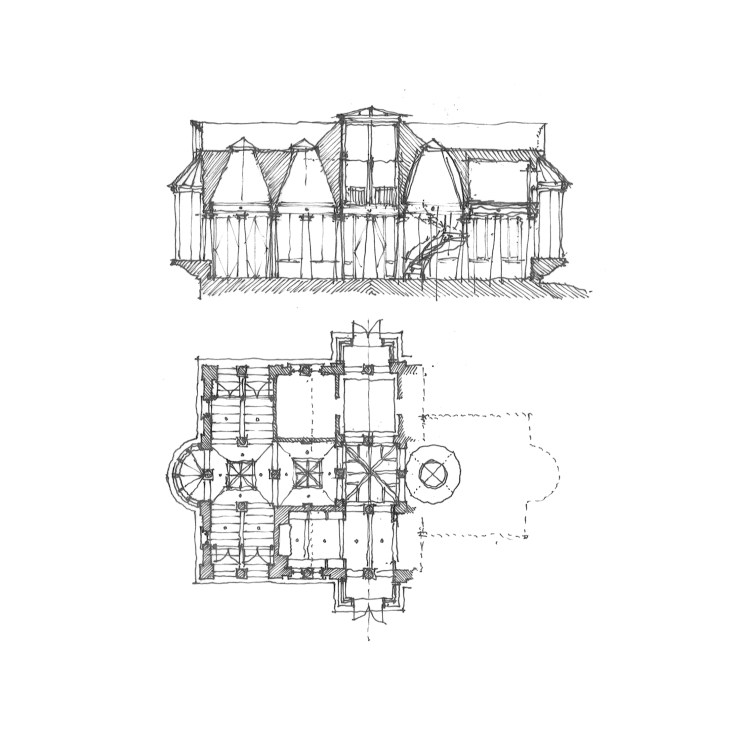
No program here, just form, where circles and squares meet, compete, and transform into one another.  Four cubic pavilions are set at the corners of a large conic square hall (the roof form echoes a very early post, a form which I’ve been interested in for some time).  The whole sits under a dutch gable roof, with a central skylight, and circular turrets on top of the square pavilions.

gablesturrets_03

gablesturrets_02

a cube, sort of

cube_01

A cube, with a barrel vault and grand cyma profiles (direct quotations of Krier) giving axial directionality, while two walls present themselves as simple four-square panels.  A grand cornice tops the volume at the exterior, with a triangular skylight running the length of the vault, and reveal courses in brick reference the four-square breakdown of the interior.

lutyes in the details

lutyens_05

First, an apology for erratic postings lately: my wife and I spent a gorgeous weekend in Yosemite, where I photographed the granite quoins of the elegant bridges as I did the granite faces of El Capitan and the Falls; and I’m neck deep studying for licensure.  But neither of those should give cause to think that I have ceased to draw.  Indeed, my study copies of the AIA contracts are filled with margins of vernacular, agricultural, and ‘rustic’ architectures.  Many of which I hope to make onto frame in the coming weeks.

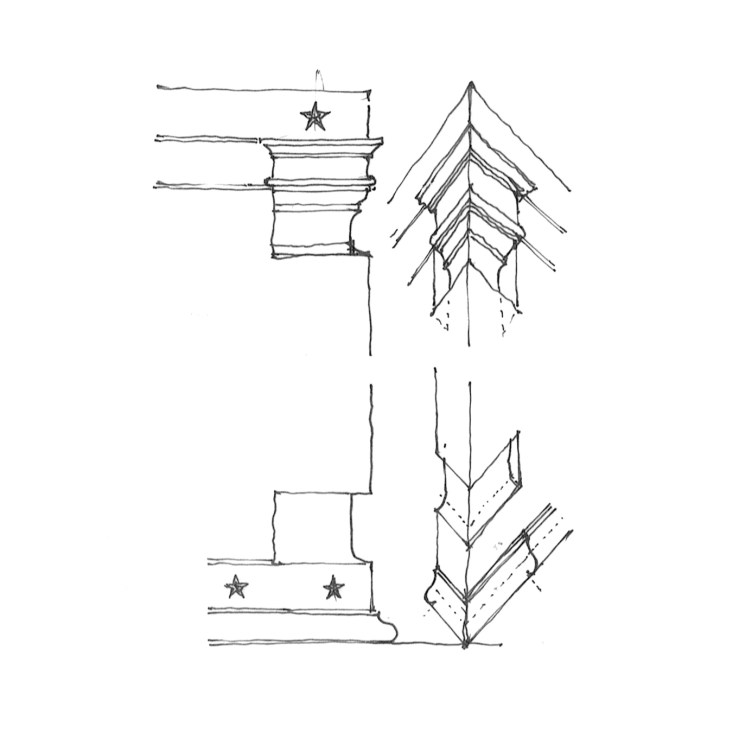
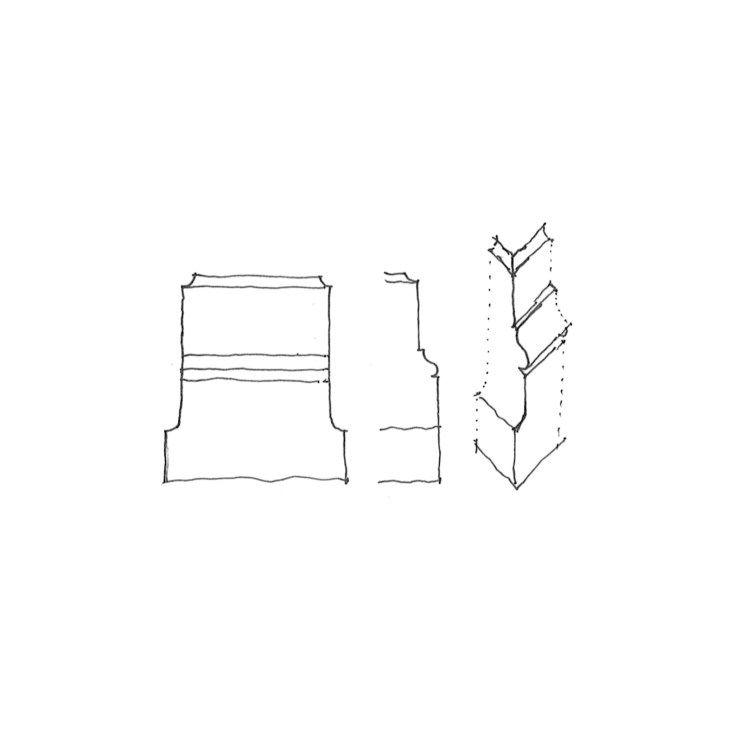
But for now, more Lutyens.  Two details:  a Tuscan pilaster as reduction rather than addition, taken from his war memorial at Thiepval, France (adapted with stars per Paul Philippe Cret’s own memorial at Chateau-Thierry); and my own interpretation of a common Lutyens formal operation – changes in plane alternate from side to side, rather than retaining diagonal symmetry (again, look at the Thiepval memorial, especially the lower arches, where the walls step in from the side before stepping in from the front, and then repeating as it goes up…).
lutyens_04

half house

half-house_01

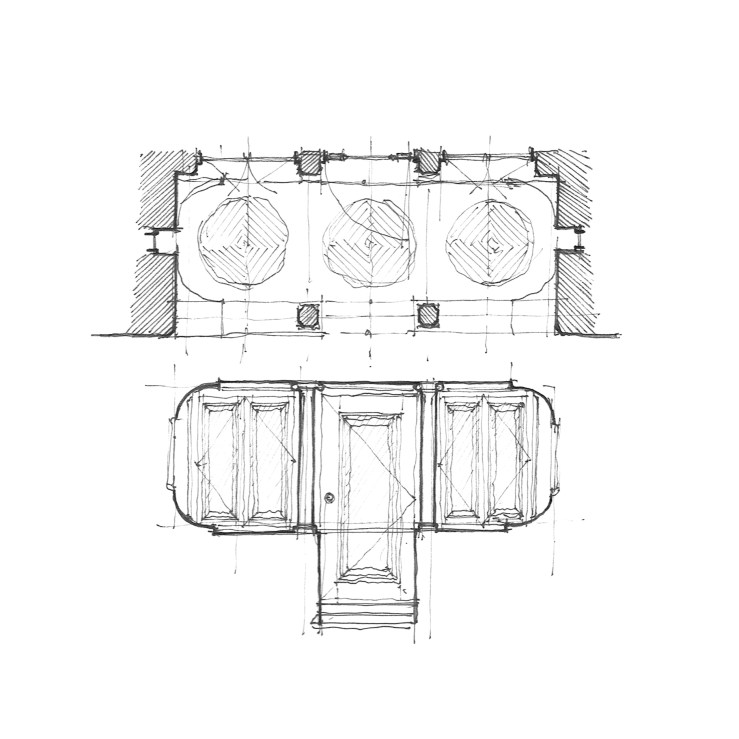
While taking its name from one of John Hejduk’s many unbuilt projects, the One-Half House, this project offers a different interpretation of an architecture of halves.  One half-plan of Richardson meets one half-plan of Neutra.  The entry portico is recessed into the building line, and takes cues from some vernacular Angeleno tract homes from the 1930’s (concurrent with Neutra’s earlier formal explorations).  I do think that the stucco variation at the bottom is much more convincing than the overtly Richardsonian brick variant – but maybe it needs to be weaned of a little too much Krier (Miami, or Windsor).

half-house_02

half-house_03

half-house_05

half-house_06

triangle meets circle

gallery_05

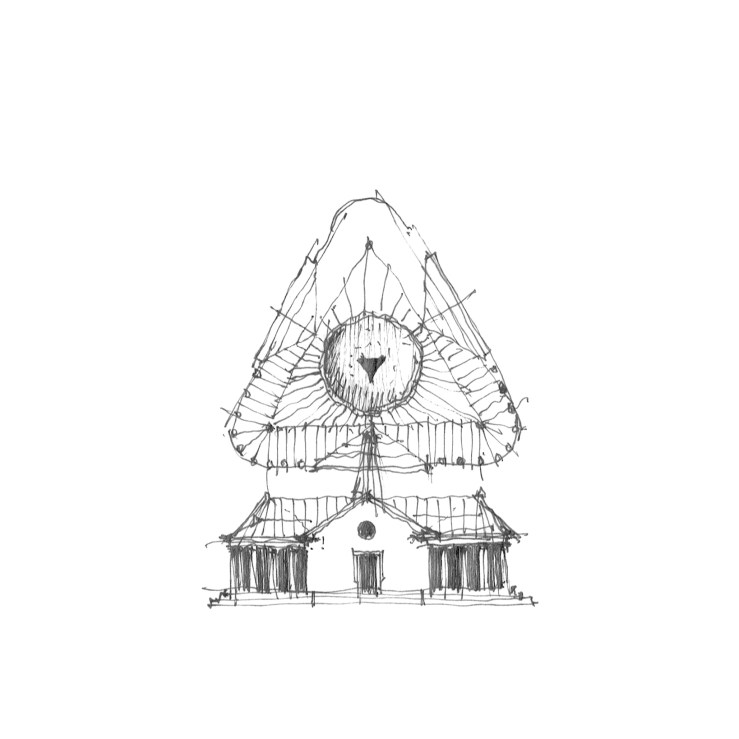
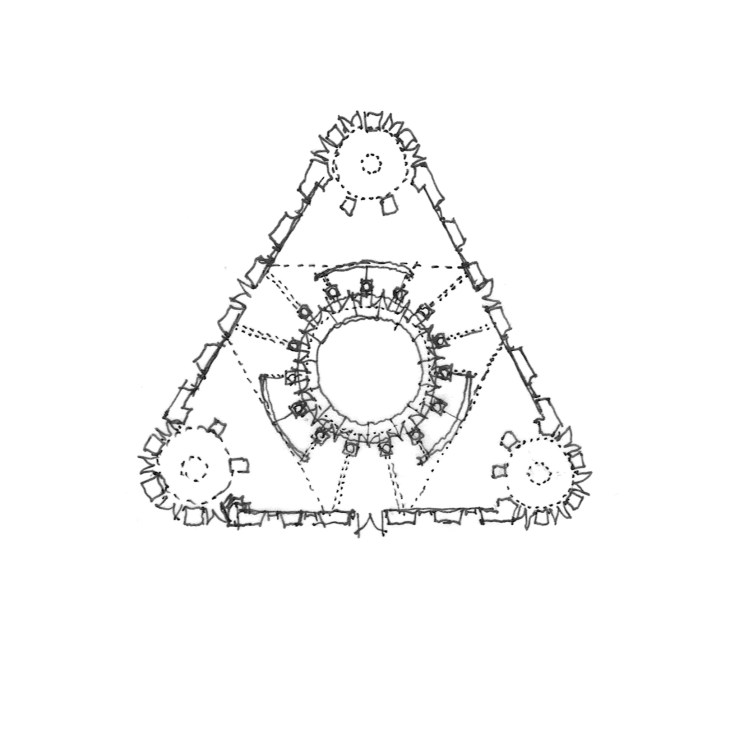
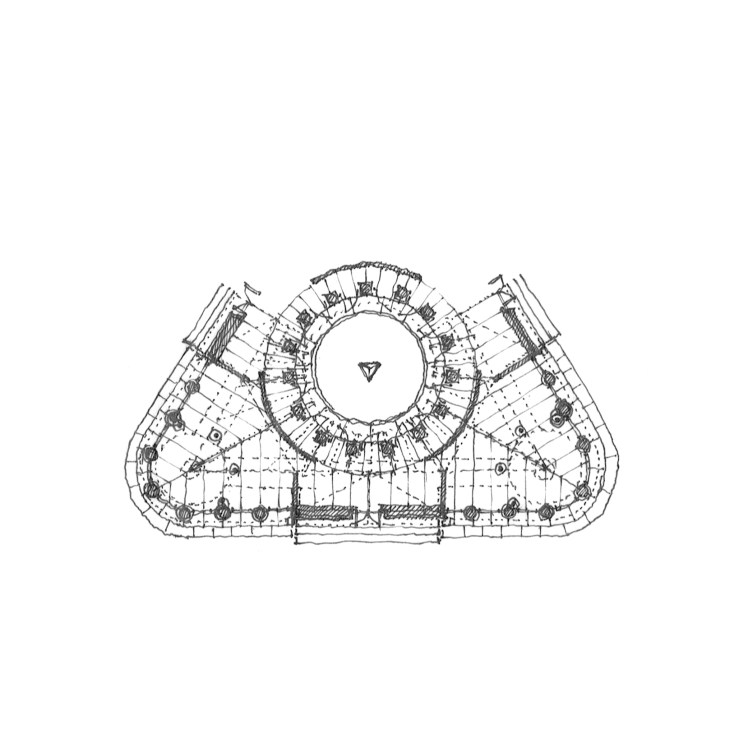
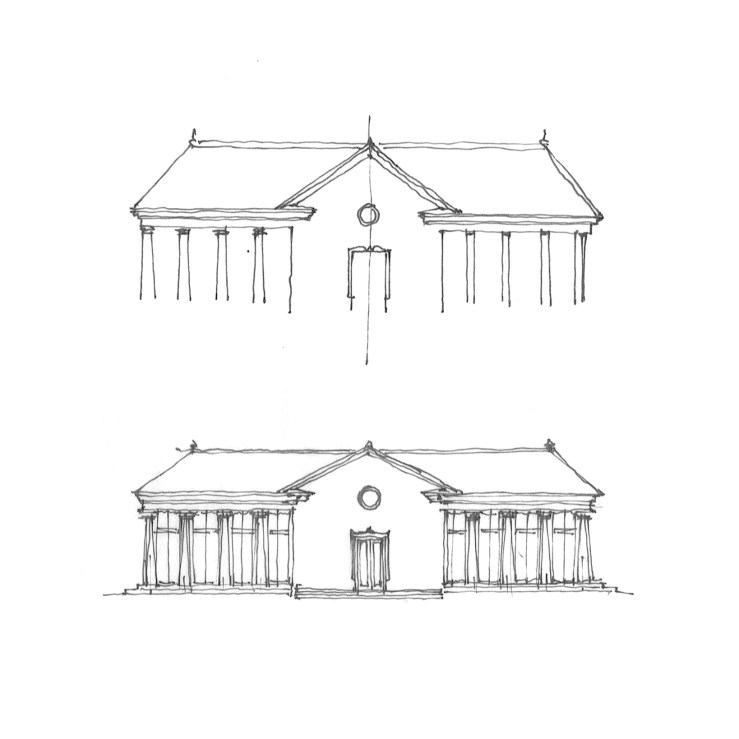
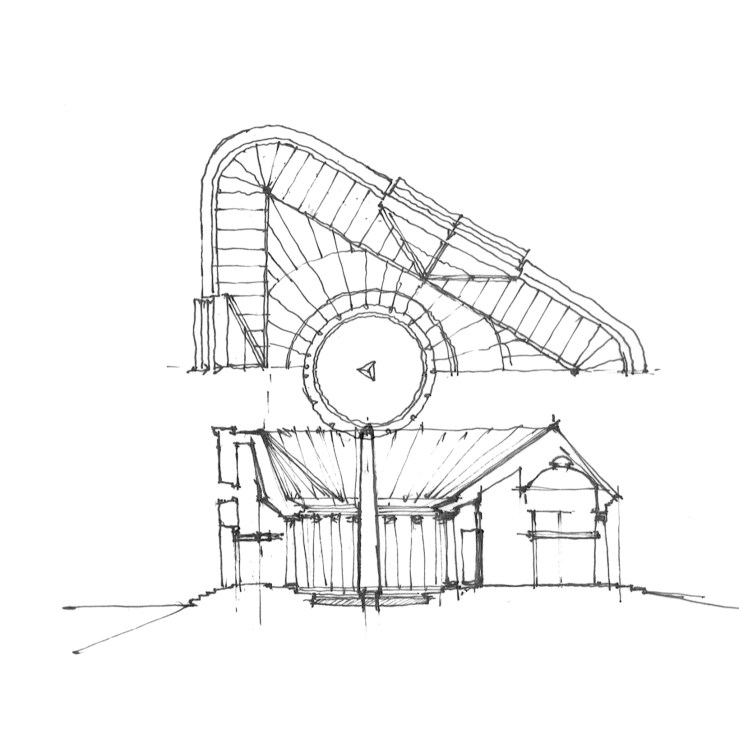
Further pulling the thread of hidden circular courtyards (here, here, & here), this exploration introduces yet another platonic geometry: the triangle.  Low gables on each facade take the center, allowing colonnades to wrap the acute corners, while a circular colonnade sits in the middle, centered on a triangular obelisk in a circular pool.  Interior spaces are fluid, with low walls and pipe columns hinting at spatial division.  The dialogue between the round courtyard and the triangular roof ridges creates a dynamic interior roof form with exposed rafters throughout.

gallery_06

gallery_07

gallery_08

gallery_09

double gables

two-gables_01

This house plays a game of symmetry, where the magnificent double gable of Lutyens’ Homewood is played on every facade, but punches out by one module on the east and west facades.  The stair is set off-center, with a tall square atrium (Craig Ellwood of two posts back), and an asymmetrical collage of symmetrical rooms inside.  My first plan (above) had double columns throughout, the second plan (below) favors the single centered column.

two-gables_02