nine-square staircase

two-gables_05

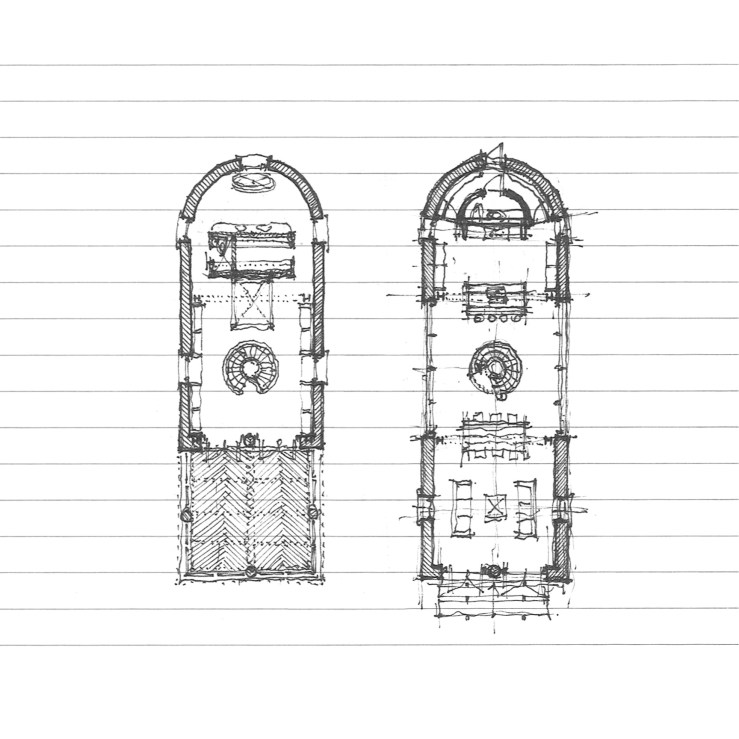
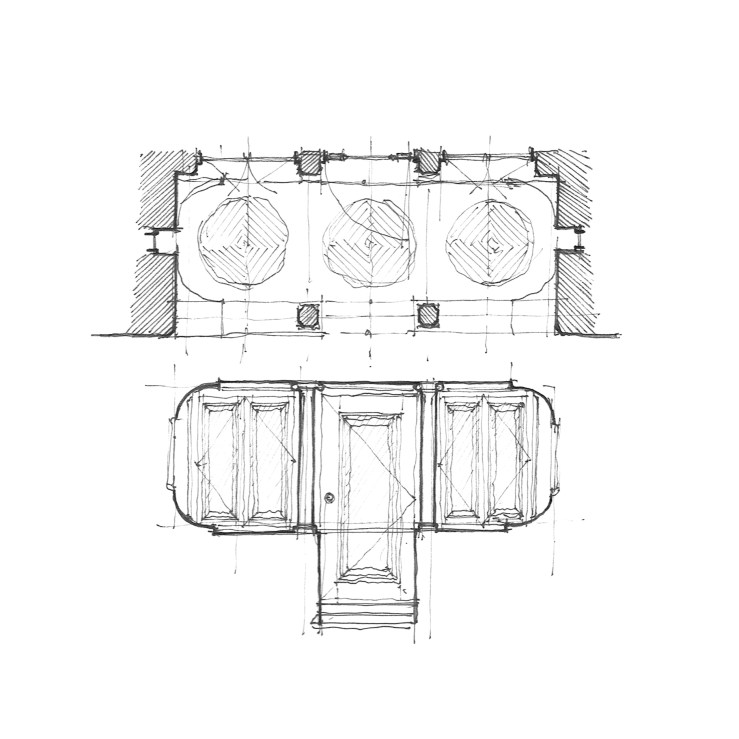
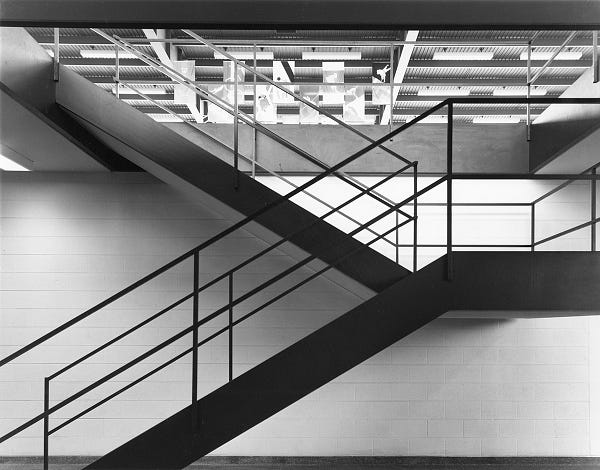
This is a piece of a larger puzzle, the basic parti of which is sketched above.  The stair is located centrally in the square plan, and is itself a nine-square plan.  Tectonically, the stair is supported on a peristyle of Tuscan pilasters, while the stair proper is takes its details from Mies’ Crown Hall at IIT, and tall fireplaces occupy three sides (their form, a take on Schindler’s Kings Road House.

two-gables_04

two-gables_03

half house

half-house_01

While taking its name from one of John Hejduk’s many unbuilt projects, the One-Half House, this project offers a different interpretation of an architecture of halves.  One half-plan of Richardson meets one half-plan of Neutra.  The entry portico is recessed into the building line, and takes cues from some vernacular Angeleno tract homes from the 1930’s (concurrent with Neutra’s earlier formal explorations).  I do think that the stucco variation at the bottom is much more convincing than the overtly Richardsonian brick variant – but maybe it needs to be weaned of a little too much Krier (Miami, or Windsor).

half-house_02

half-house_03

half-house_05

half-house_06

a garden gate

GATE_01

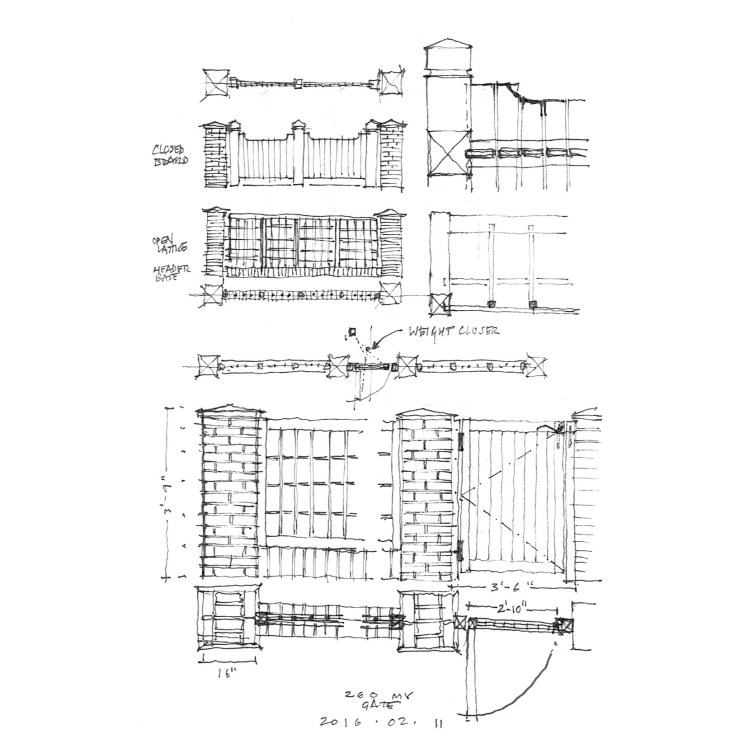
Because even the most mundane of elements deserve to be thoughtfully and appropriately considered, I’m featuring a series of details and design considerations for a gate at my house, fronting a small garden courtyard.  Typical wood rails span brick piers, with a weighted chain closer to keep things tidy.

a house with a hall

hall-house_01

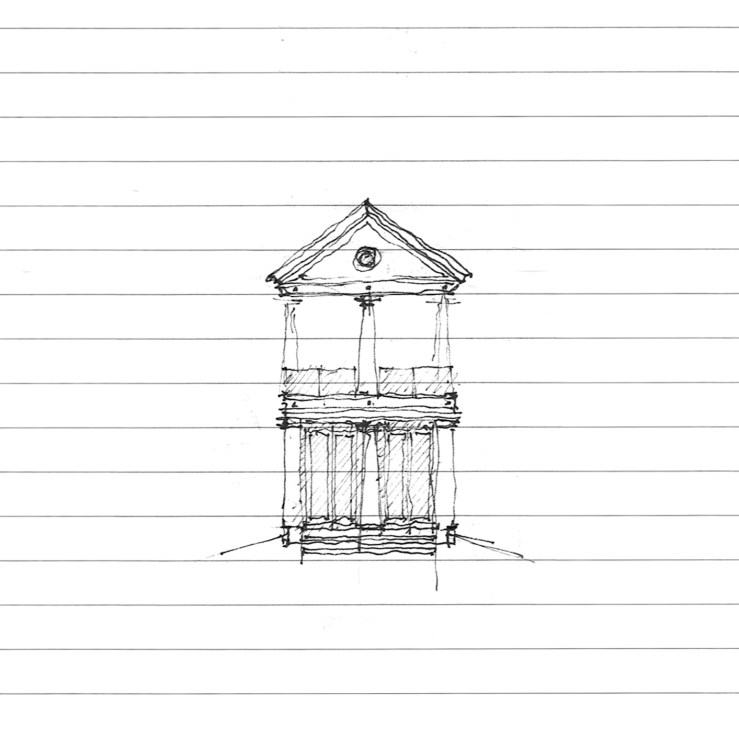
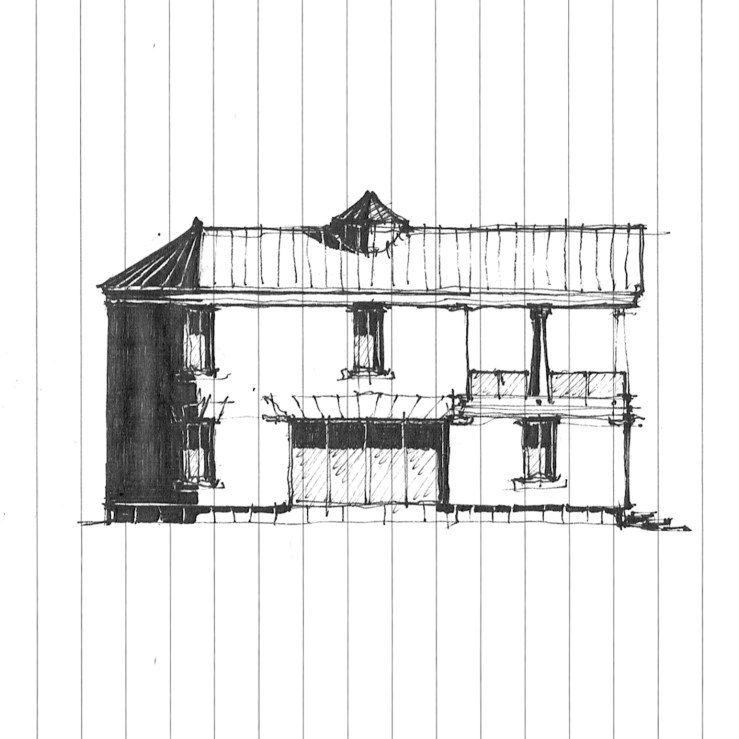
Plan as generator (aka, ‘floor plan comes first, elevations second’), with a long hallway bisecting a semi-cubic volume, colonnades at either end.  Now a staircase – centered on the hallway, one half of the house takes a large ballroom, while the other is bisected into two smaller drawing rooms. The second floor, two long, windowed rooms sit over the porches, while a tall pyramidal skylight tops the stair hall.

hall-house_02

asymmetry in the country

country-house_01

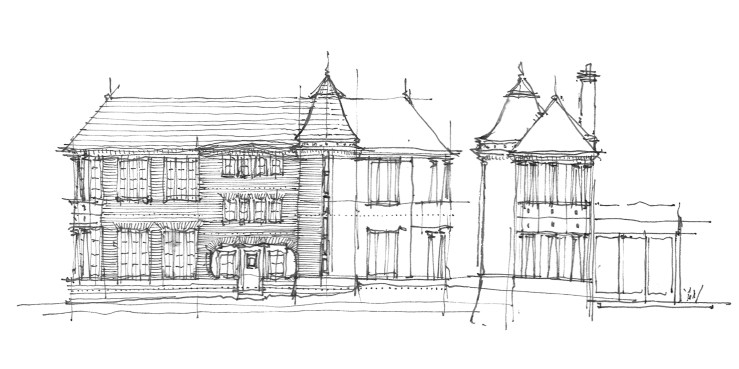
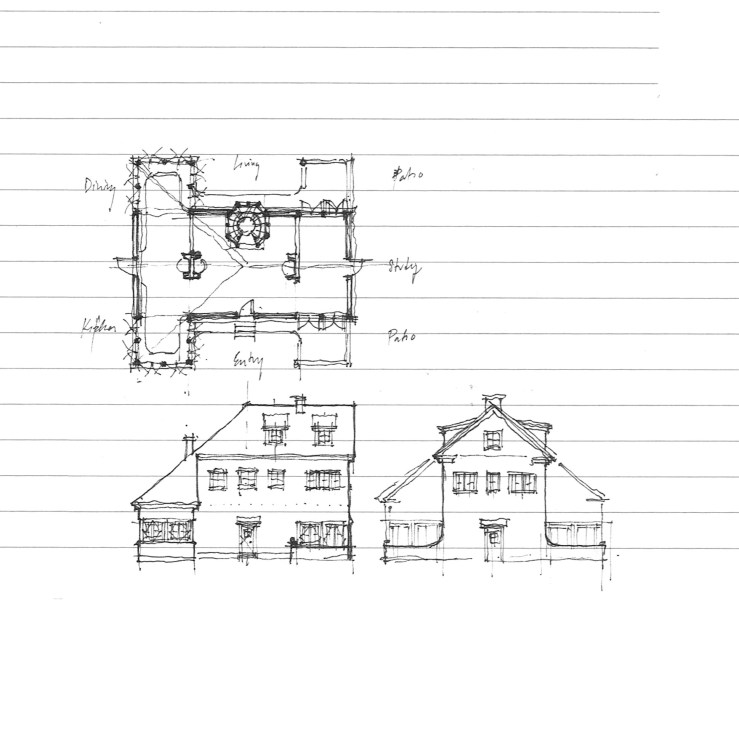
Today’s installment is something a little idiosyncratic – this one didn’t begin with a square, but rather a triangle.  From that, came a rotunda, and two arms, one of which I furnished with a square.  This project takes more precedence from the picturesque traditions, but is still rather rigorous in module and geometry.  References stem from Robert A M Stern to Samuel Vosper’s work with the Army Corps of Engineers and a touch of Lutyens.

country-house_02

from industrial to domestic

PILOTI_02

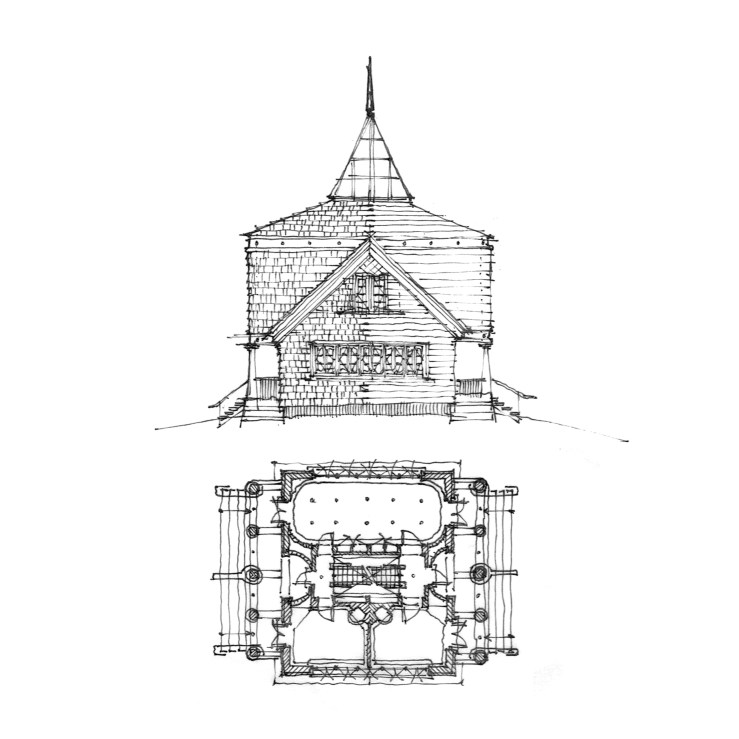
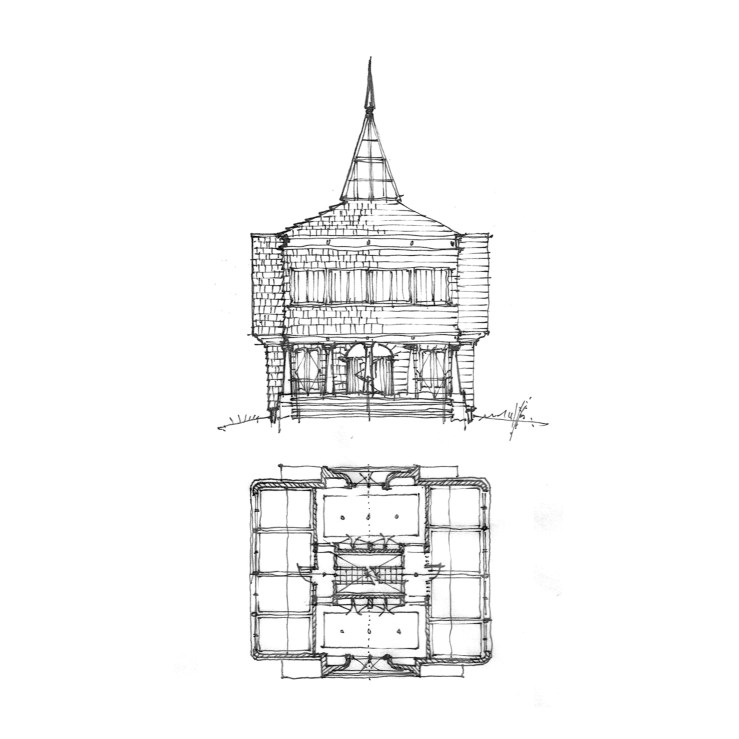
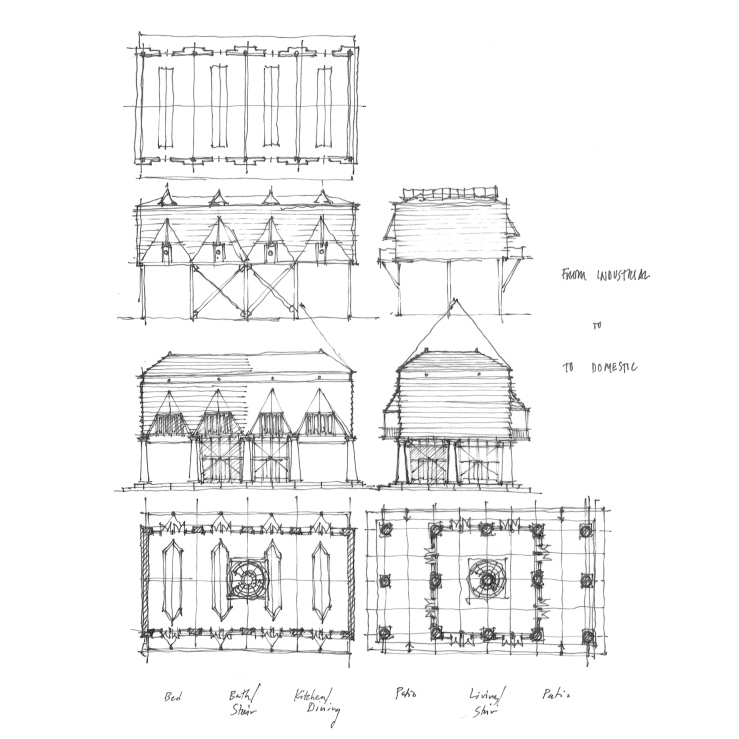
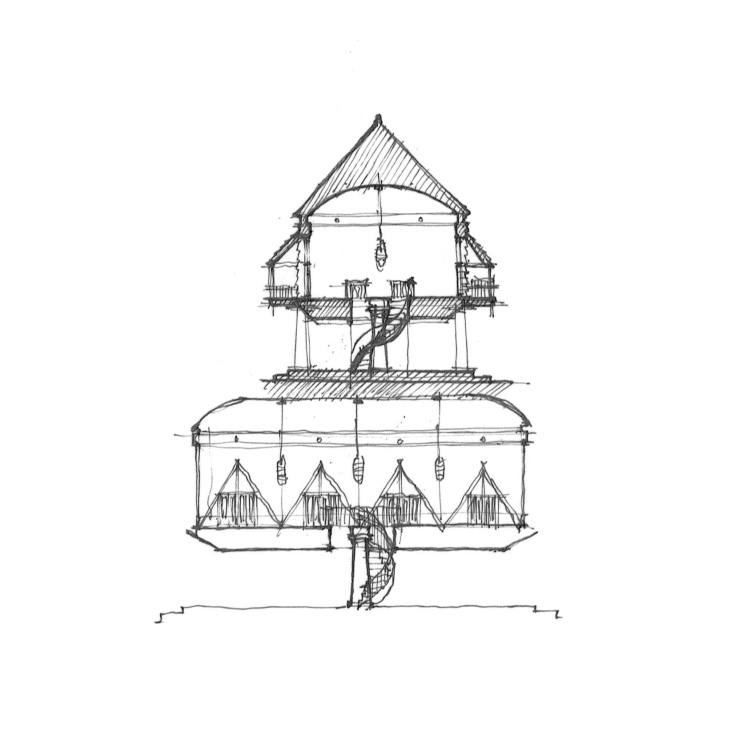
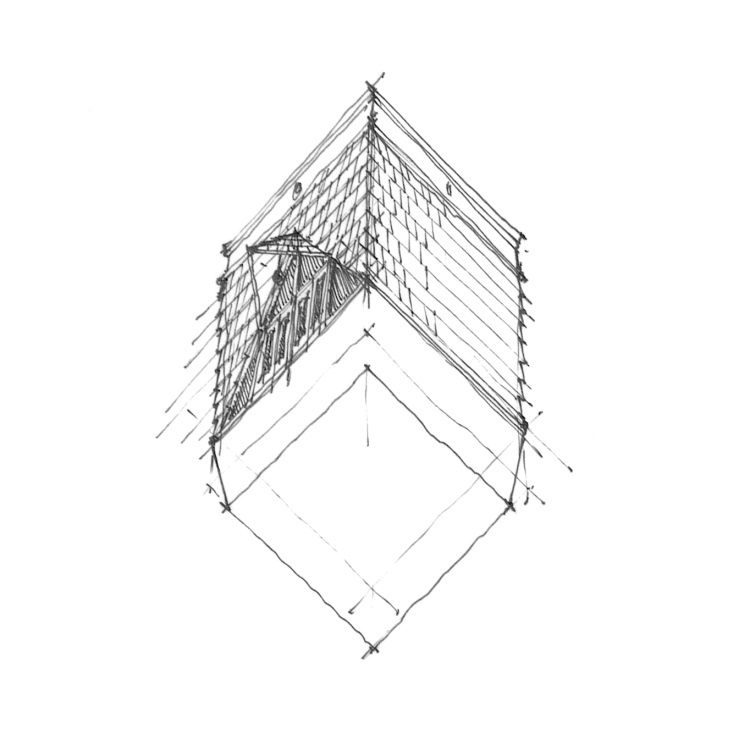
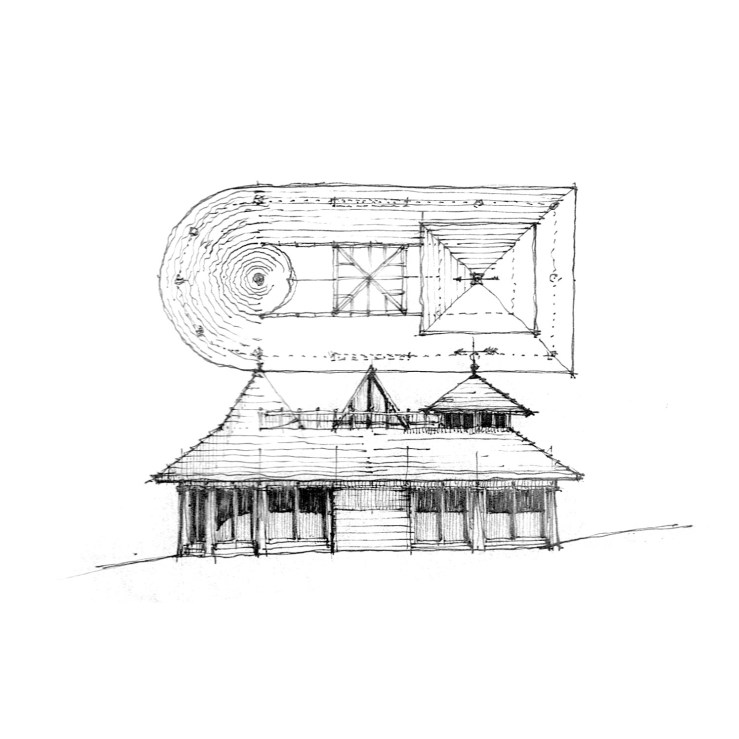
Today’s piece stems from an industrial building I passed by at Los Angeles’ wastewater treatment plant.  The original was a blue corrugated steel box on diagonally braced stilts, with triangular recesses and frames above second story doors.  I have no idea what this is used for.  None.  But The deliberateness of the design was evident, as the entire plant had been drawn up by Anthony Lumsden, a techno-postmodernist.  So I clad it in shingles, inspired by some triangular dormers by Ike Kligerman Barkley, and set it on a chunky Tuscan colonnade (a la Graves), and called it ‘house’.

PILOTI_01

PILOTI_03

wall treatment

260-MV_04

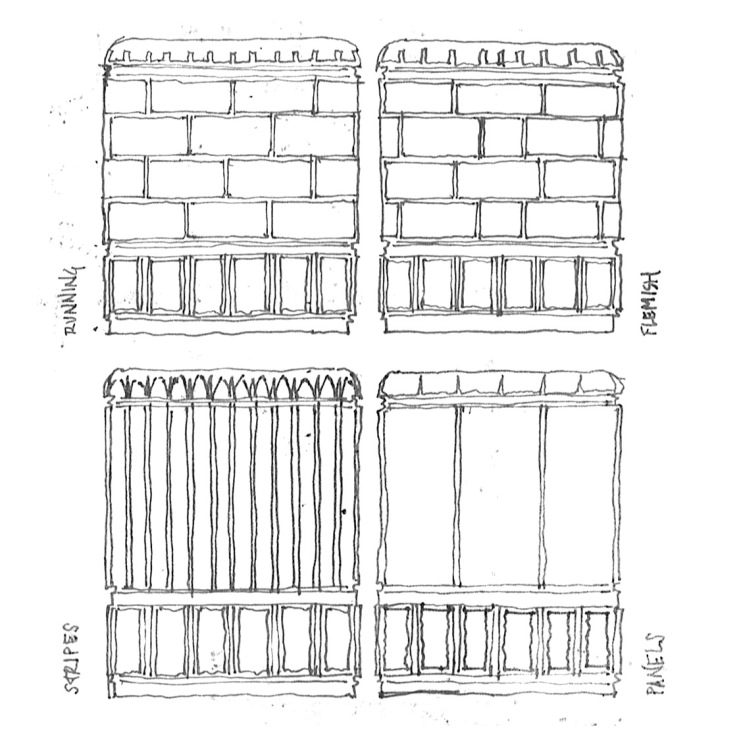
Maybe not what most people consider ‘capital-A’ architecture, but interesting nonetheless – interior walls and their treatment.  These four options are studies for my own house, with coved ceilings, picture rail, wall base, chair rail, and wainscot sticking.  The two top options explore large-scale masonry patterns a la Michael Graves, while the two bottom options divide the wall into sections, from many stripes to more distinct panels.

a barn to live in

BARN_02

Taking its form from some barn structures I passed on my trip to Oregon, this house has two opposing axes, one large gable, and a hip-ish roof.  A spiral stair gently curves out on the side opposite the main entry.  Classical details sit happily next to vernacular forms.  Further formal explorations below

BARN_03

BARN_04