
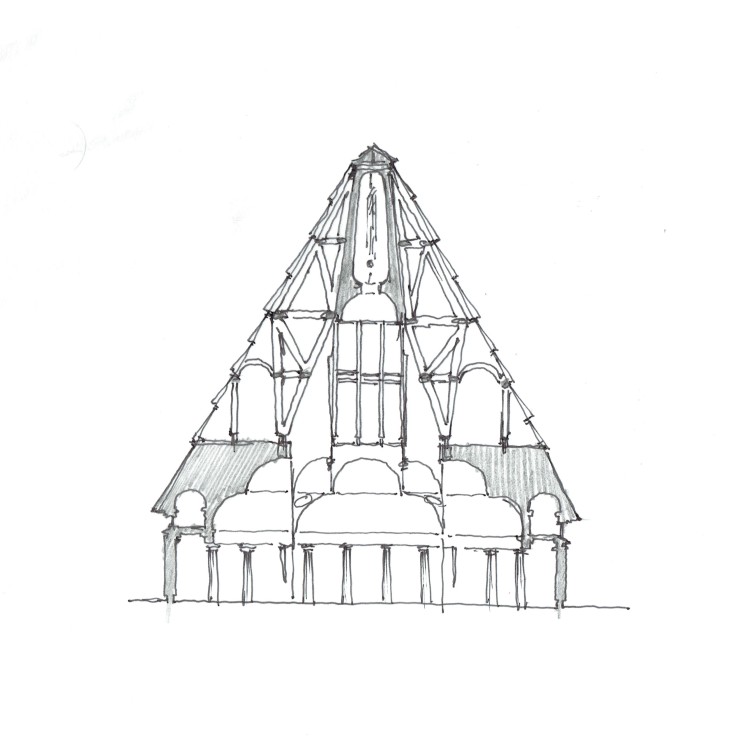
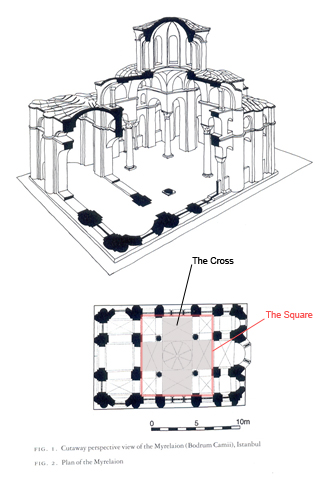
Most of the church forms I’ve featured have been basilicas – that is, long linear rooms with clearly defined axes and a higher central nave with lower side aisles. But recently, I tried to reconcile my basilican interests with my predilection for squares. Enter two historical church types based on the nine-square motif: the German hallenkirche (hall church), where there is no clear distinction between nave and aisles, but rather a large, open ‘hall’ of columns with extensive windows on all sides, and the Greek cross-in-square, in which a cruciform church plan is contained in a square form, with a large dome over the central crossing. This project fuses the two, with an intense wood roof structure that attempts to read as both the hallenkirche and the cross-in-square in one, and goes even further to render the space as a cube.


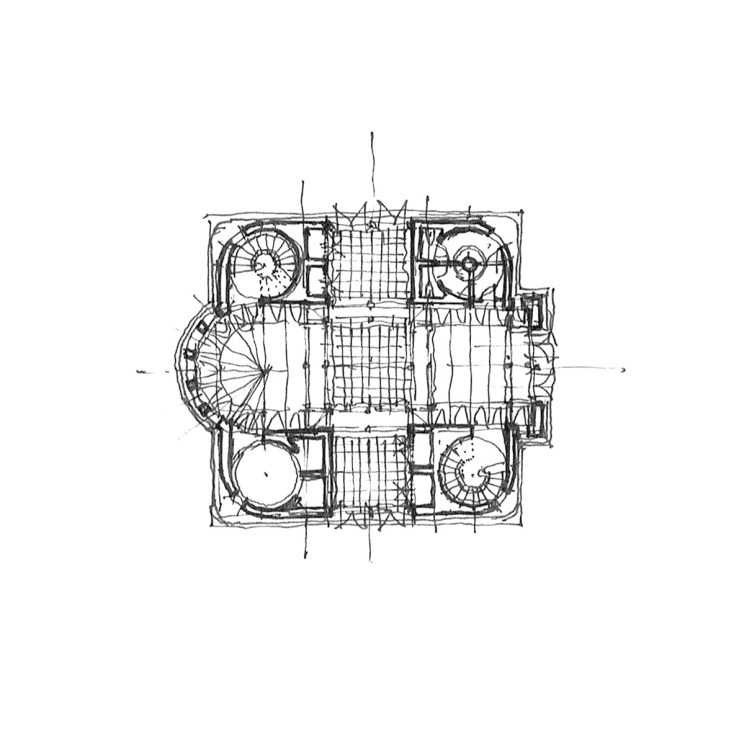

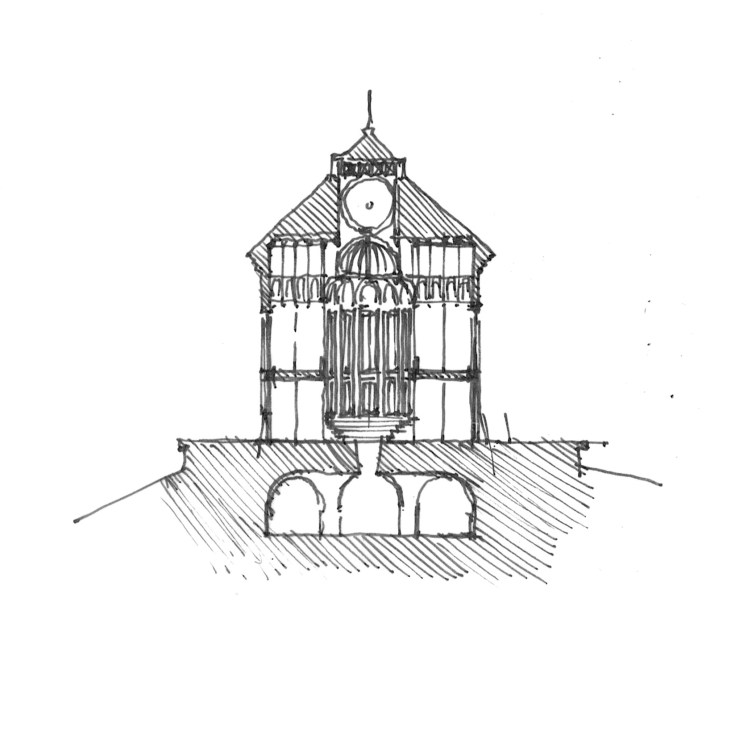

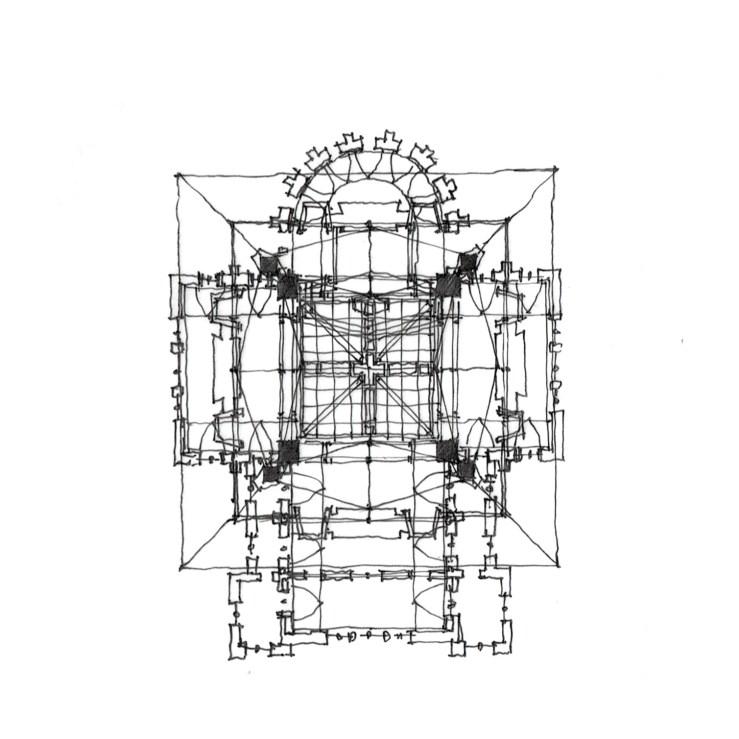
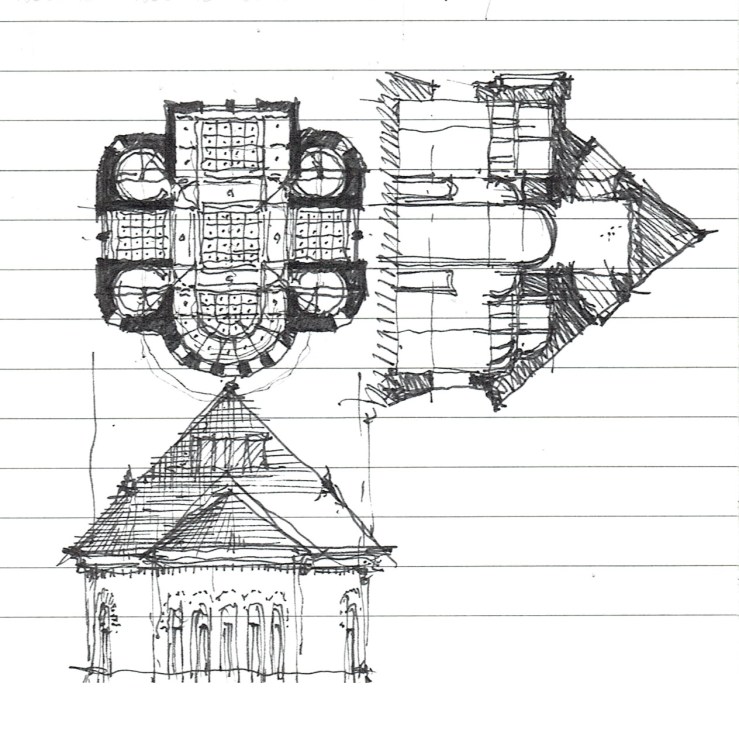

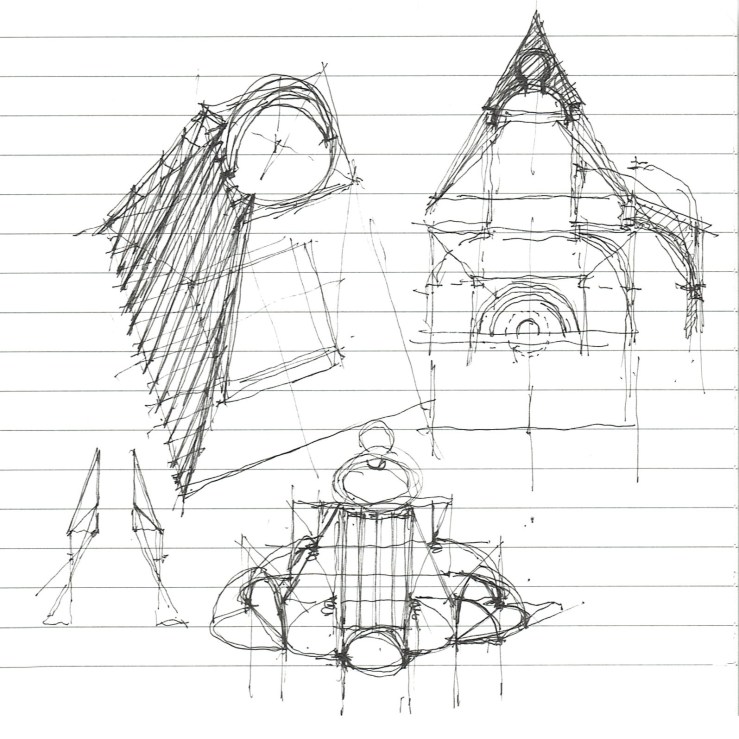


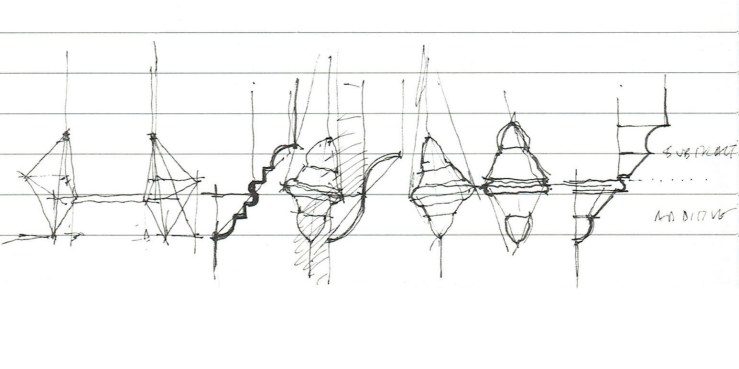

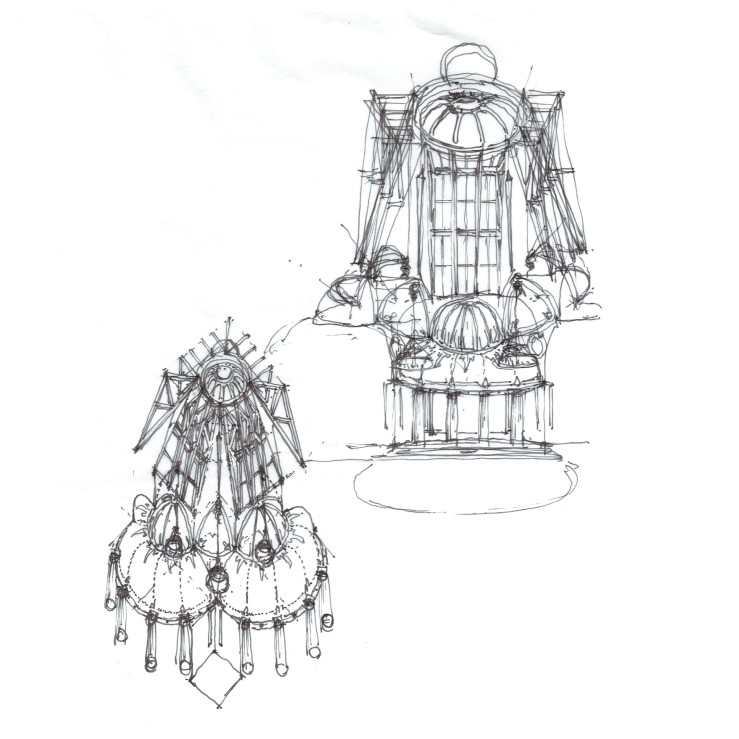

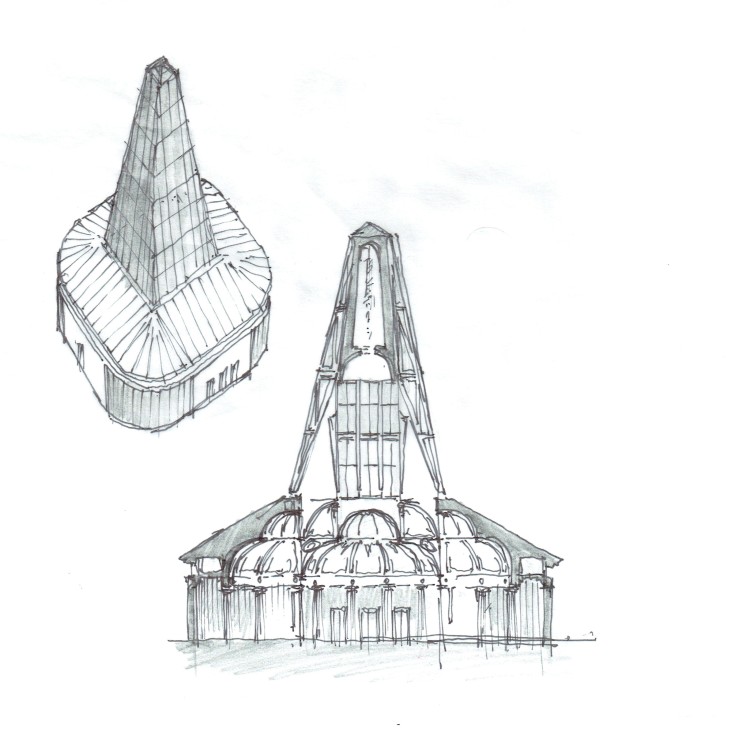


 This past February, my wife and I took a weekend trip to San Francisco, where we stumbled across the city’s cathedral – St Mary of the Assumption, by Pierluigi Nervi and Pietro Belluschi. The church is a square, with large piers in the corners supporting a gargantuan lantern, which also doubles as the church’s campanile. The large piers dominate the four corners which have been rendered in finely detailed glass storefronts, effectively making the church more of a standard Greek cross rather than the centrally-focused square it purports to be. I’ll be featuring my own riffs on this project over the coming days, but for now, I’ll let you appreciate the brutal simplicity of the form that started it all.
 frame
frame 

.GIF)
