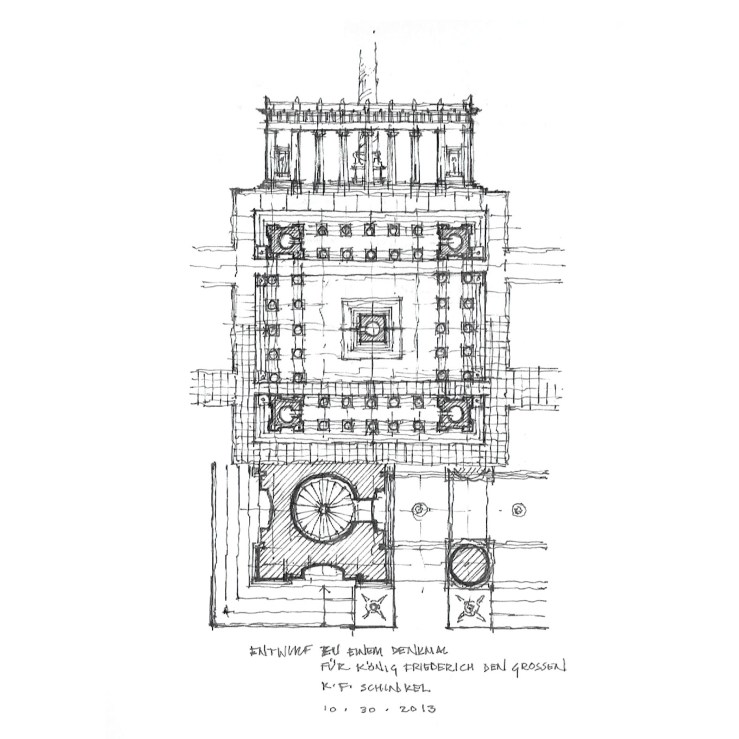
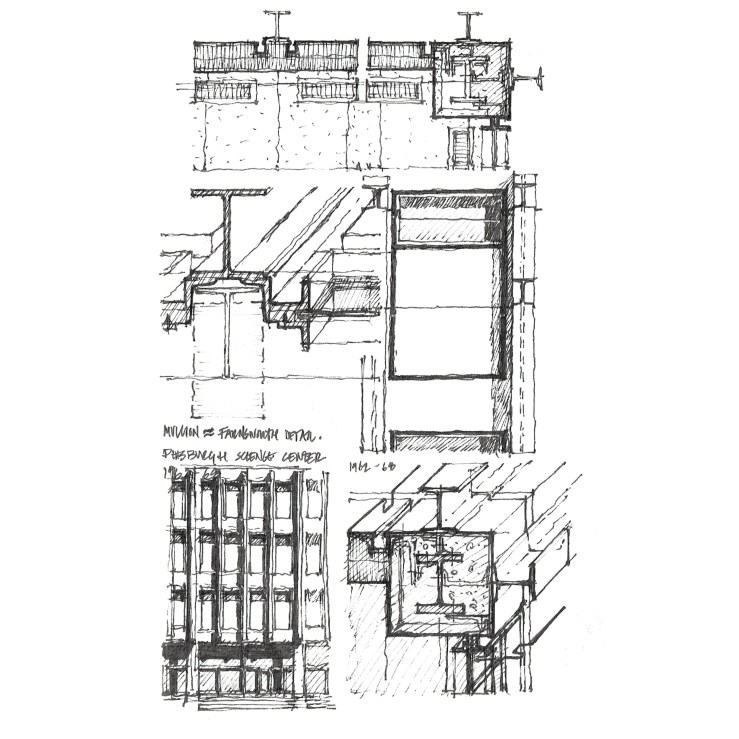
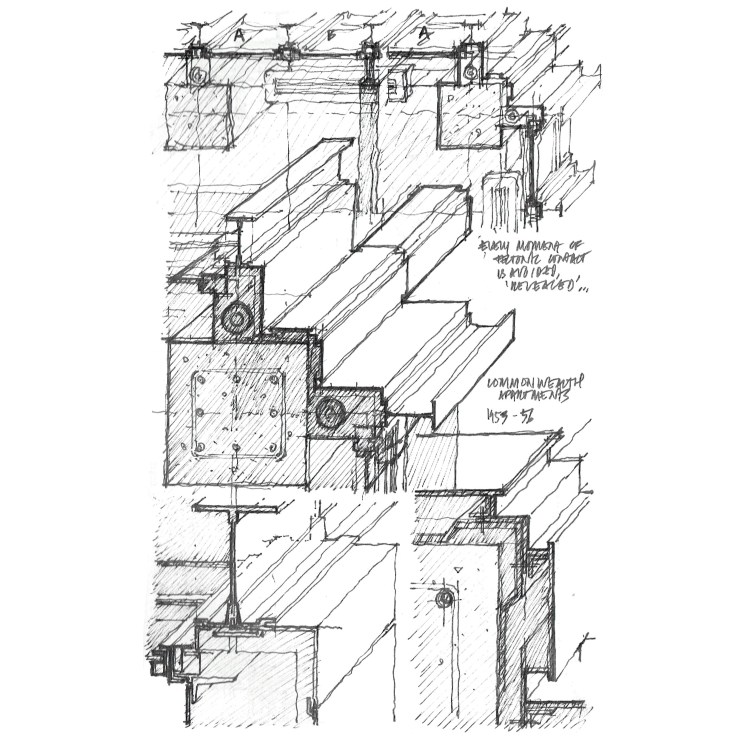
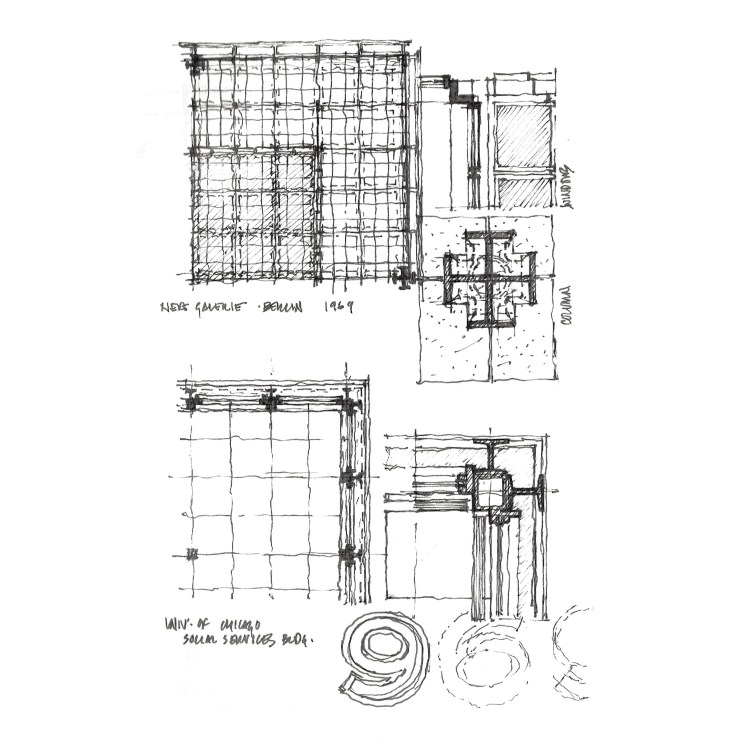
It’s been a long week of Mies, Mies, and yet more Mies. So here’s a bit of a respite from the daunting Modernism his work exemplifies: Karl Friedrich Schinkel. And yet, there’s something afoot – a link between Mies and Schinkel, which I am definitely not the first to make (see Kenneth Frampton and Thomas Beeby). But whatever the reason, take a little solace in the capitals, pilasters, and peristyles – if only for the now.






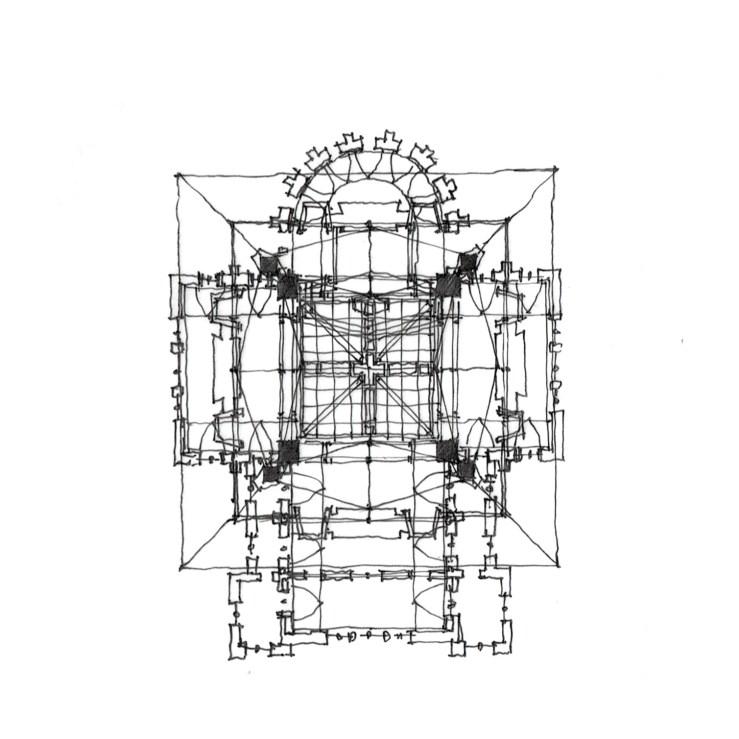

 This past February, my wife and I took a weekend trip to San Francisco, where we stumbled across the city’s cathedral – St Mary of the Assumption, by Pierluigi Nervi and Pietro Belluschi. The church is a square, with large piers in the corners supporting a gargantuan lantern, which also doubles as the church’s campanile. The large piers dominate the four corners which have been rendered in finely detailed glass storefronts, effectively making the church more of a standard Greek cross rather than the centrally-focused square it purports to be. I’ll be featuring my own riffs on this project over the coming days, but for now, I’ll let you appreciate the brutal simplicity of the form that started it all.

 frame
frame 