putting the pieces together

MUSEUM_01

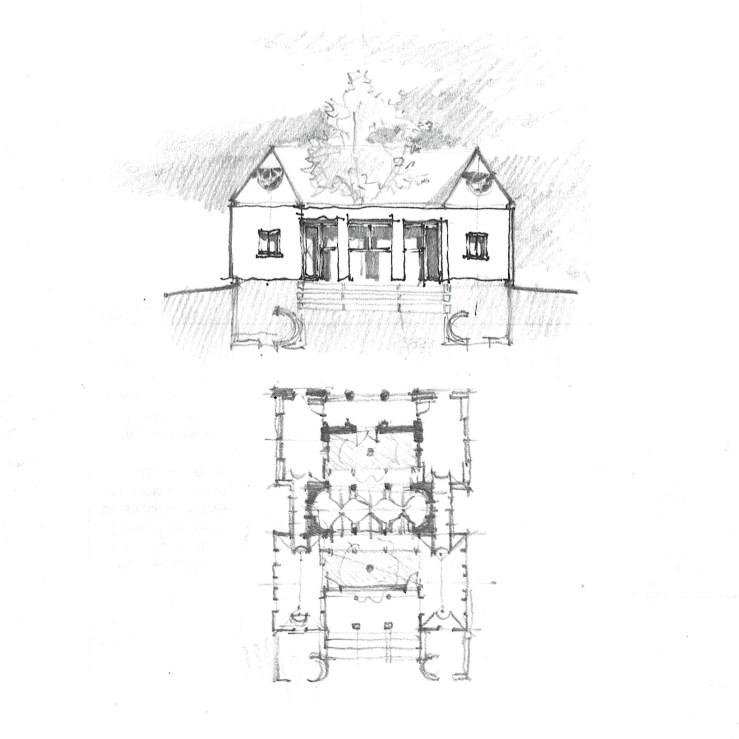
Lacking any particular program (that is, use), this courtyard structure plays on several ideas: the plan is neither a true double-courtyard, neither is it truly H-shaped (where the courts would be open on one side); one half of the project is more abstract modernist while the other is more expressly traditional; glass walls sit next to Classical colonnades; all the while the two side volumes are topped with that dormer I posted a few weeks back.

a gas station and the california vernacular

GAS-STATION_02

Driving along the coast through Laguna Beach, I noticed a funky little structure now operating as the offices for a small auto repair shop – it was clearly an old gas station, with the concrete pump pads still extant, which I’ve drawn in the top-most drawing.  The fascinating bit was that the overall building was a  gabled Spanish stucco hut, complete with a red tile roof and chimney, but the service awning was a flat modernist roof, and which cut deep into the gabled volume.  The overlap and simultaneity of languages was so simple, irreverent, and playful.  So I did my own variation: the plan is the bottom half of the top drawing, the half-elevations are below.

GAS-STATION_03

something stern did

RAMS_04

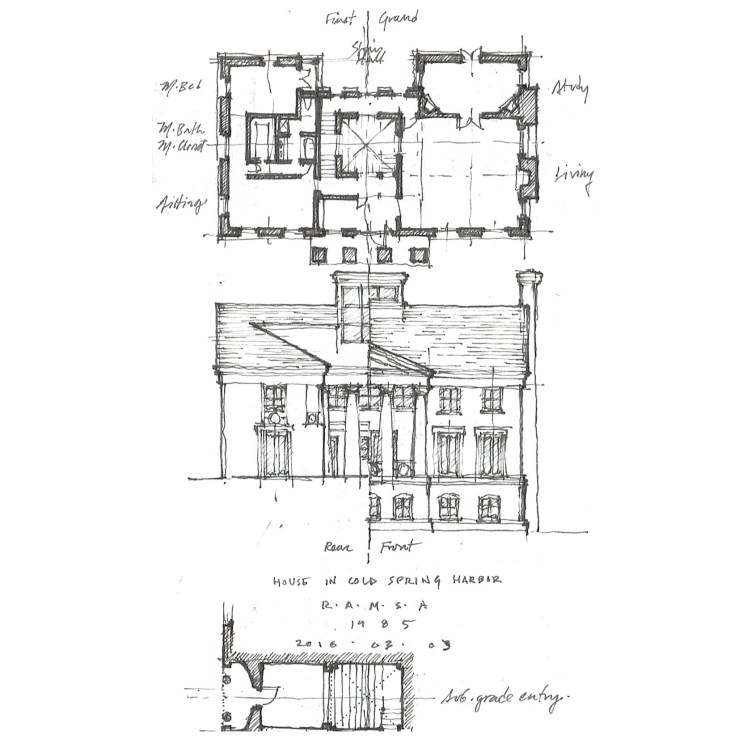
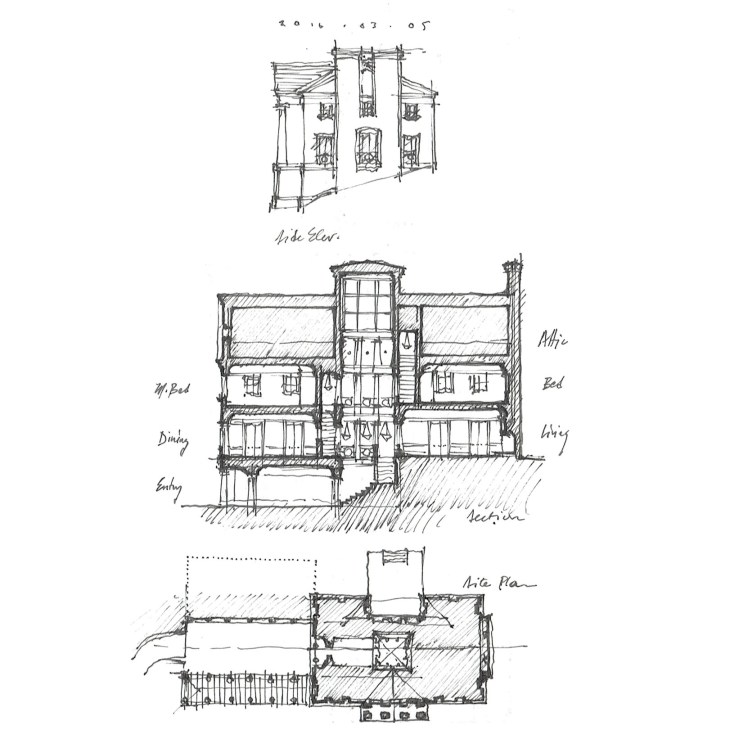
Stepping back to a previous topic, I’ll share an unbuilt Robert A. M. Stern project I stumbled upon a few months past titled simply ‘House in Cold Spring Harbor’ from 1985.  The house in interesting for a few reasons: the formal entrance is off of a motor court on the secondary axis, and is below grade (the bottom sketch in the drawing above); a large square stair makes up the majority of the central volume, and is capped with an enormous north-facing monitor; there is a wonderful play between the formal portico-ed facade and the rear garden facade, which takes on a u-shape; a large chimney-piece makes up the east facade, though the flue is not centered on the entire building, rather a window.  My own circular take on the central staircase follows.

RAMS_05

STAIR_02

a bungalow court

COURT_01

A typical typology of Southern California, the bungalow court is typified by a series of low, one-story units arrayed around a small courtyard, all fit onto a single residential lot.  Most often, the structures were fitted in the Spanish Colonial Revival, Moderne, or (less frequently) the Arts and Crafts styles.  My interpretation favors a hybrid language of the Moderne with hints of Gill.  After drawing a perfectly fine elevation, I couldn’t help myself but to fit out a delightful little tiempetto on the corner. . . working a bit of Michael Graves back into things – because, why not?

from mies to wright

FLW_02

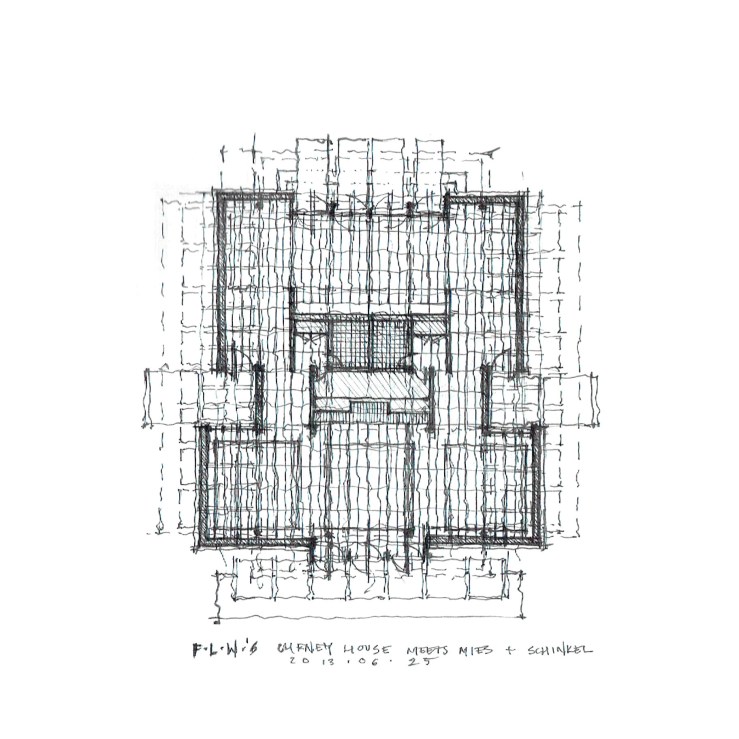
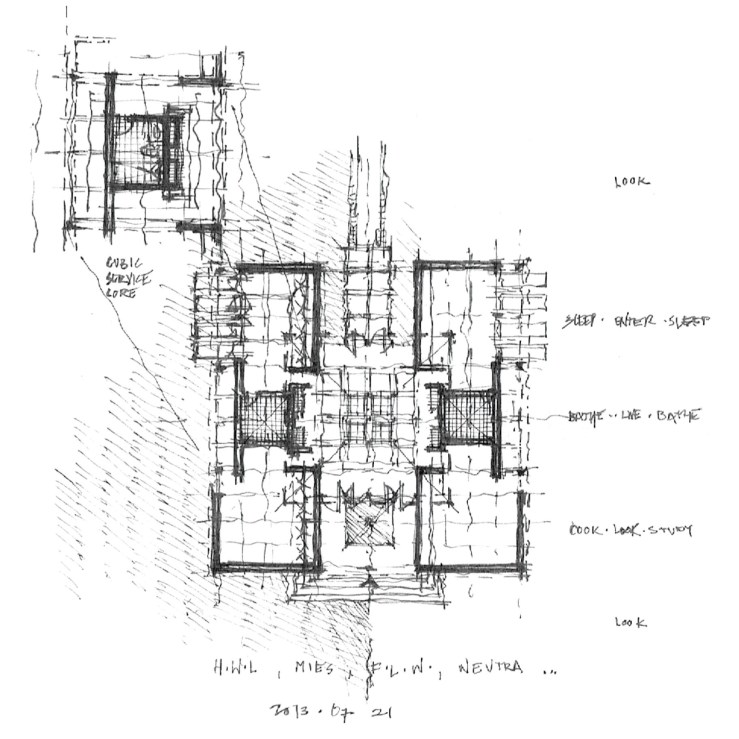
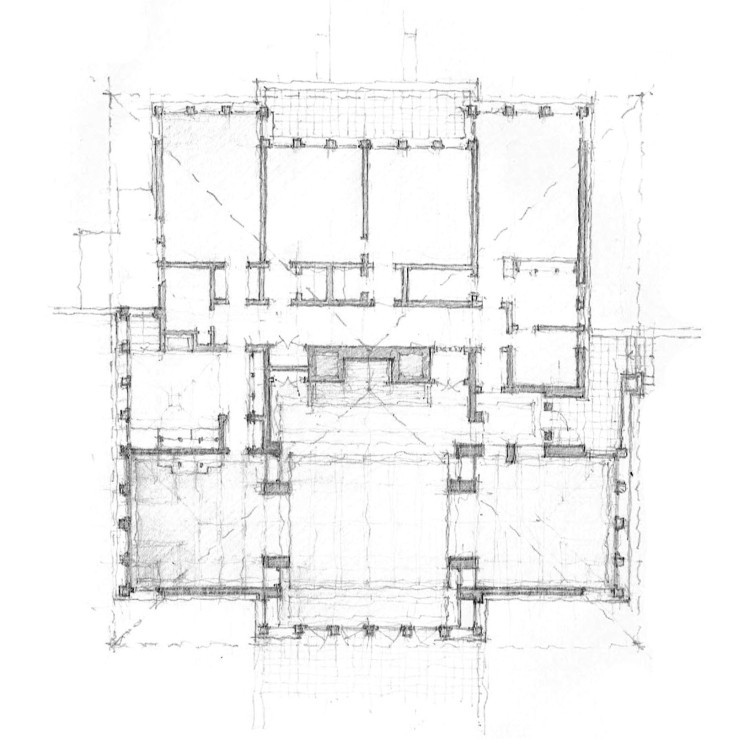
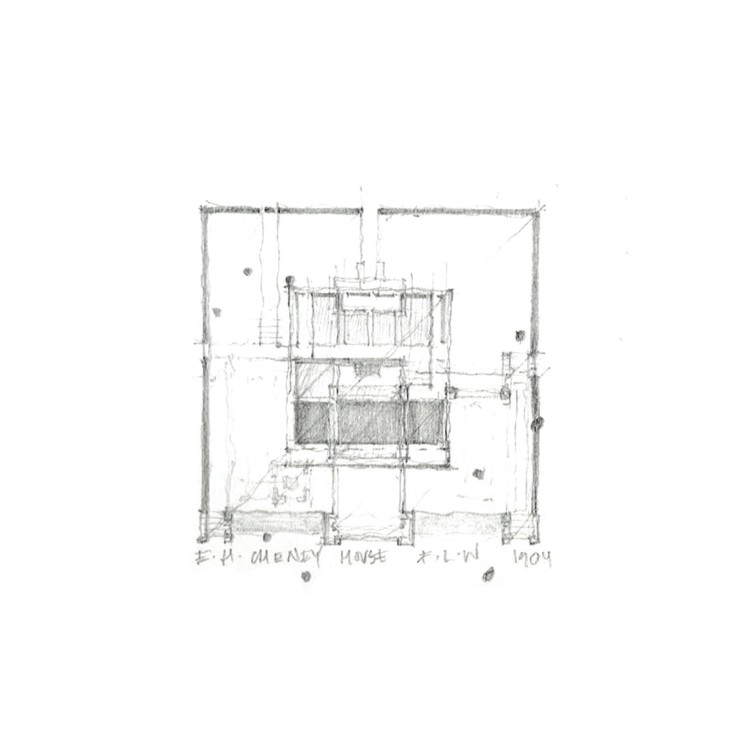
Keeping the Chicago theme, but moving a bit back in time, today I’ll feature some early Frank Lloyd Wright, particularly the Cheney House in nearby Oak Park.  The plan is fascinating because it is an effectively square structure under a large hip roof, divided into two halves: the front is made up of three public rooms (nine square), while the back is broken into four bedrooms (four square), with servant spaces filling out the middle.  The hearth is at the very center of the house, typical Wright.  This basic parti (formal planimetric diagram) still fascinates me to this day – a simple form with a complex, yet brutally clear interior logic.  The variations it inspired will follow over the coming days.

FLW_03


respite

SCHINKEL_01

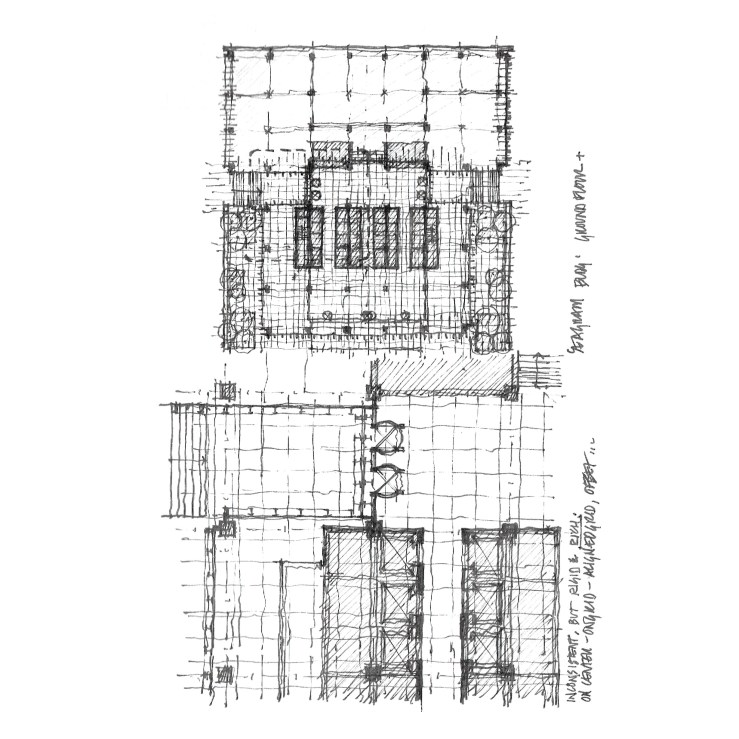
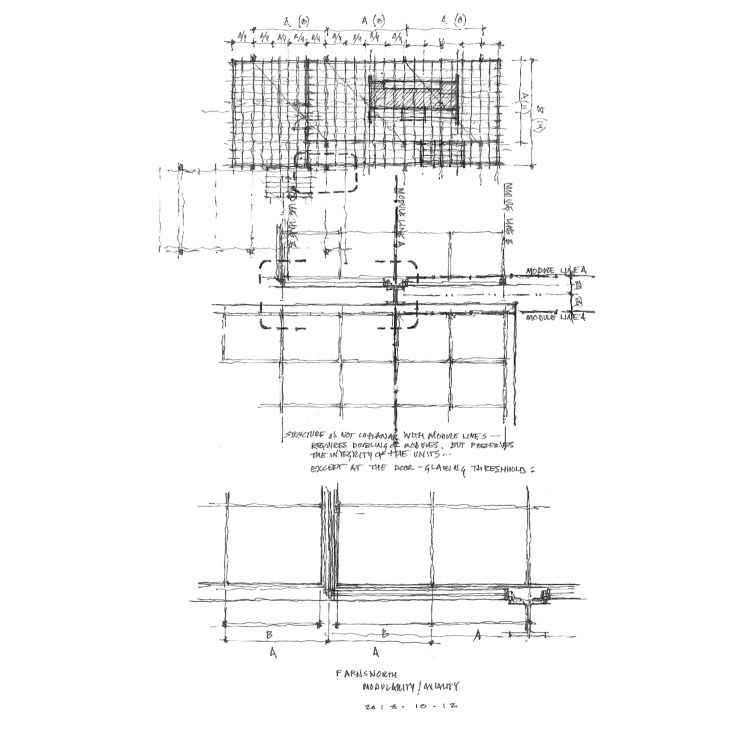
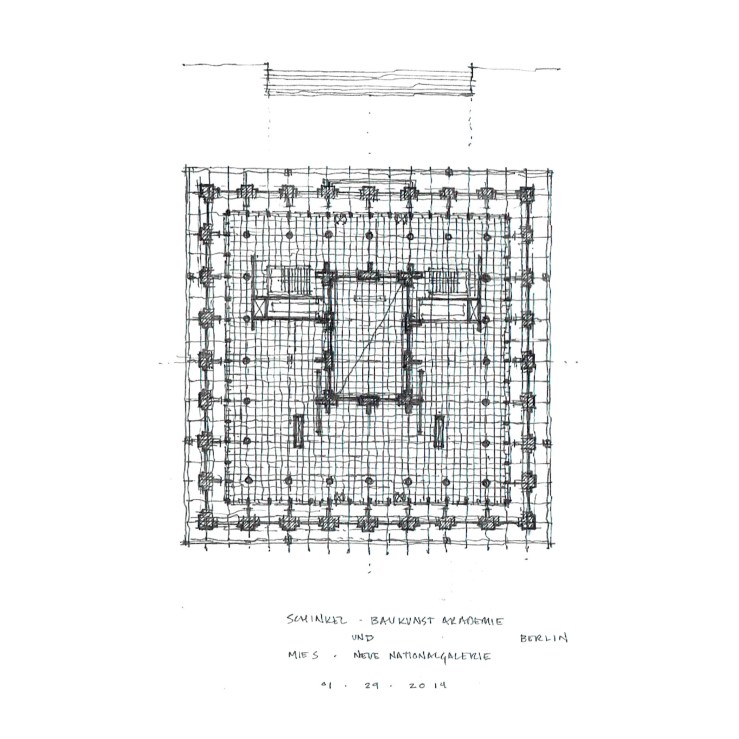
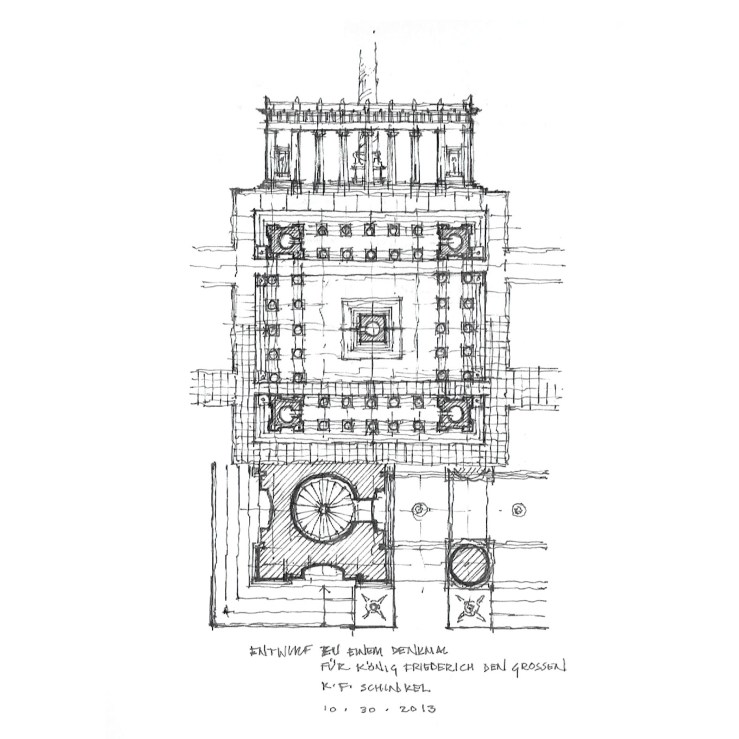
It’s been a long week of Mies, Mies, and yet more Mies.  So here’s a bit of a respite from the daunting Modernism his work exemplifies: Karl Friedrich Schinkel.  And yet, there’s something afoot – a link between Mies and Schinkel, which I am definitely not the first to make (see Kenneth Frampton and Thomas Beeby).  But whatever the reason, take a little solace in the capitals, pilasters, and peristyles – if only for the now.