
Combining the first and second interpretations of this theme, here’s a take with both the flanking skylights (a la Soane) and the semi-circular colonnade, with two large columns on center to flesh things out.
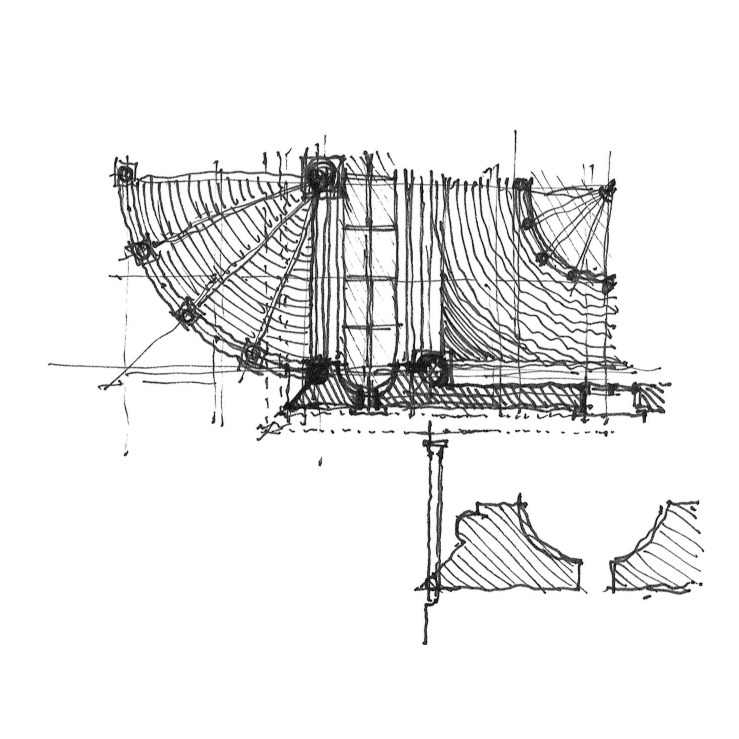
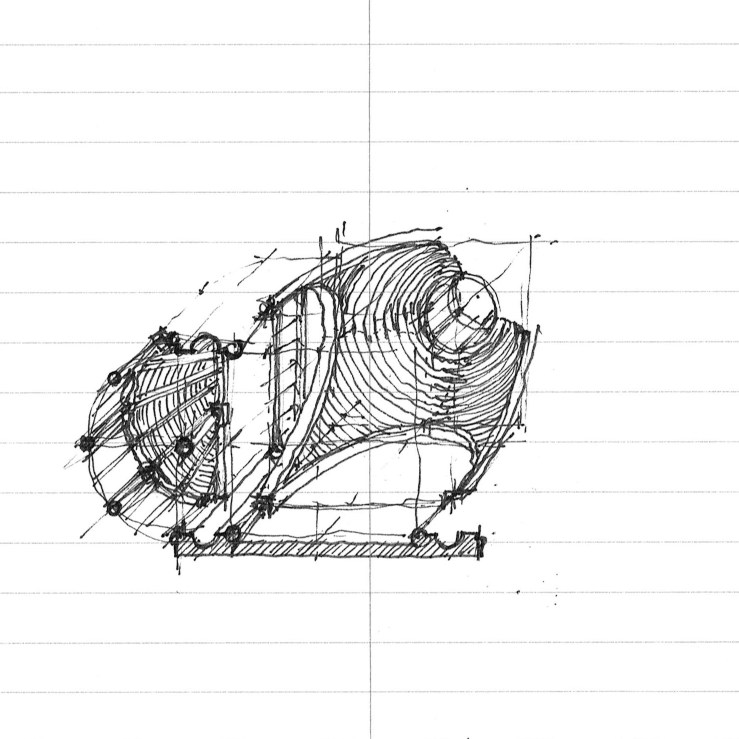
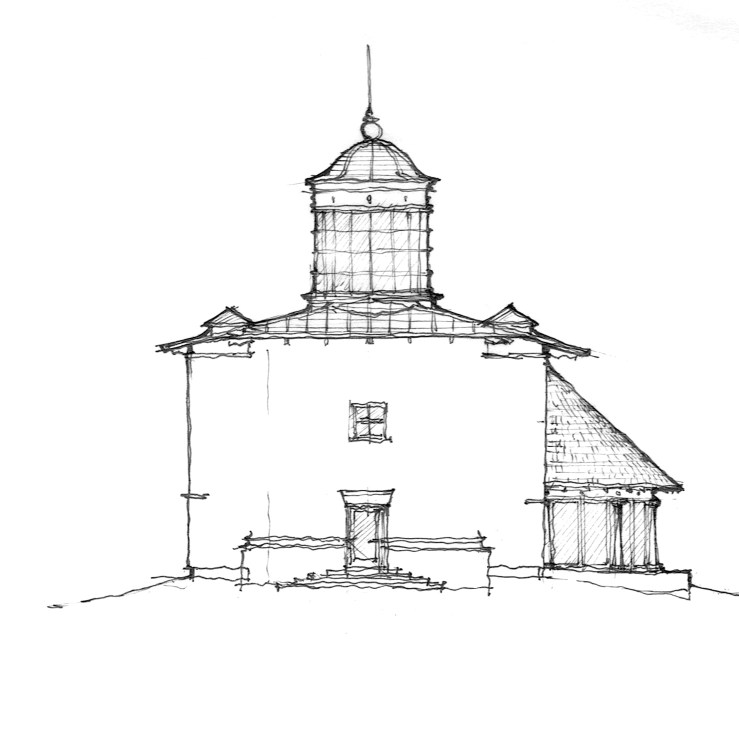

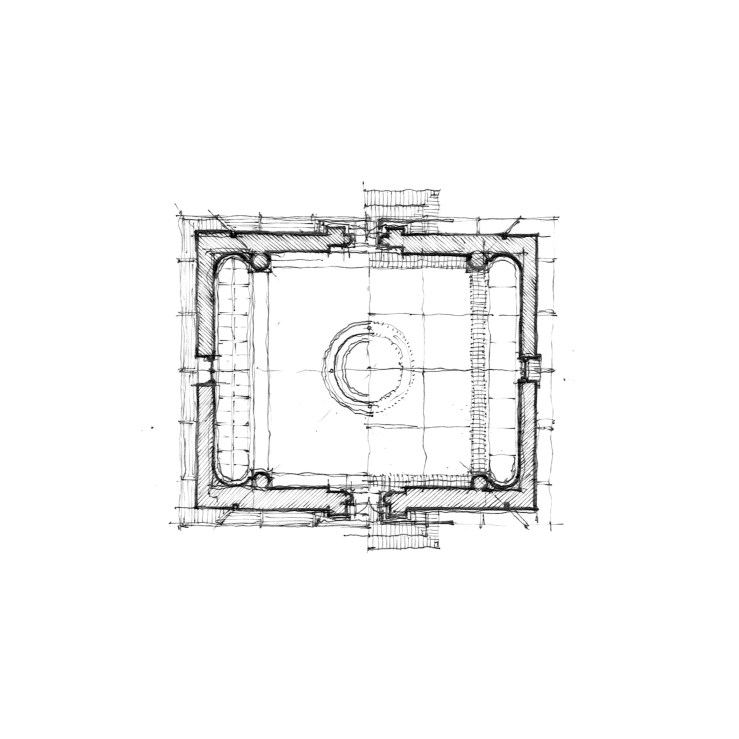
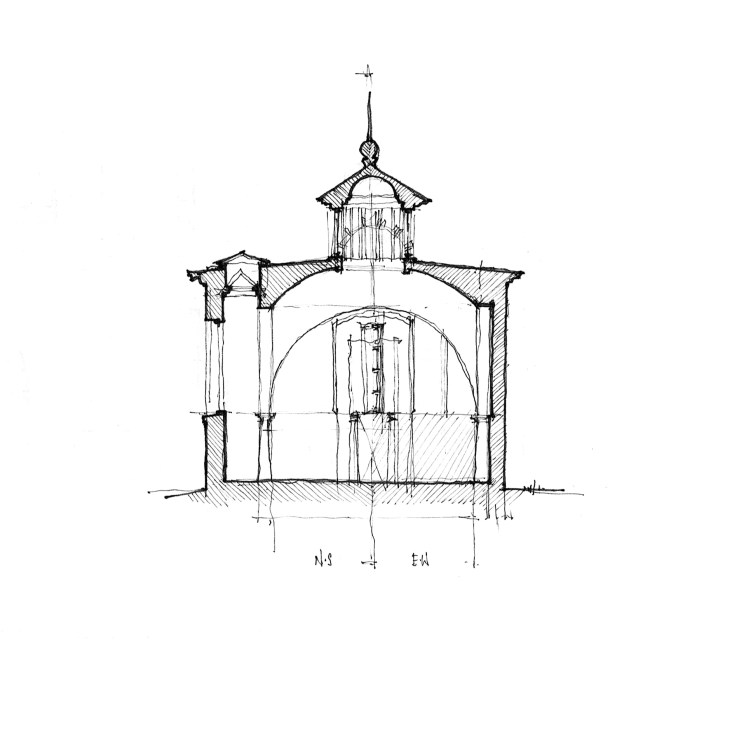
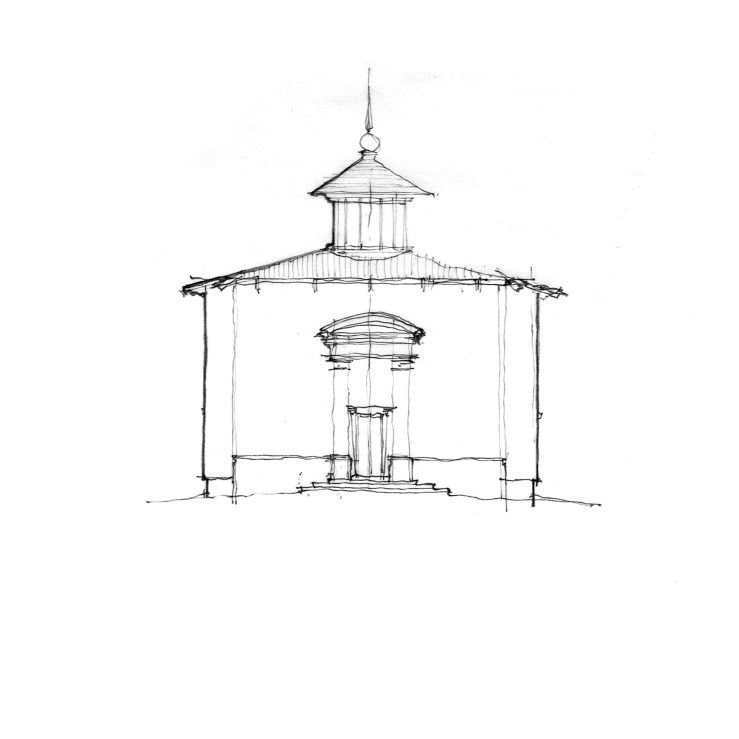
I got a new book on Sir Edwin Lutyens, so obviously I’ve been obsessing over his details, here presenting a take on his epic kitchen at Castle Drogo (itself a quote of Sir John Soane’s soaring occuli at the Bank of England). Lutyens is truly fascinating, especially in his seemingly infinite possibility to breathe a sense of whimsy into the often staid classical Orders. My representation is axial, with two rounded skylit bays on either end of the main axis, an asymmetry that reads in the roof eaves as well as the elevations. The main door is marked with a Mannerist curved pediment, hinting at the curved vaults hidden within. The section below cuts through both axes.

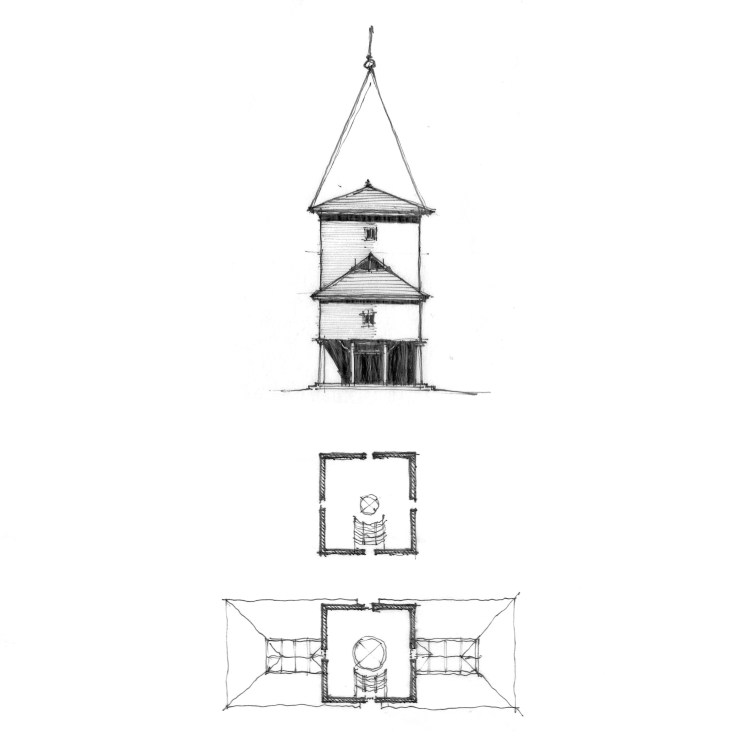
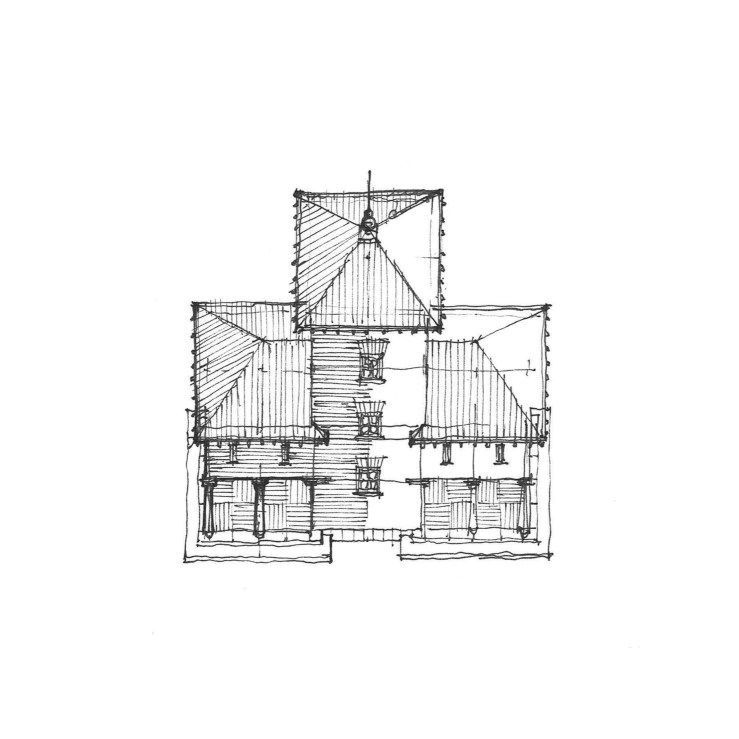
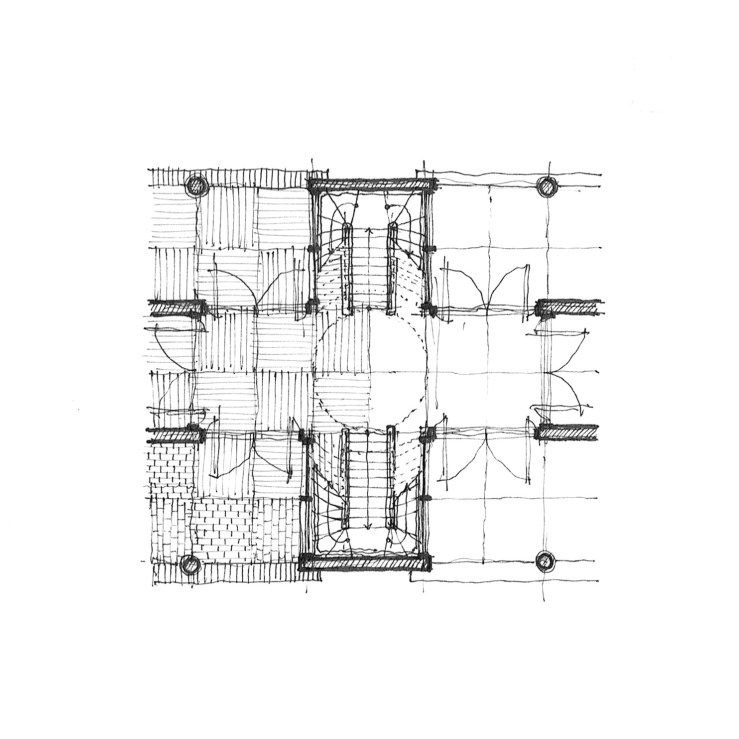
This is a collection of market types, with four ancient Greek stoae on the ground level, double stairs up to the second floor market halls, skylit, and further to the commodities trading levels within the tower. An atrium spans between the four levels. An enlarged plan of the entry lobby finishes the drawing set.
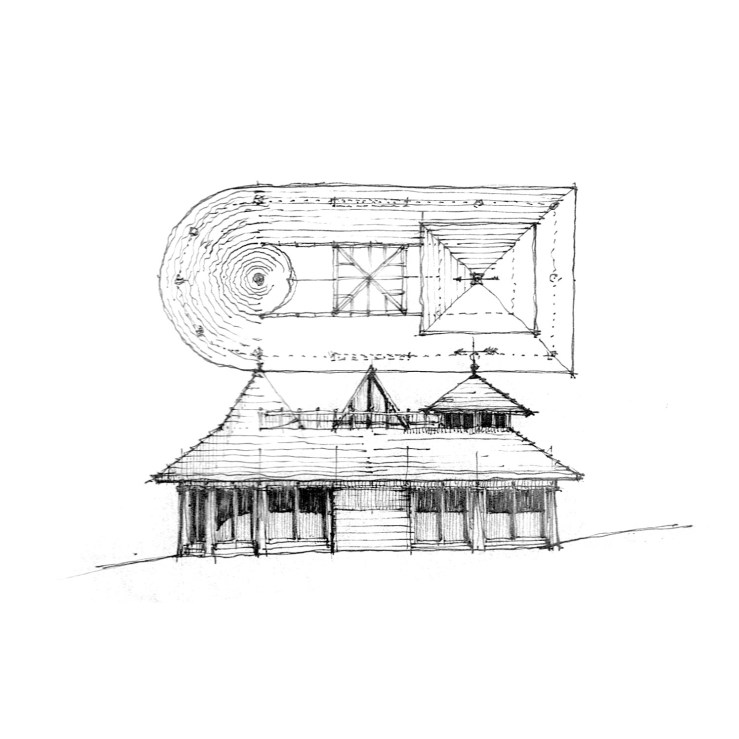
It started with a roof plan – a hip roofed monitor. Then a cone. Then a pyramid skylight. In plan, the monitor sits above a square living room, the cone above a semi-circular bedroom, with cores flanking a tall dining room, topped with a skylight.


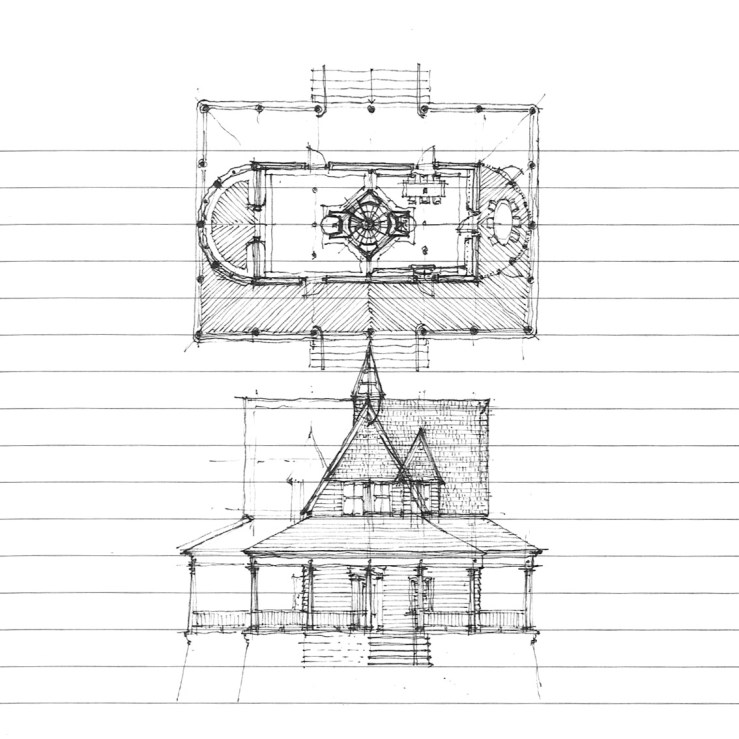
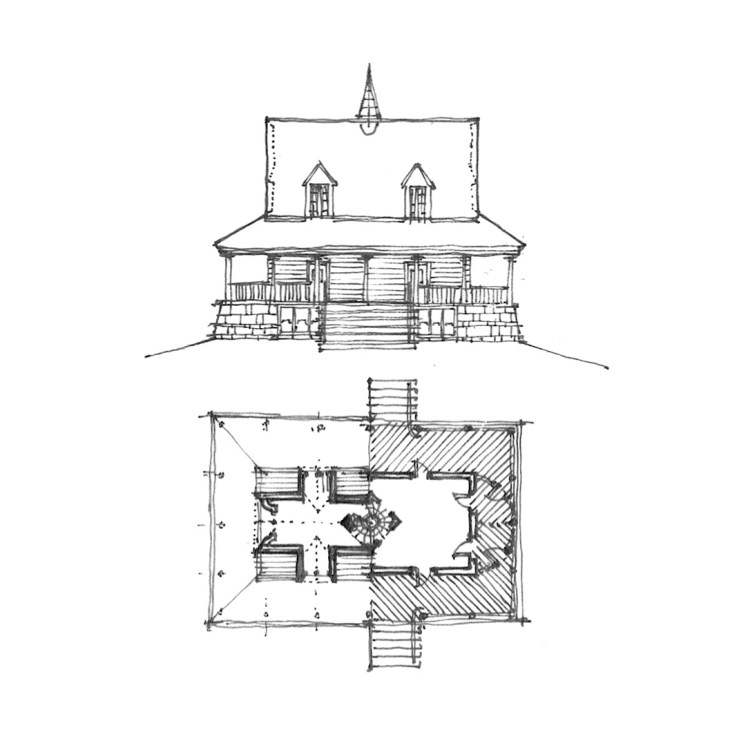
The parti is simple: two squares topped with a tall gable, surrounded by a wrap-around porch. A skylit stair occupies the very center, flanked by hearths. A semi-circular screened porch fills in one end, while an enclosed patio becomes a library at the other.
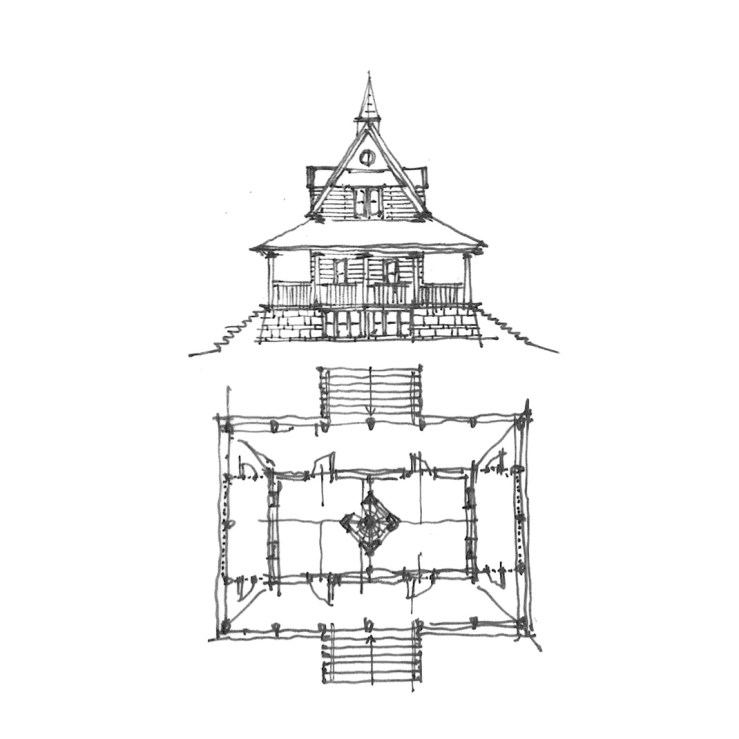
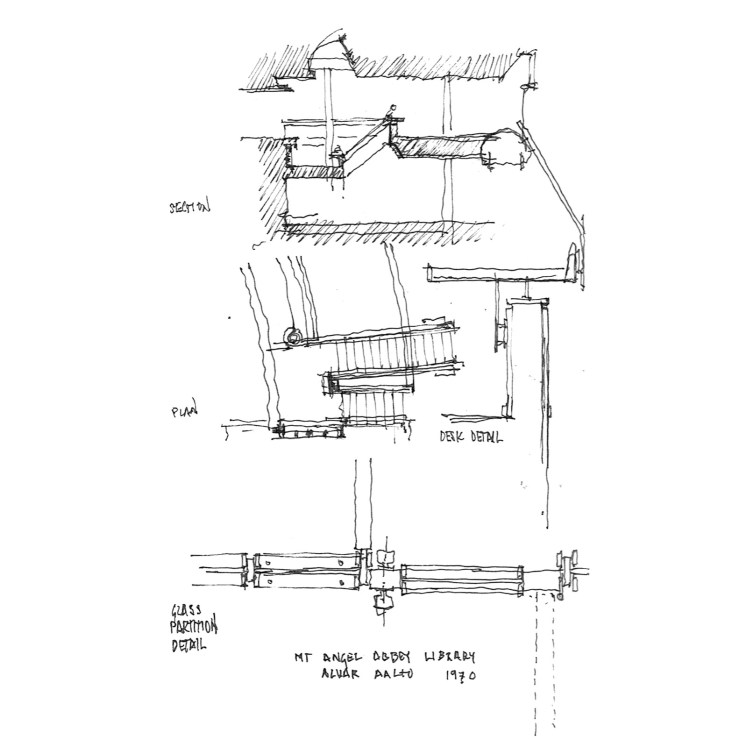
Alvar Aalto has only three built structures in the United States: a dormitory at MIT, an interior on Manhattan, and a library at a Benedictine Abbey in Mount Angel, Oregon. These few drawings are my rapid attempt to distill some important moments from the Abbey library, which I visited on a recent trip up the Pacific coast: A section through the skylit split-level reading room, and a plan beneath; a detail section through a typical study desk, which run the length of the double-height spaces, eliminating a traditional guardrail; and a detailed plan of a glass partition at independent study carrels, with hollow-steel-section framing members and wood stops – a beautiful, humane, change to the typical Miesian system. There was so much more, but unfortunately so little time.
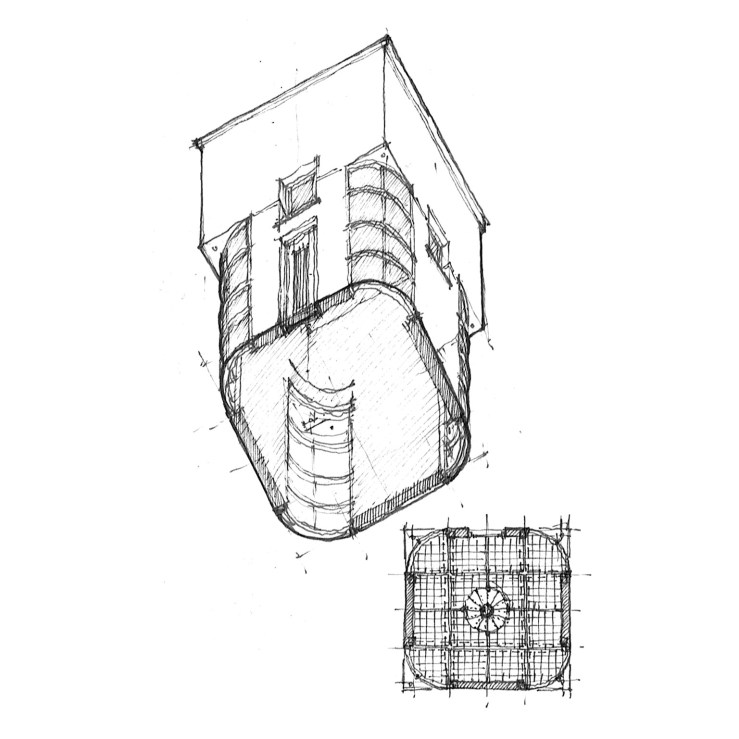
A half-cube with filleted glass corners surmounted by another half-cube under a skylit hip roof. A glass block floor demarcates a gallery above, with a matching laylight, while a steel and glass spiral stair provides access.
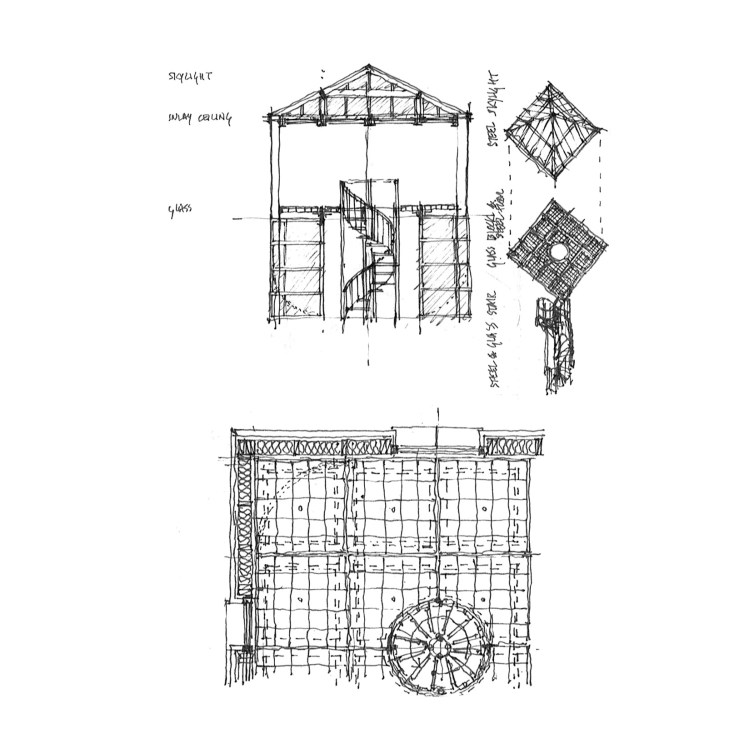
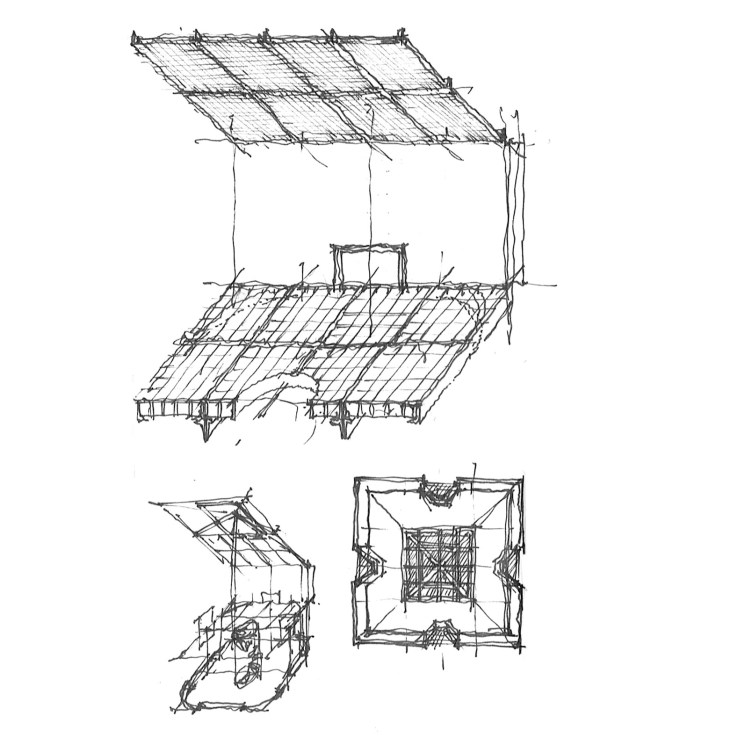
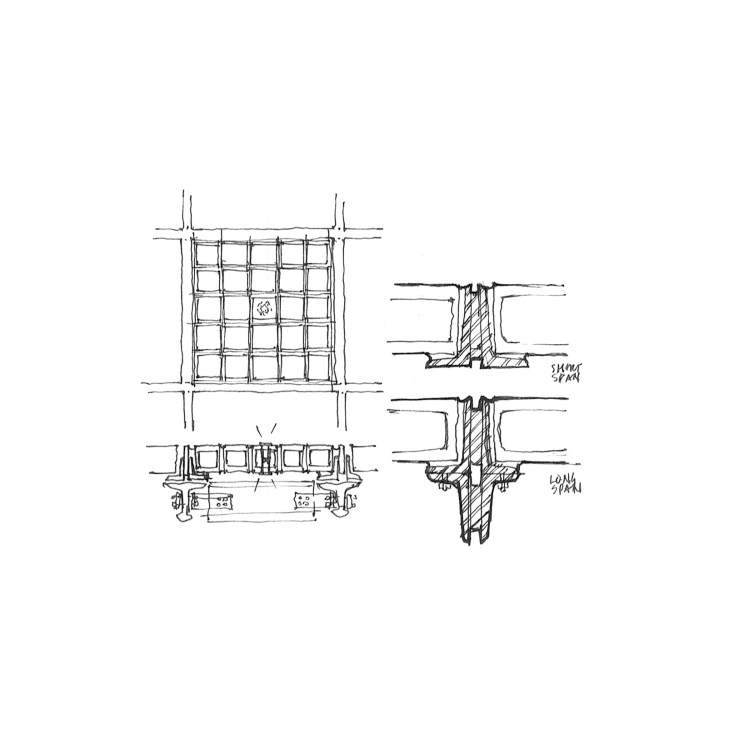


A square with Richardsonian towers on the corners, flat masonry facades in the main axis, with full-height shingle roofs over porches in the other. A skylit circular stair in a square hall in the center with octagonal-ish foyers on either end with half-round aedicules for entry porches.
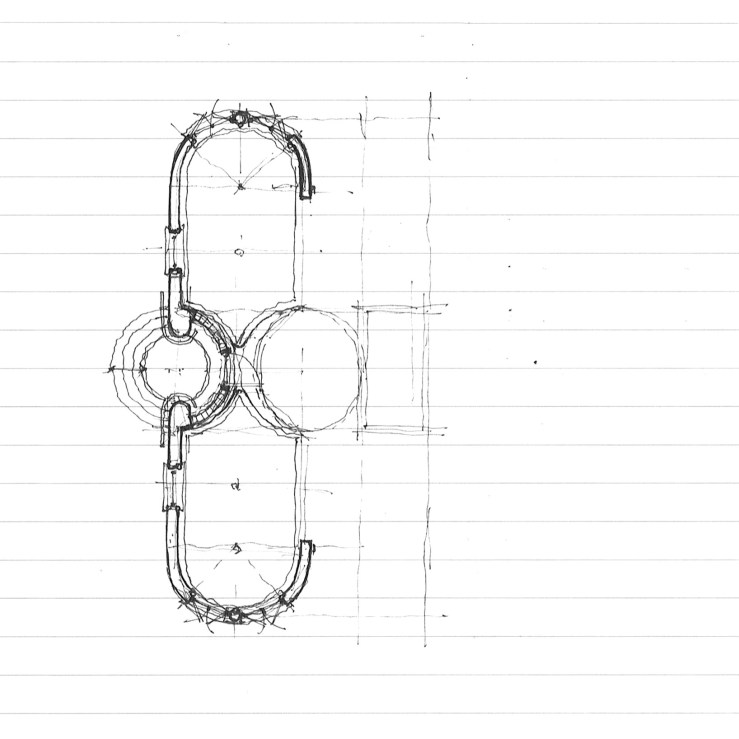
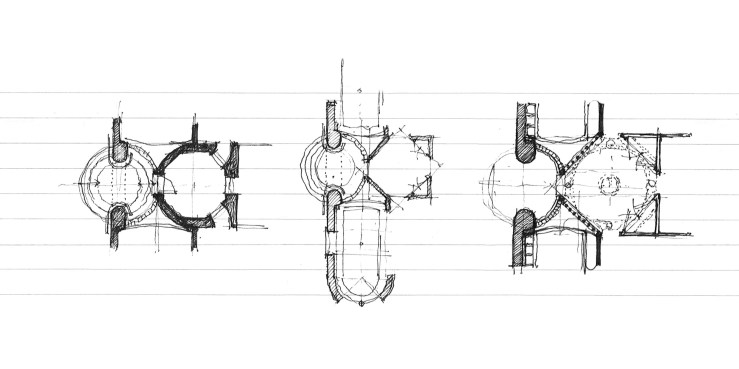


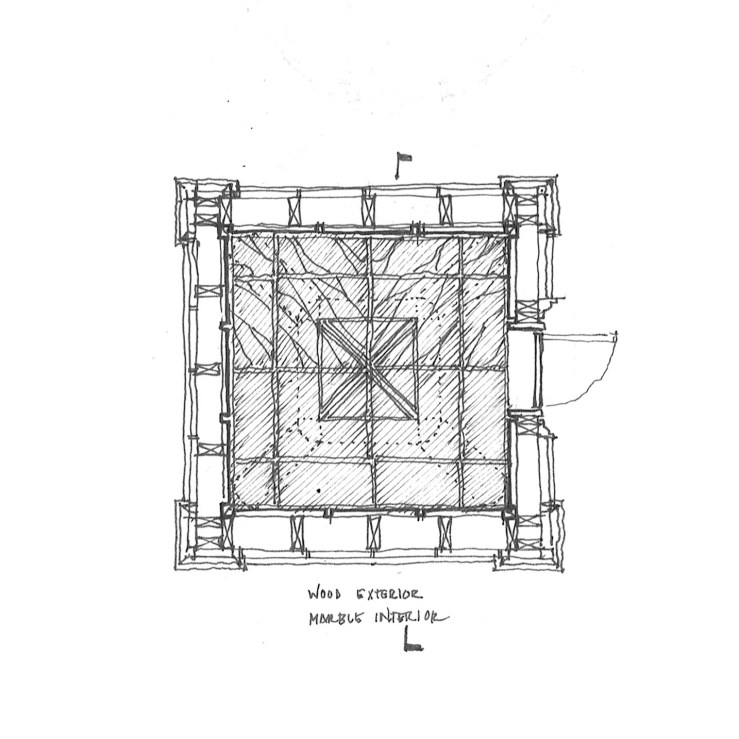
This room comes from a very unlikely place – a simply detailed restroom at Richard Meier’s Getty Center. A heavily veined dark grey marble floor stood in nice contrast to the Carrara marble wainscotting and white plaster walls above. That’s where things started. This version panels out the Carrara walls on the interior, topping it off with a tall conic skylight (maybe the Getty galleries?), and all of it wrapped in a Tuscan-detailed wood wrapper.
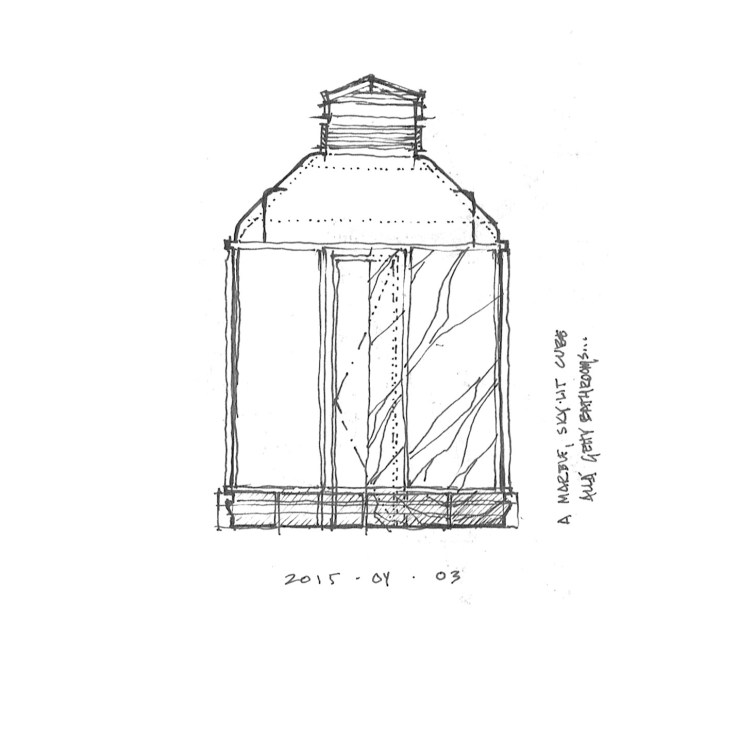

I was sketching up a bathroom for a small house renovation when I began to ask ‘four square or nine square?’. These two simple rooms are the answers to those problems. That is all.
 frame
frame 