a ranch home

ranch-house_02

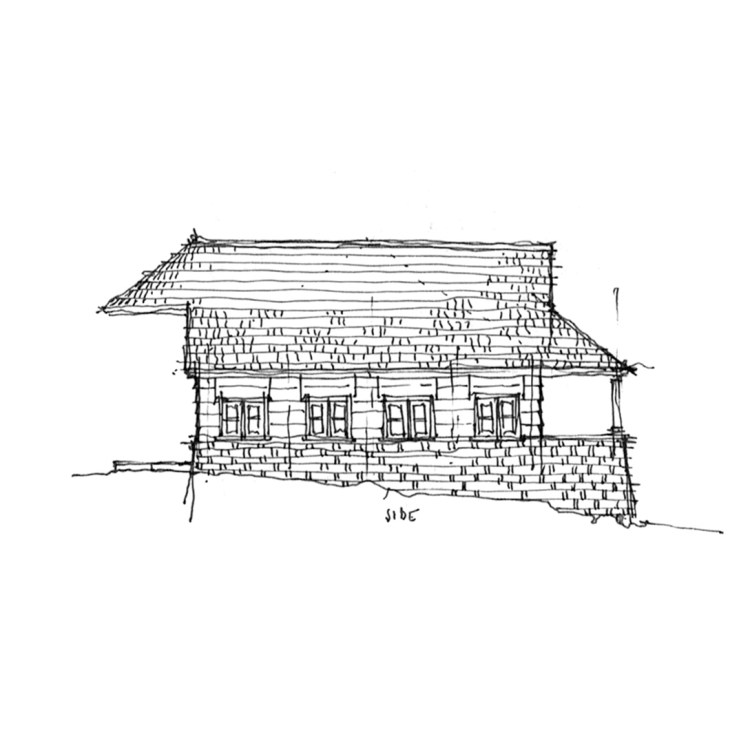
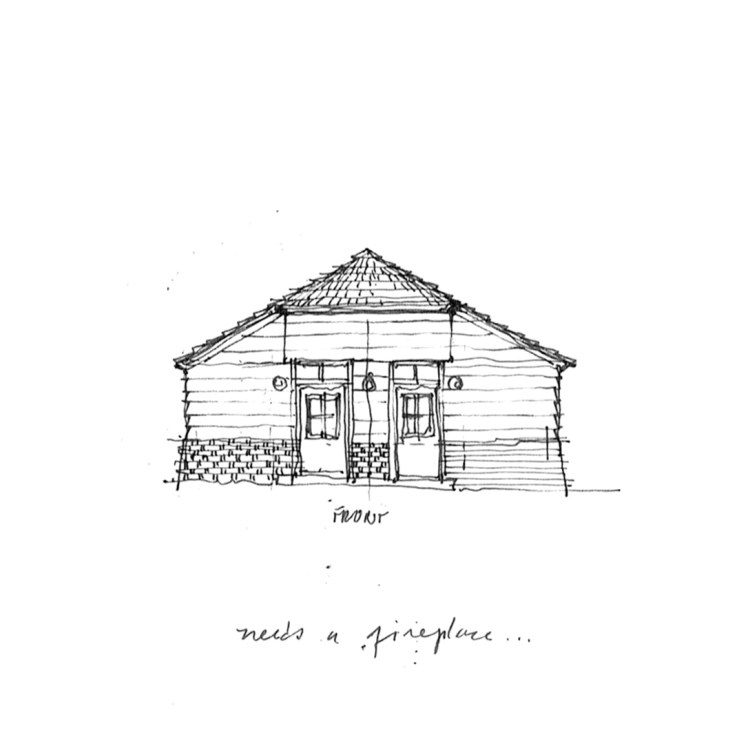
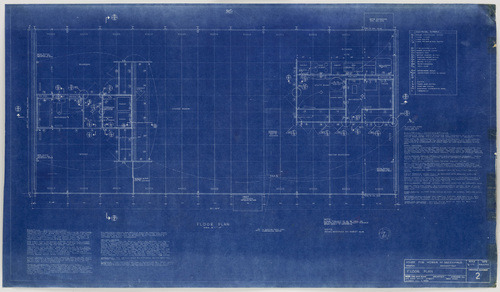
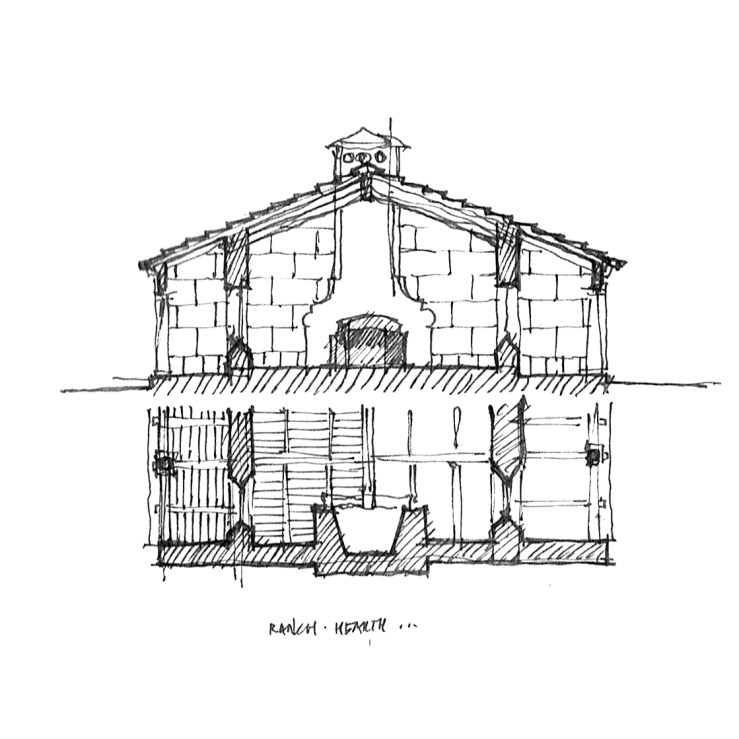
While studying for my latest licensure exam, I came across a simple section of a ranch-style home, which I couldn’t resist but take stab at.  The hearth above is the result of that drawing, and the plans below are the further explorations thereof.  The floorplan references Mies’ linear homes of the mid 1950’s (McCormick, 1952 & Greenwald, 1955), with a linear series of kitchen, dining, and living spaces separated by casework storage and toilet units, while long porches flank full-height doors.  Because my first plan neglected to include the bathroom in particular, the bottom sketch notes how the bath, murphy bed, and storage unit works out.

ranch-house_01

ranch-house_03

porches, squares, and circles

porch-house_06

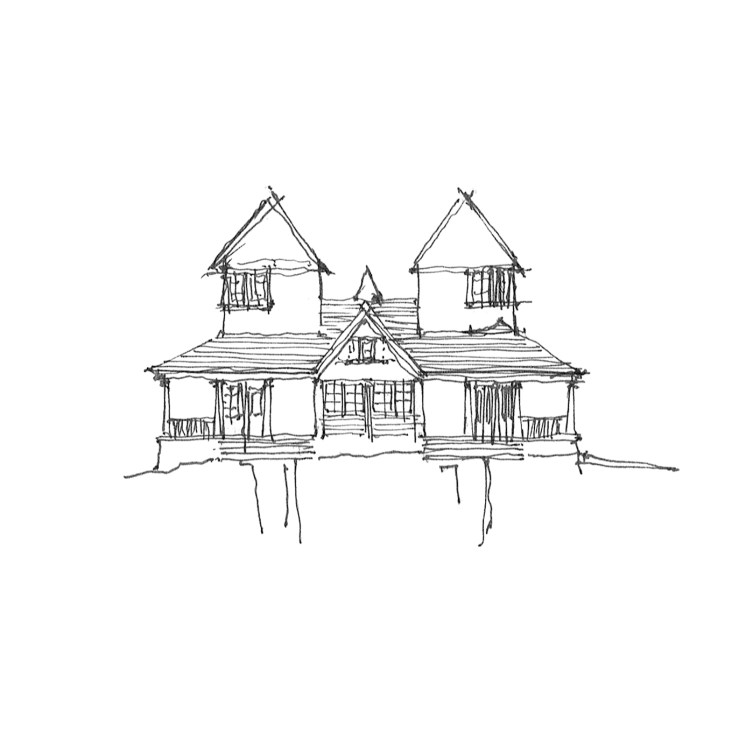
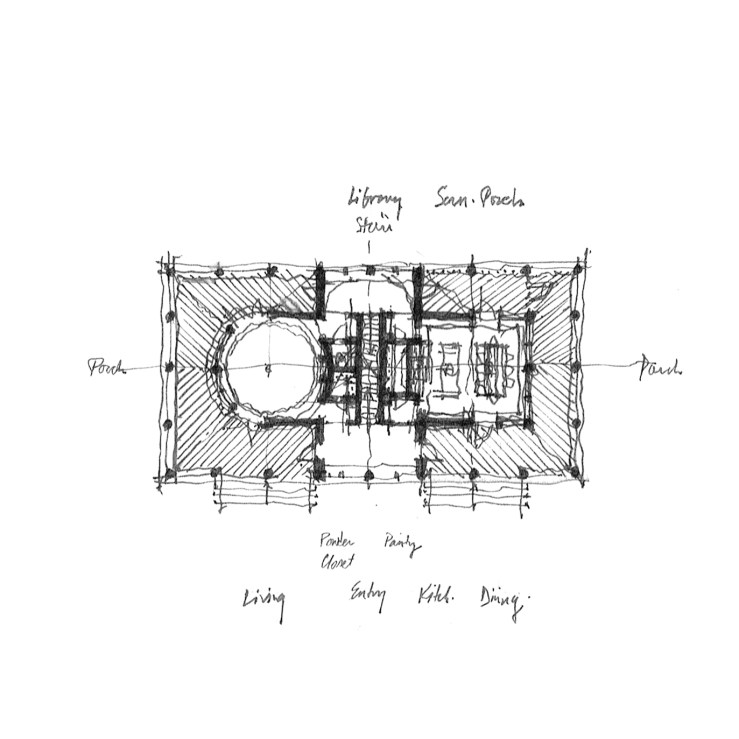
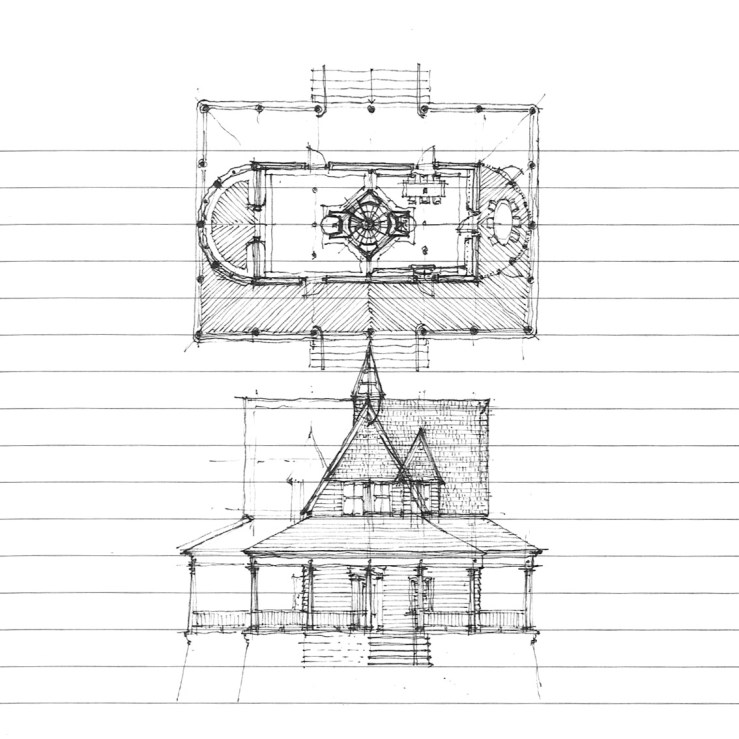
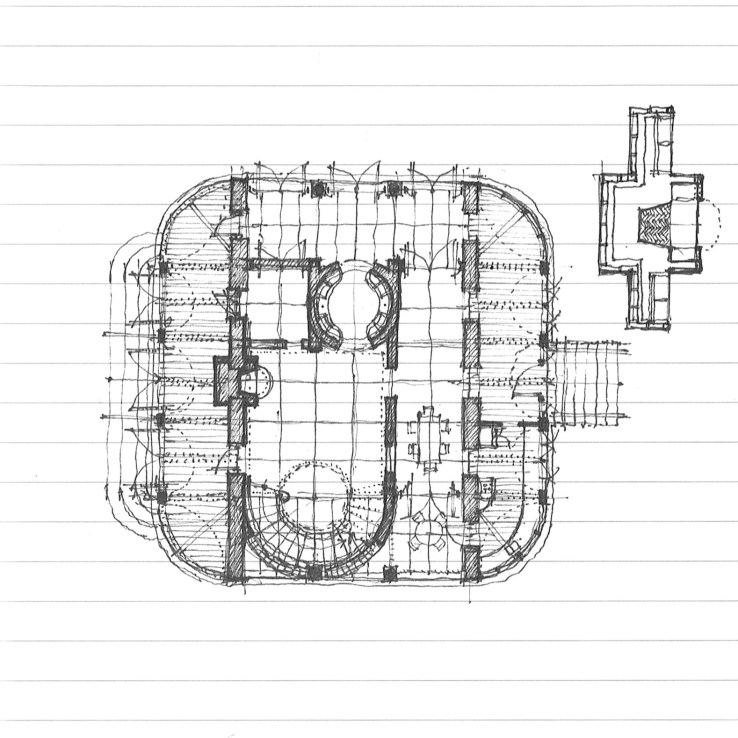
This project stems from a building I passed by every so often living in New Haven, CT.  Two or three Victorian and Colonial homes had been repurposed as a school, with one long porch wrapping all of the various buildings into one.  My proposal here places two opposite forms – one square, the other circular – against one another, united by a shared central staircase and a wrap-around porch, as one house with two identities.  The bottom elevation shows a variation, with a larger second floor and attic, but the basic idea is lost. . .

porch-house_04

porch-house_05

porch-house_07


a courtyard in the desert

desert-courtyard_01

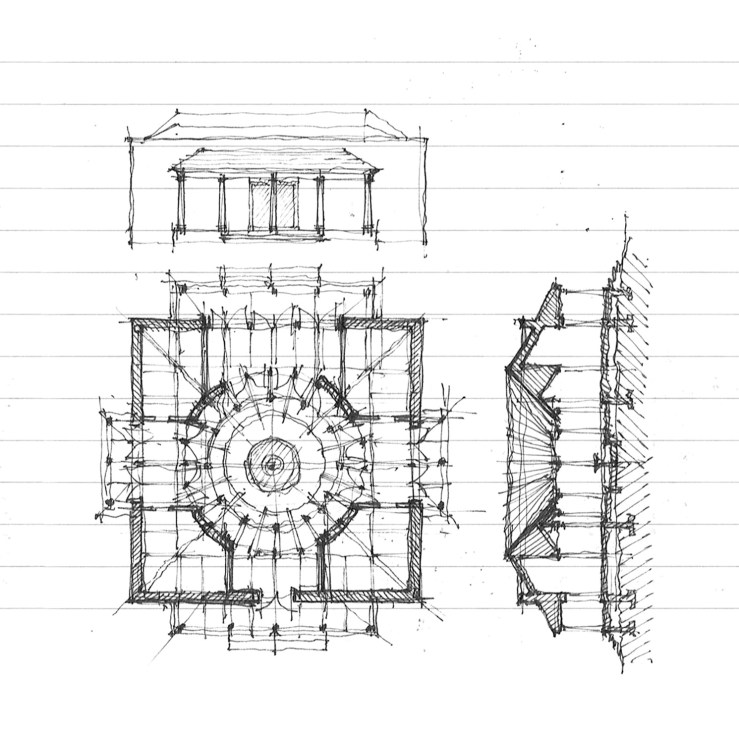
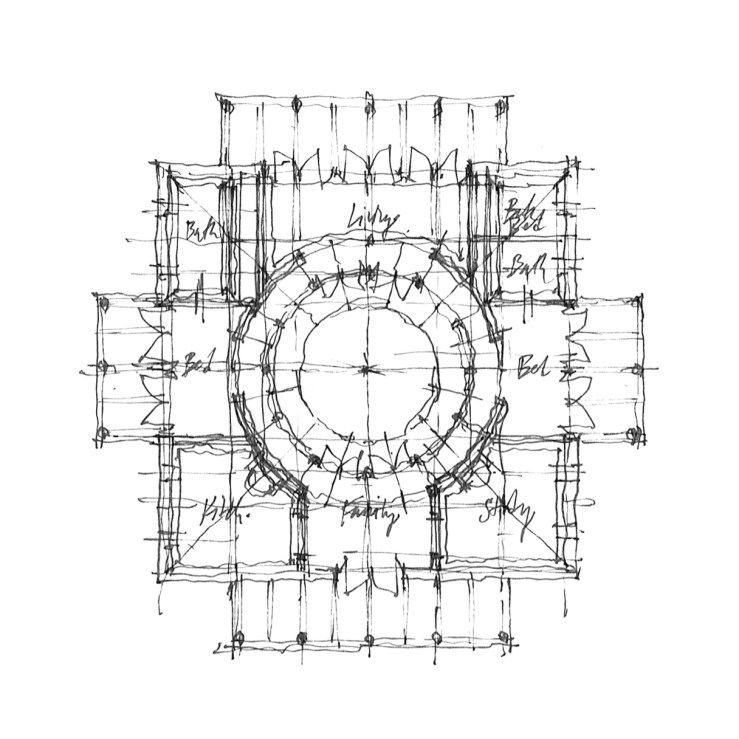
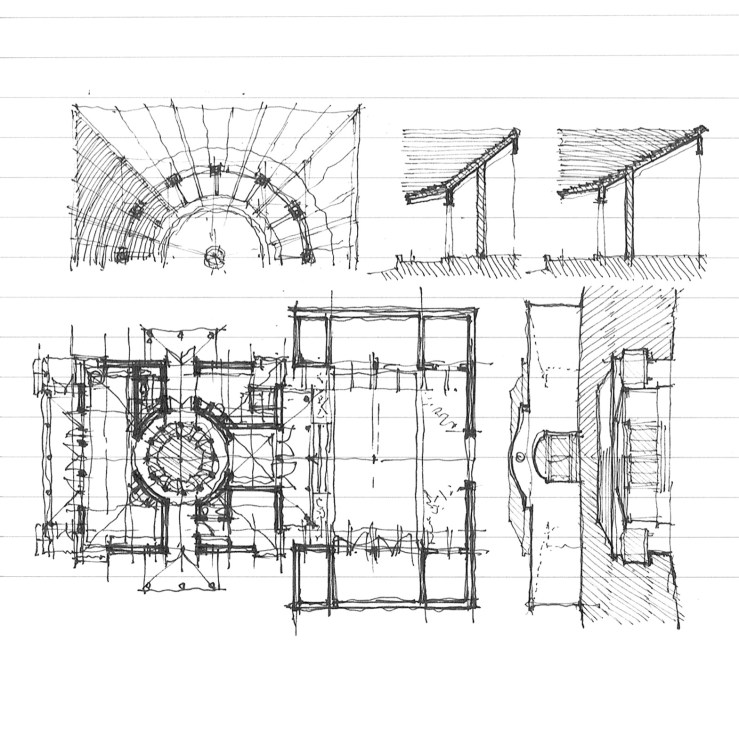
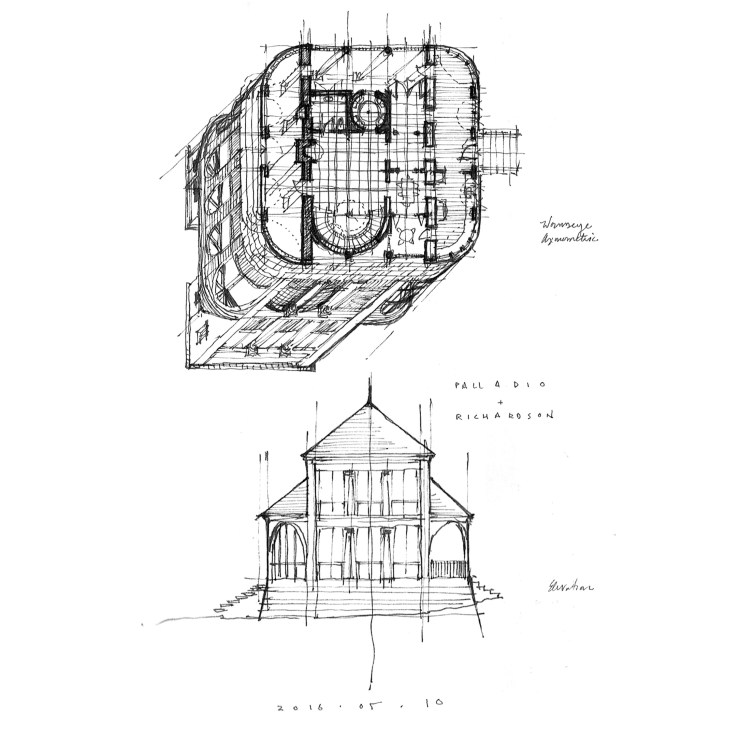
My brother-in-law lives in a small military town in the Mojave desert, and when he mentioned buying cheap land and building something, naturally I got thinking.  Courtyard typologies sprang to mind, perhaps met with elements of pueblo adobe rectangular masses and carved wood porches.  My plan offers a square adobe mass punctured with a circular courtyard and fountain at its center (evaporative cooling), and is rimmed with wood porches about to enjoy the expansive desert vistas, and to offer deep shade to any exterior openings.

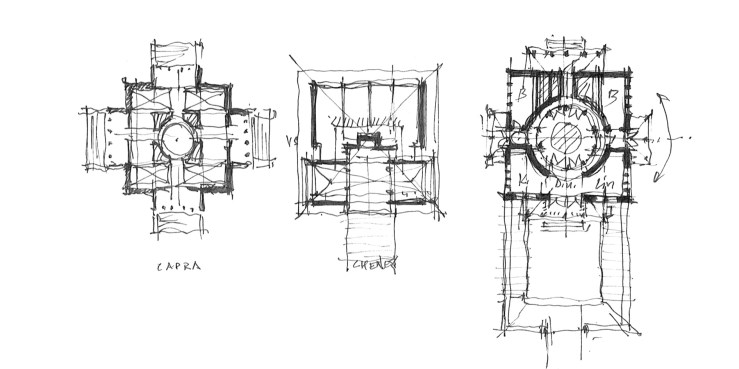
While traces of Irving Gill abound in the reductive classical-vernacular language, the plan geometries posed a small problem, reconciling the circular interior form and the division of rectangular rooms about.  I turned to Palladio’s Villa Capra (La Rotonda) for help, but also needed to situate the rooms of a modern single family residence, and thought Frank Lloyd Wright’s Cheney House might work.

desert-courtyard_02

desert-courtyard_03

desert-courtyard_04

another cabin-thing

cabin_07

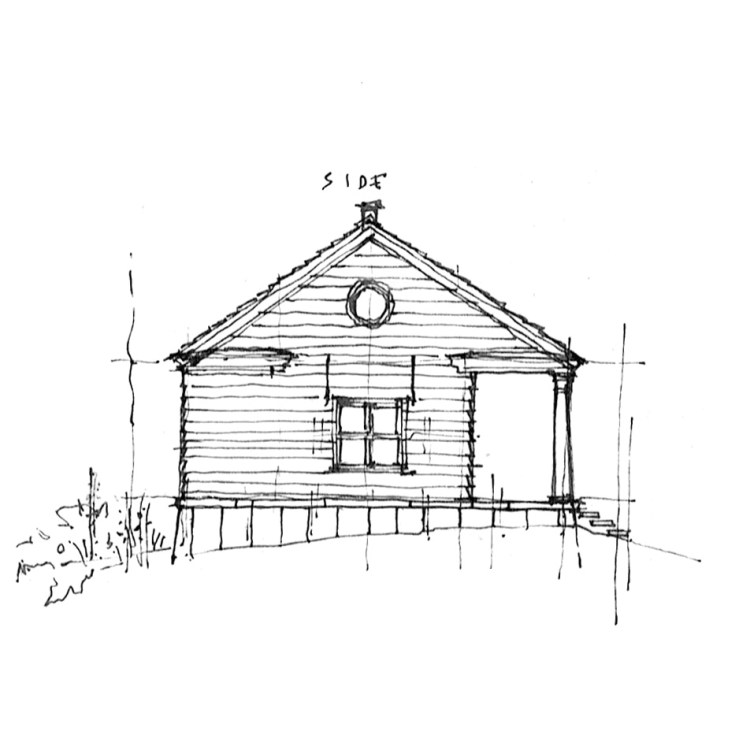
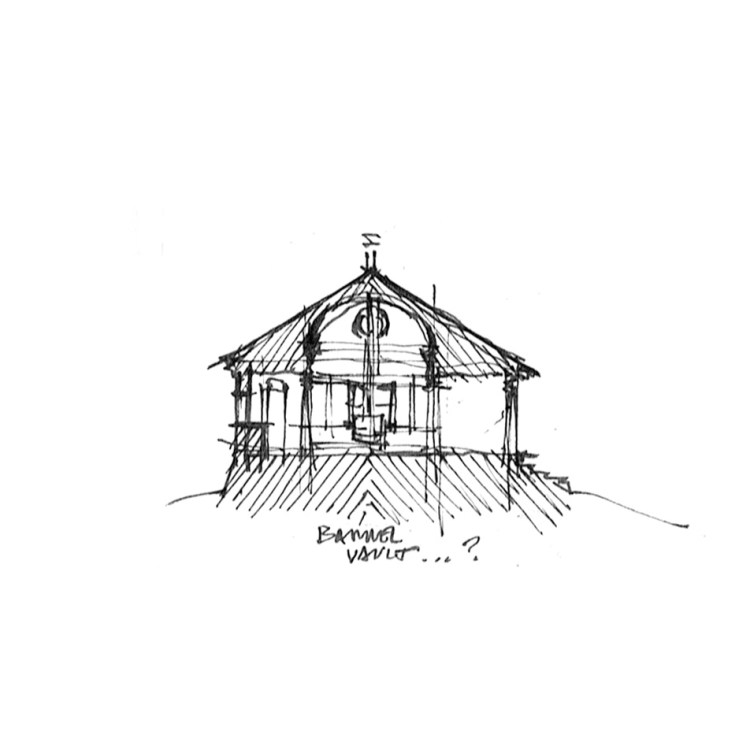
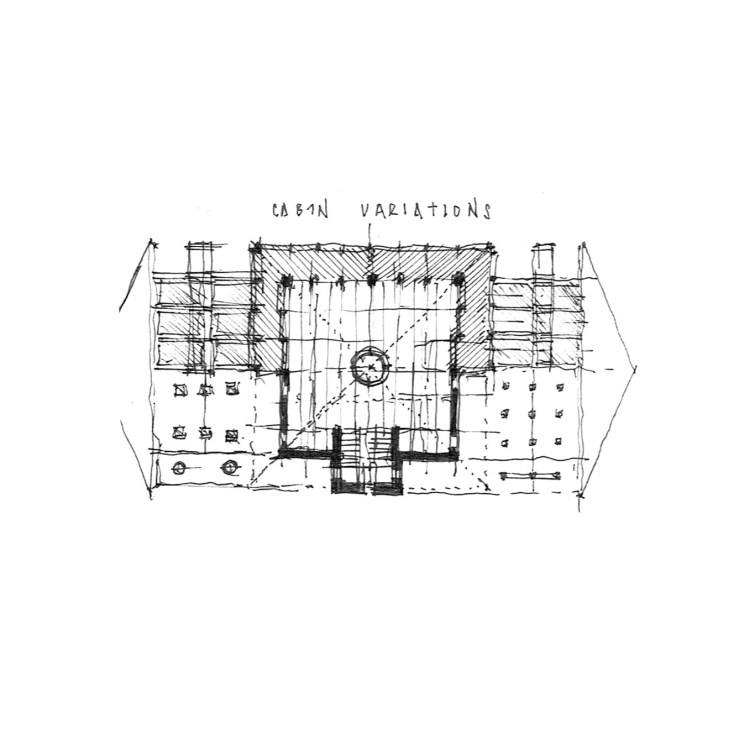
Continuing my exploration of rural agricultural form, this square cabin-like-structure plays on ideas of symmetry, complete and incomplete form, nine-square and four-square planning, all within the guise of simple vernacular architecture.  The side elevation was the generator, with an overall symmetrical gable, infilled below with a colonnade on one end, a blank wall on the other, and a large picture window on center.  The plan operates between the three bays of this side elevation and four running perpendicular, with a long vaulted living-sleeping room flanked by the porch-colonnade on one end and a long kitchen-toilet-service gallery opposite.  A study of potentially running a barrel vaulted ceiling the length of the main living hall is at the bottom.

cabin_08

cabin_09

cabin_10

cabin_11

a primitive hut

hut_01

Or not.  Maybe just a hut then.  A four-square hut.  With a porch on one side and a matching sleeping alcove on the other.  And a single wood stove.  A small kitchenette as well.  And plenty of bookshelves.  Or maybe a different roof altogether in place of the four gables?  An inverted butterfly perhaps?  I think so.  Much more interesting than the bucolic nonchalance of that first drawing.


hut_03

hut_02

a richardsonian cabin

cabin_03

Continuing last week‘s Californian agricultural experiments, this small structure (which I’m titling a ‘cabin’, but really is a programless form) is square in plan with a pitched roof running in one direction, terminating in a dutch gable at the far end over a colonnaded porch and a large circular window in the gable face, and cantilevering over the entry portico, where two identical doors reference the four-square floor plan.  The language owes much to Richardson, filtered through the vernacular, with a shingle roof, clapboard walls, and a flemish bond brick base.

cabin_04

cabin_05

cabin_06

a house with a hall

hall-house_01

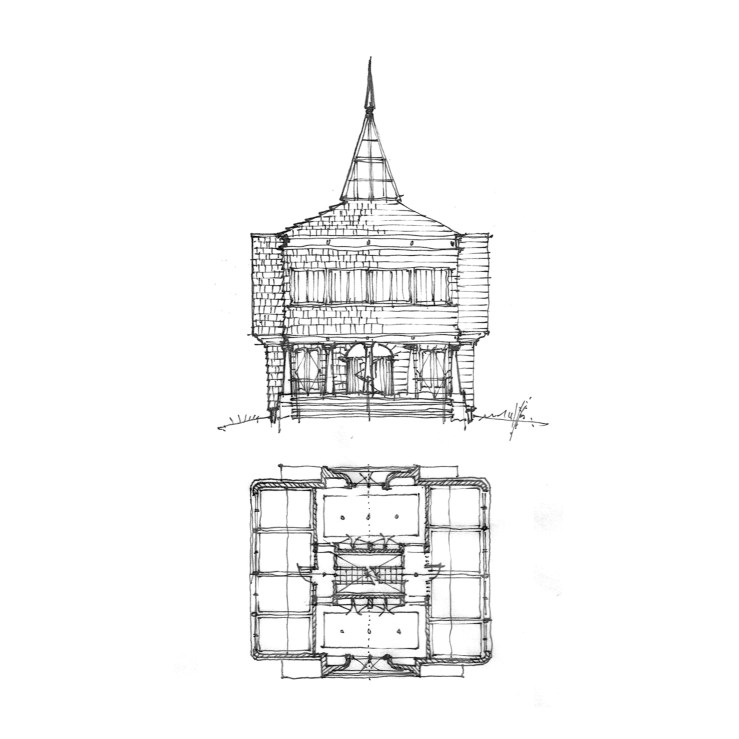
Plan as generator (aka, ‘floor plan comes first, elevations second’), with a long hallway bisecting a semi-cubic volume, colonnades at either end.  Now a staircase – centered on the hallway, one half of the house takes a large ballroom, while the other is bisected into two smaller drawing rooms. The second floor, two long, windowed rooms sit over the porches, while a tall pyramidal skylight tops the stair hall.

hall-house_02

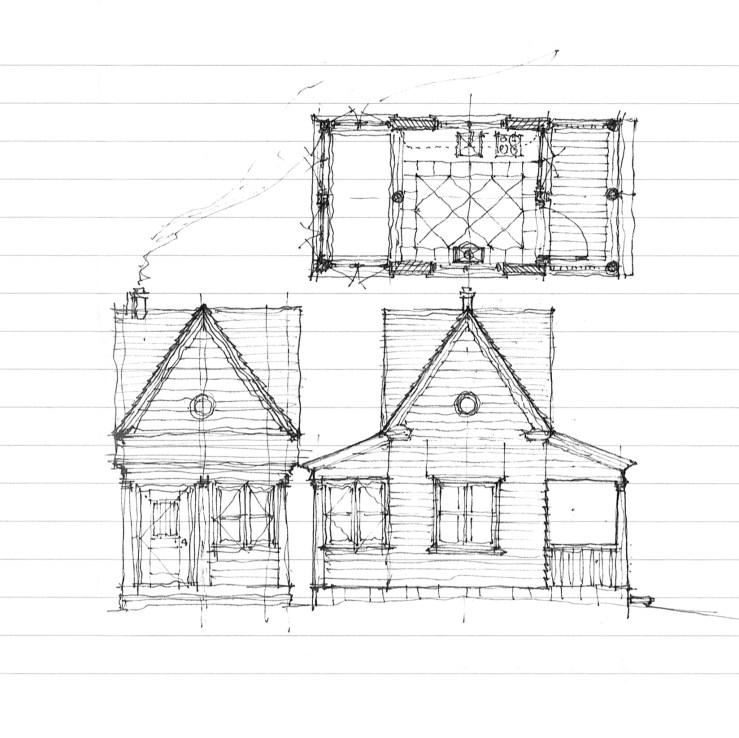
a porch house

PORCH-HOUSE_01

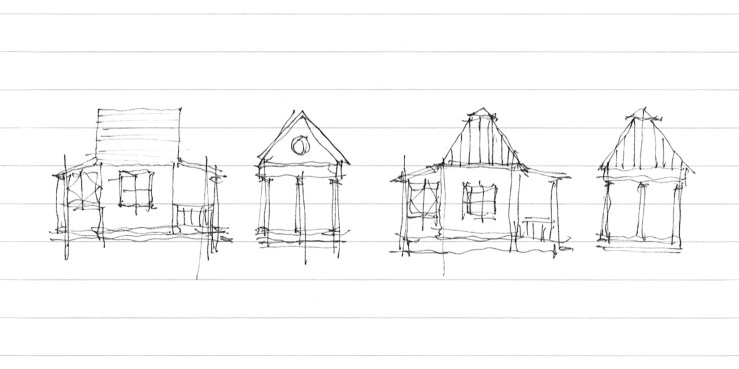
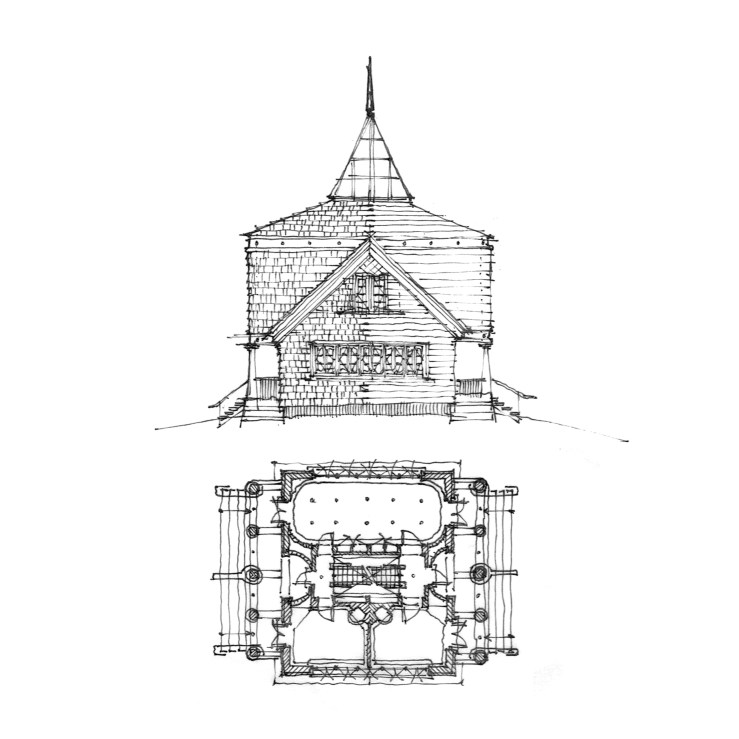
The parti is simple: two squares topped with a tall gable, surrounded by a wrap-around porch.  A skylit stair occupies the very center, flanked by hearths.  A semi-circular screened porch fills in one end, while an enclosed patio becomes a library at the other.

PORCH-HOUSE_02

PORCH-HOUSE_03

cabins & barns

CABIN_01

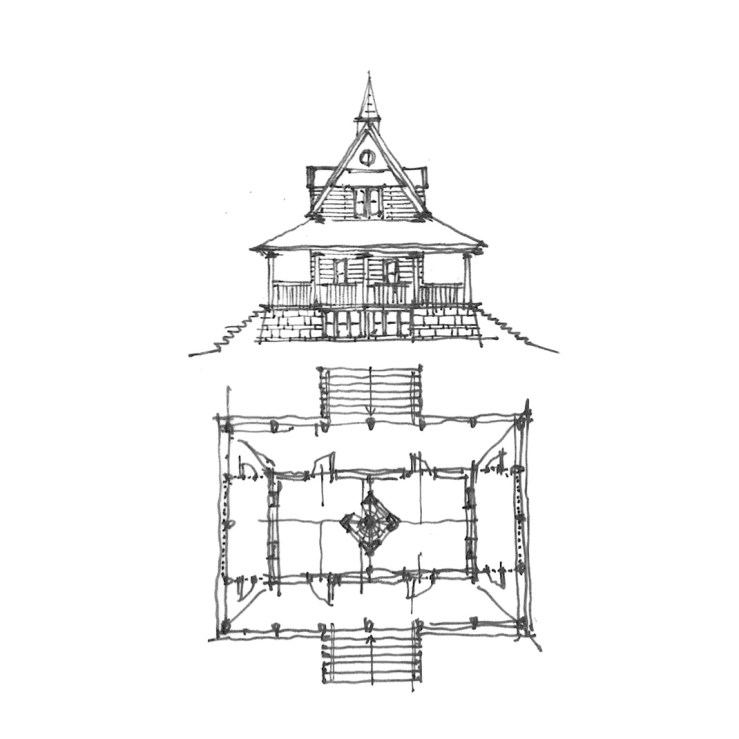
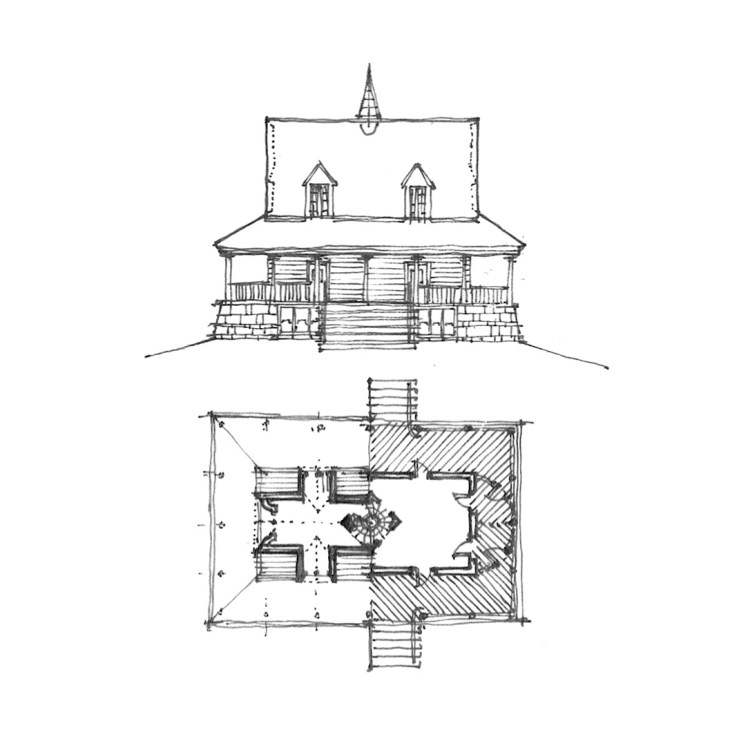
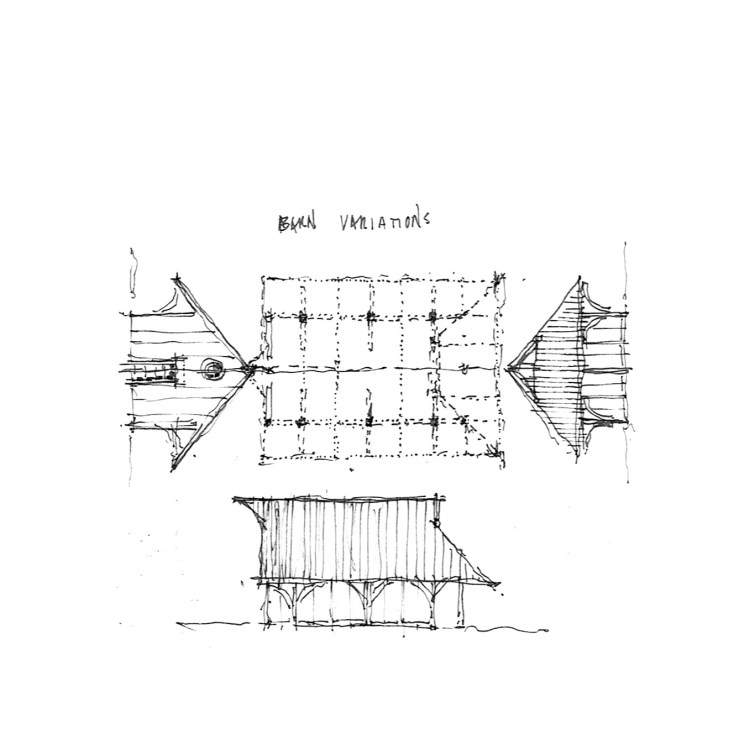
Following up on two themes from my northward journey, I’m giving you a look into two ideas, both alike in simplicity.  The Coast: a cabin, square with a large hip roof over a wrap-around porch, and elevations that need a good fleshing out.  Farmland: a barn, with deep eaves on three sides, enclosed in glass behind.

BARN_01

shingles and palladio


VILLA_06

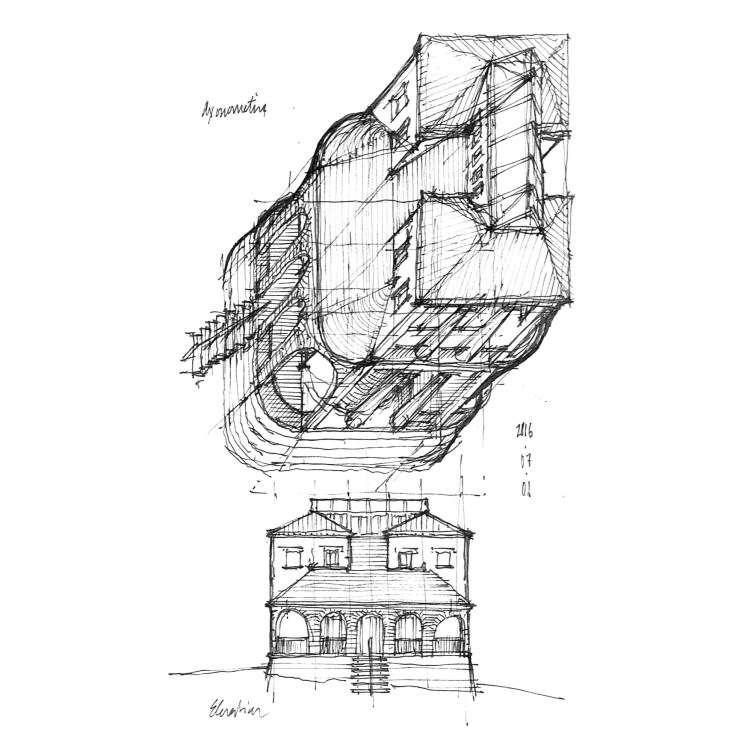
A Palladian villa facade on the primary axis is countered with long, low shingled porches on the transverse, which in a twist of irony is where the entry is located.  Behind a symmetrical elevation of colonnades and porticoes, the building takes a more free spirit – one porch is exterior, the other ‘enclosed’, a glass-wrapped stair hall occupies two of three bays of a frontal portico, while the left over bay is screened in.  The shingled roofs of the porches extend to meet a long skylit lightwell, cutting the central Palladian volume in twain.

VILLA_05

VILLA_07