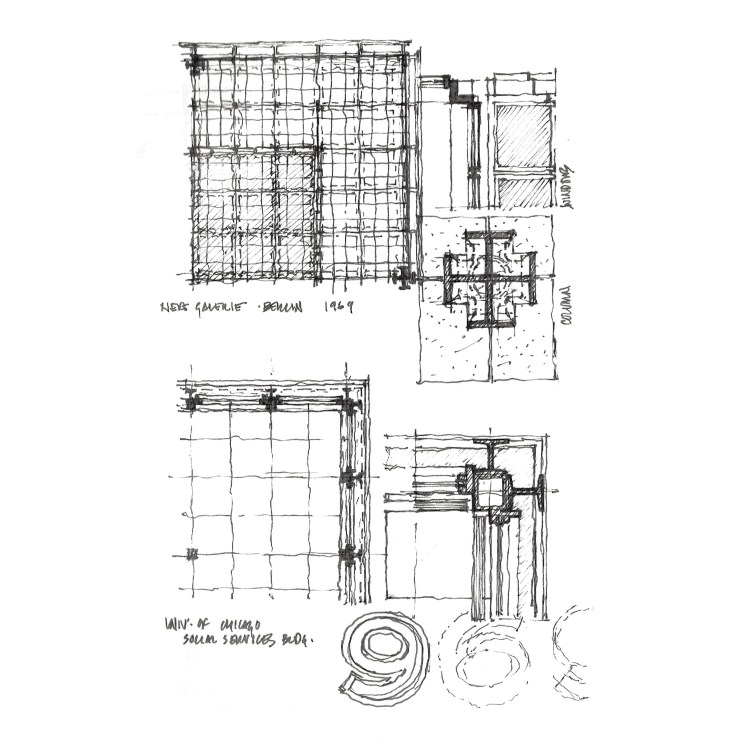
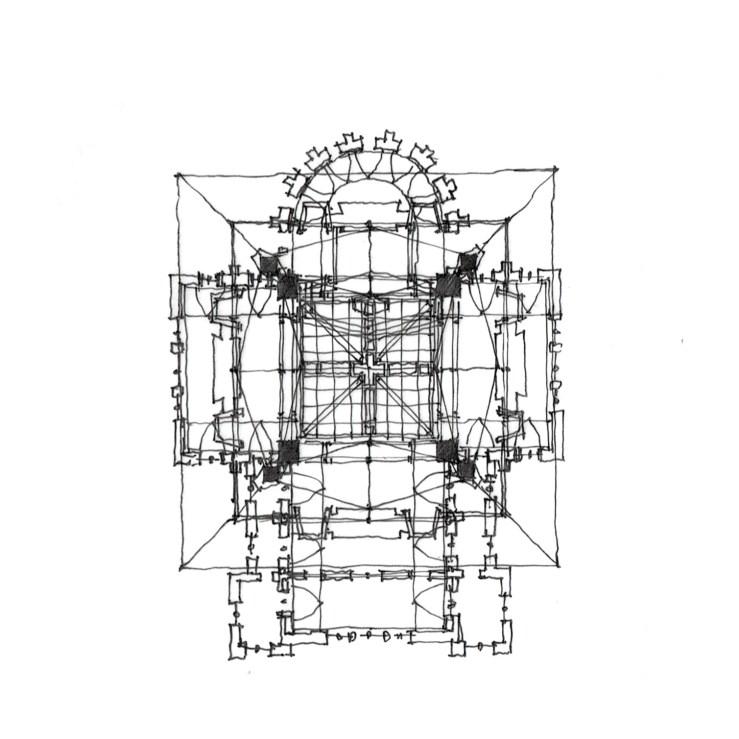
mies at iit

MIES_13

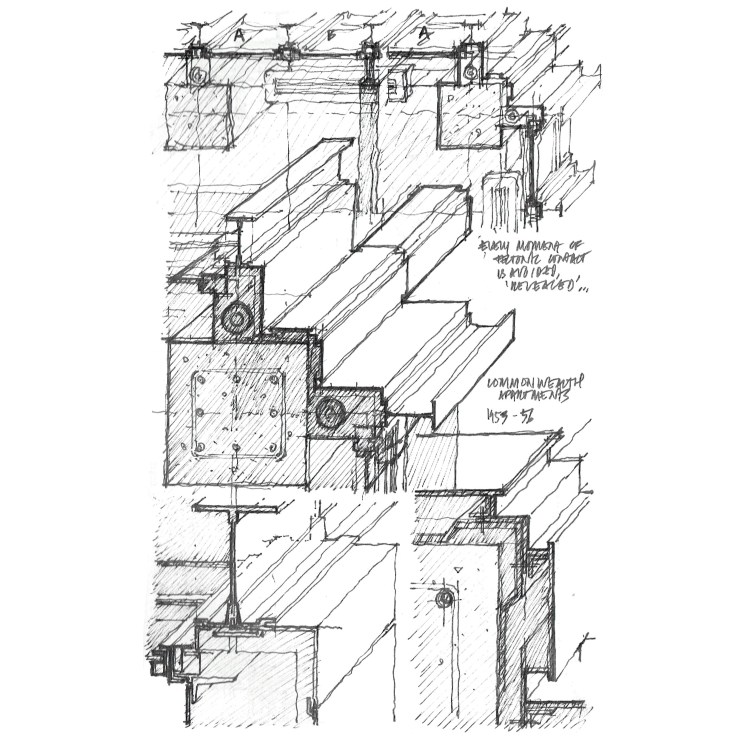
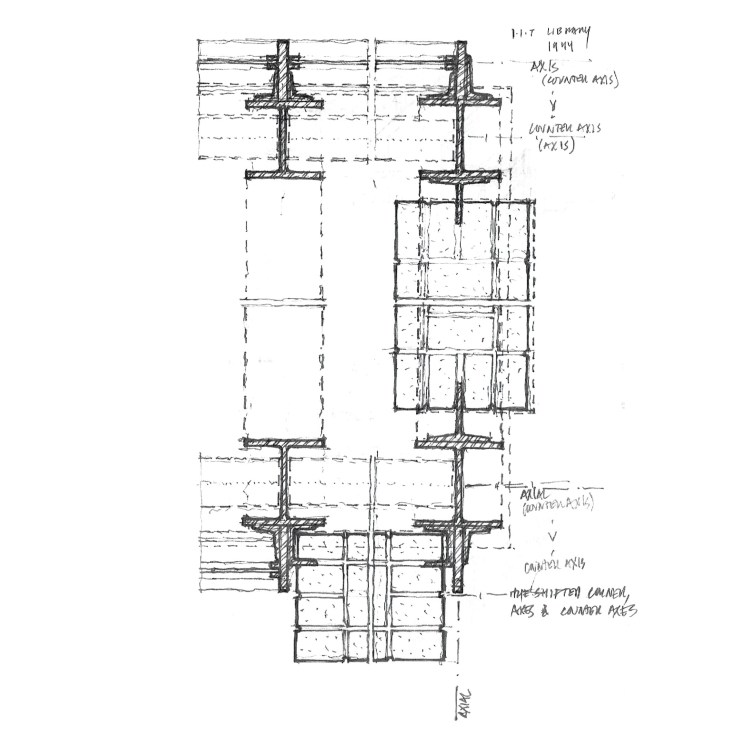
In contrast to yesterday’s post, I’m featuring Mies’ earliest work in the United States (and his first experimentation with the ‘revealed’ corner, where the exterior envelope is set off of the structural grid), classrooms at IIT, for which Mies also completed the masterplan.  Here, the frame is still made up of wide flange steel sections, but with buff brick infill panels.  The window systems are still solid steel bars welded together – the thermal break found in the aluminum and bronze curtainwall systems was still a long way off.

MIES_14MIES_12MIES_15

modules, mullions, and mies

MIES_08

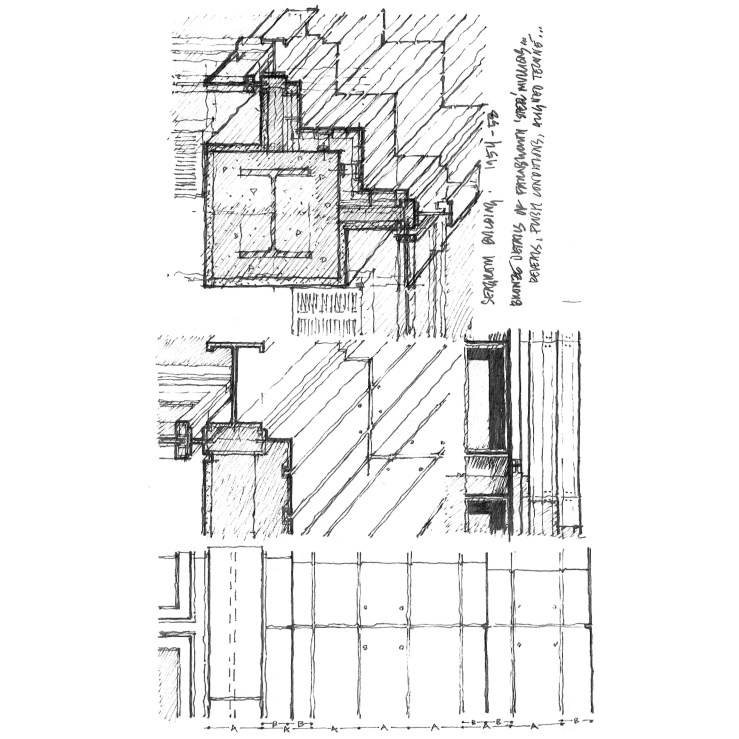
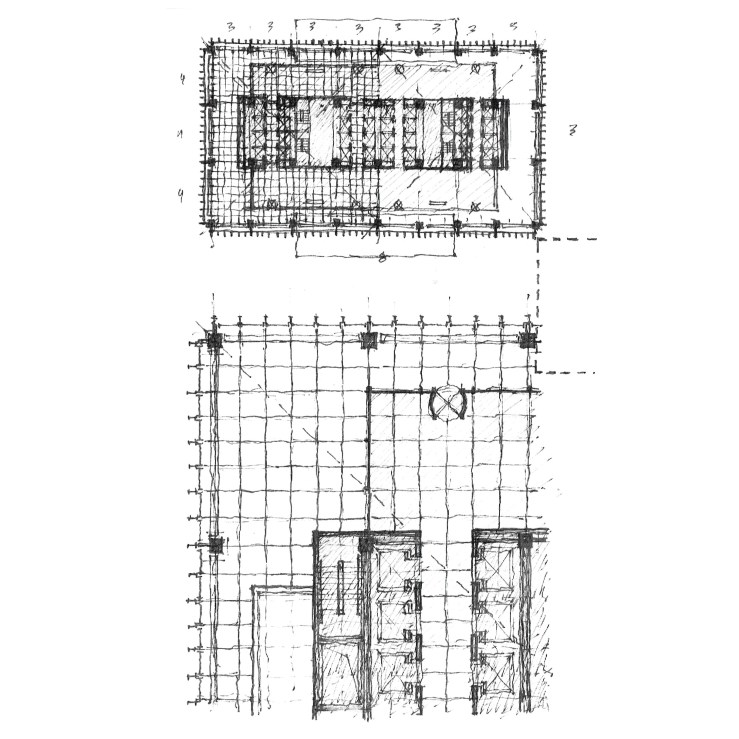
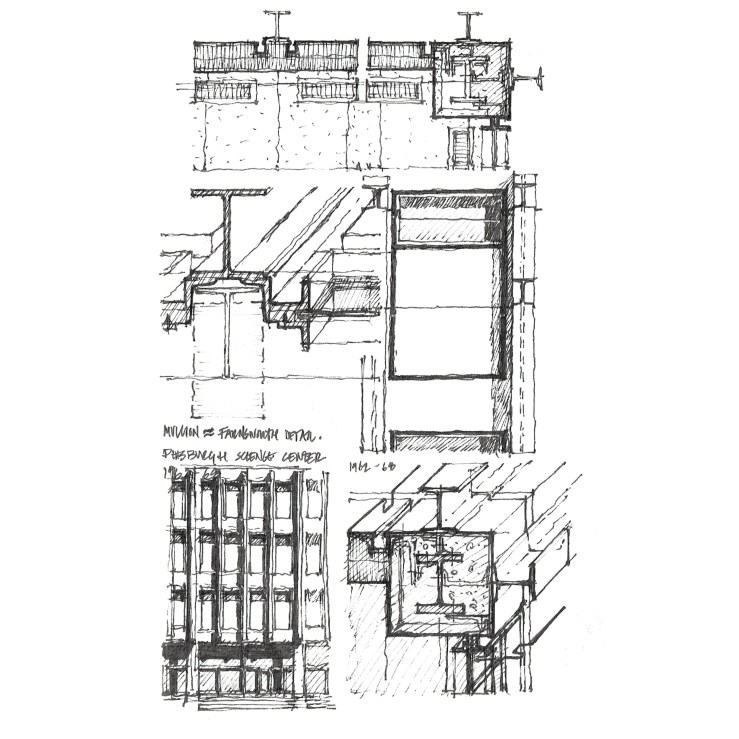
Today, I’m featuring the pinnacle of Mies’ urban tower typologies: the Seagram Building of 1958.  The wide flange steel mullions on the Lake Shore Drive apartments are rendered in custom bronze extrusions, with thermal breaks at the windows, but all appearing as though they were constructed of arc-welded steel sections (as at the Farnsworth House).  The glass curtainwall is brought proud of the structural column line, allowing the windows to be consistently sized throughout.  A contemporaneous example in Toronto follows:

MIES_10MIES_09

mies-a-palooza

MIES_07

While working in Chicago, I became painfully aware of how little I actually understood the mature work of Mies van der Rohe, especially with regard to his command of modules, structural regularity, and the finesse of his details.  So I drew.  I drew every one of his corners I could get my hands on – from the early simplicity of the Lake Shore Drive Apartments to the apex of complexity at the Seagram Building only some 10 years later.  Over the next few days I’ll be overwhelming you with these drawings.  Enjoy.

MIES_03MIES_11

gas station, classical var.

GAS-STATION_01

We all know what gas stations look like here in America – banal.  Yet, the same ‘Mid-Century’ Modernism that is so popular right now also tidied up these rather pedestrian buildings as well.  Mies van der Rohe even tried his hand at one in Montreal as part of a larger development.  However, decades of neglect and changing cultural tastes have obscured the once minimal elegance of these structures.  I drove past an example in Santa Monica that had been covered up in all the various and cheap appliques of ‘Mediterranean’ style.  If Modernism could love this typology, could good Classicism?  Behold, the fruits of such thinking – Doric porticos and pyramidal skylights.