a house with a veranda

PORTICO-HOUSE_04

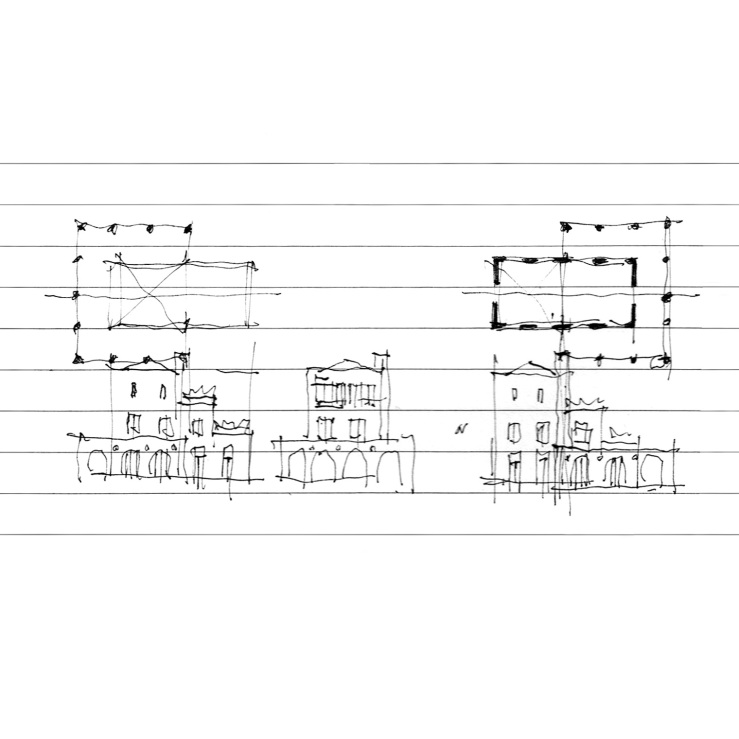
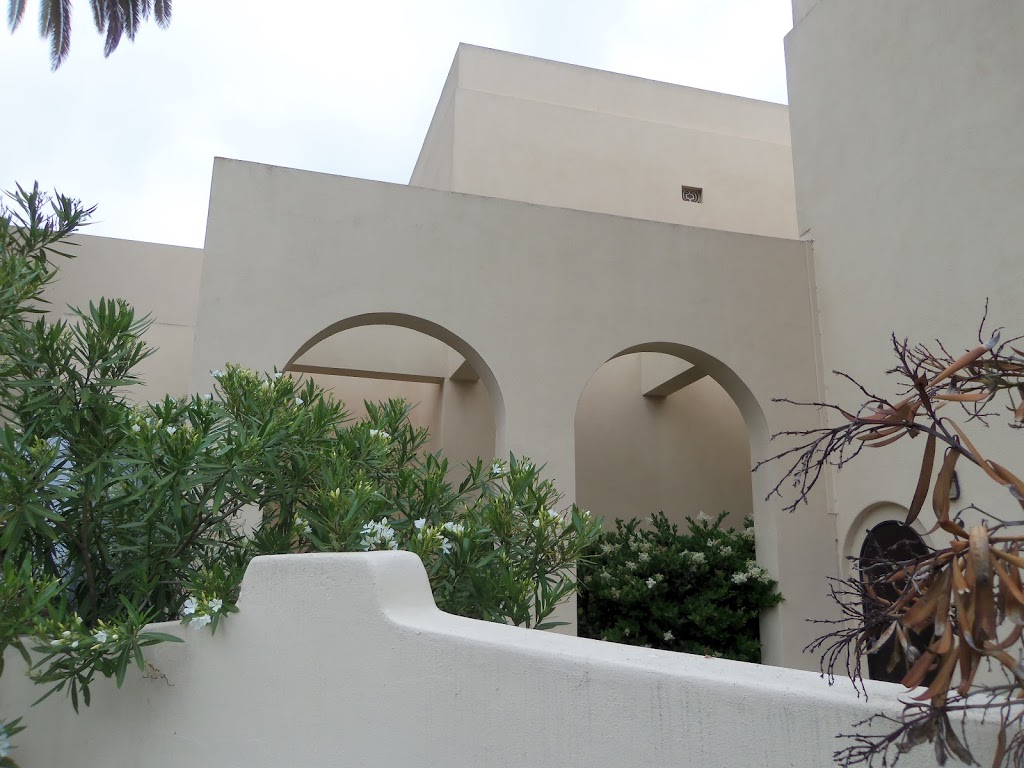
To celebrate my birthday, my wife took me to see over 20 of Irving Gill’s extant works.  I’ve always appreciated this seminal figure, and his lasting impact upon Southern California’s architectural development, but had never taken it upon myself to actually seek out his work in person.  Lesson learned.  And as much as I appreciate precedent study, that is the representation of existing works through drawing, I believe that history must be operative – that is, we must look to how history can work for us today.  Not only what we can learn from it, but what we can do with it.

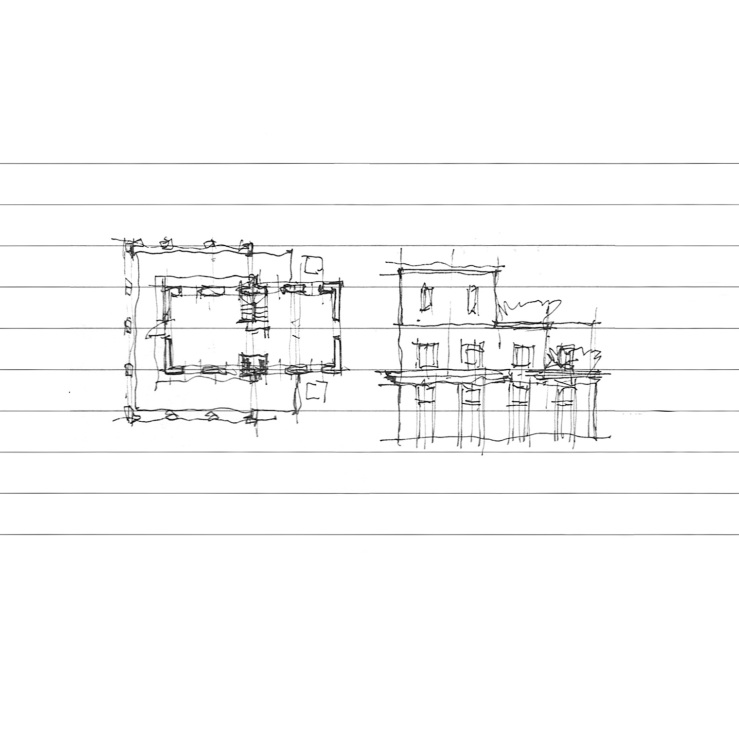
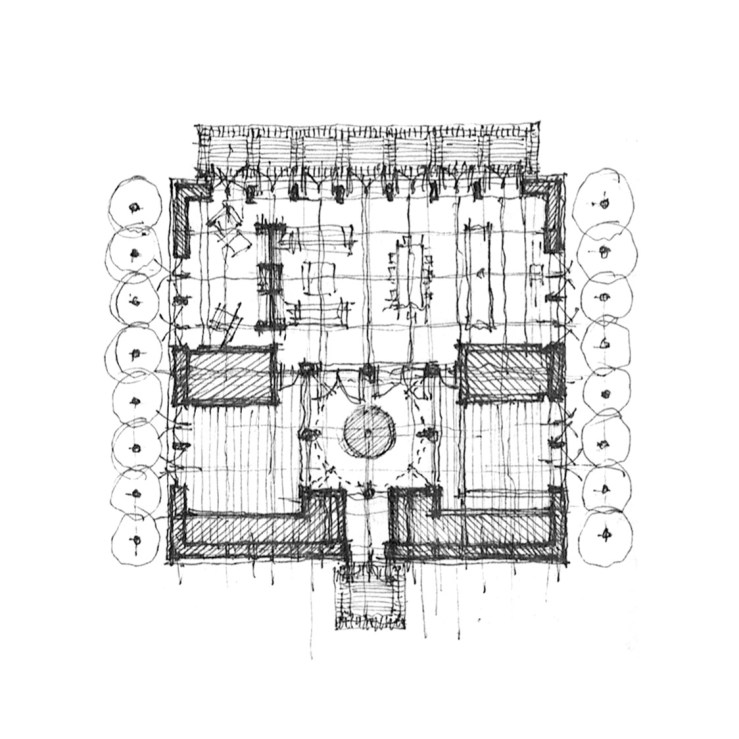
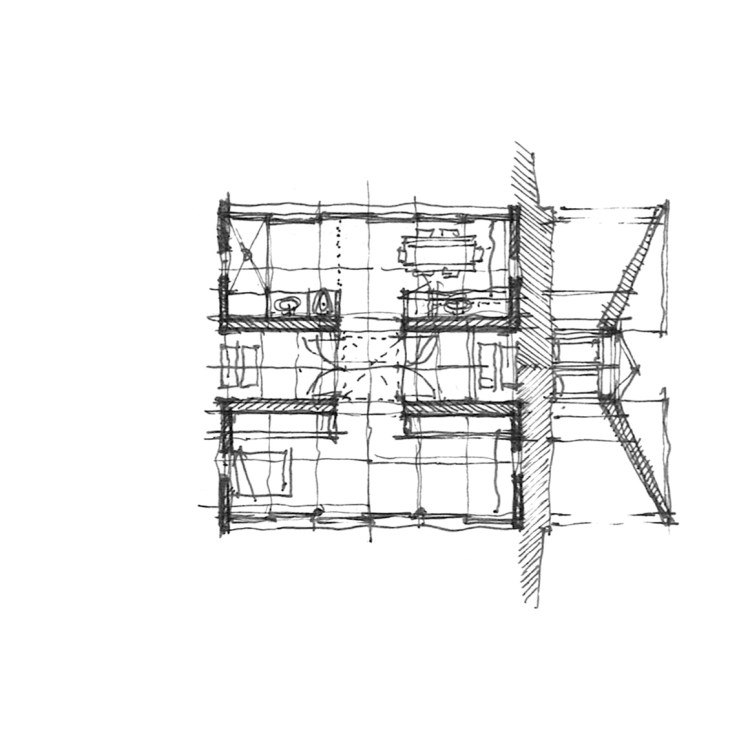
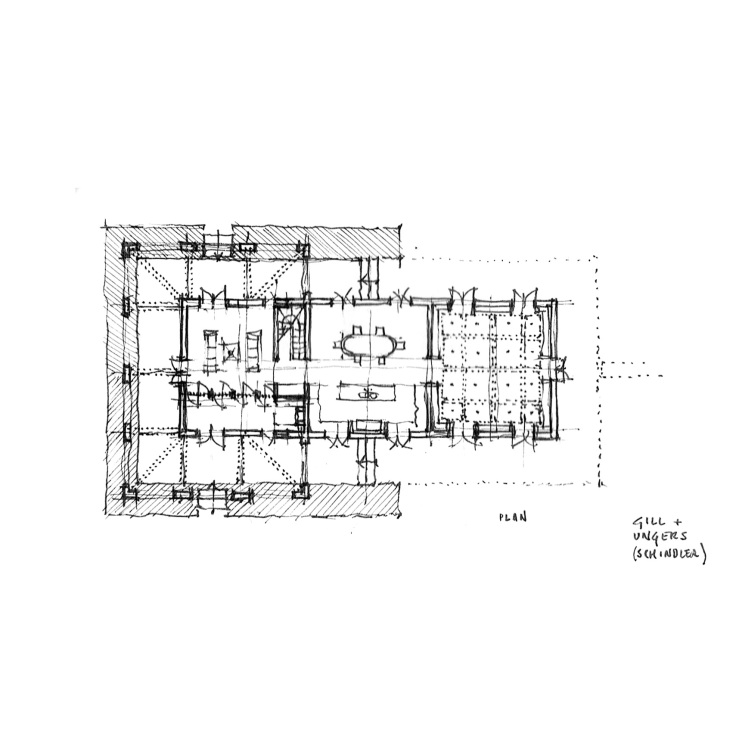
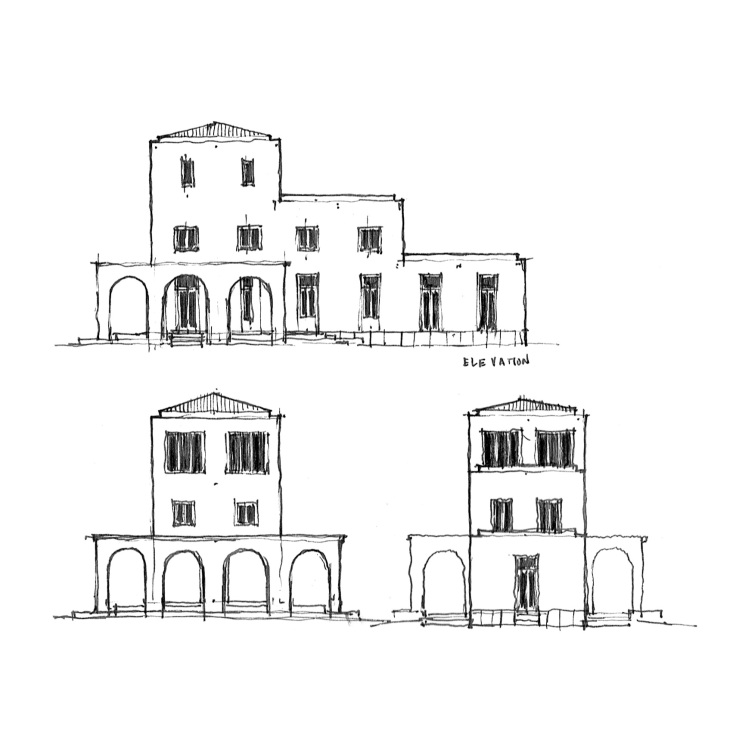
And with that introduction, I give you a small house, three squares in plan, stepped in section, cubic in volume.  The articulation of the volumes is typical Gill, with an arcade wrapping the a portion of the ground floor as a screen, yet open to the air above (quoting Gill’s Bishop’s School in La Jolla).  The remainder of the details are taken from Ungers, with some Schindler-esque diagonal planning.
PORTICO-HOUSE_03

PORTICO-HOUSE_01

PORTICO-HOUSE_02

a garden home

GARDEN-HOUSE_01

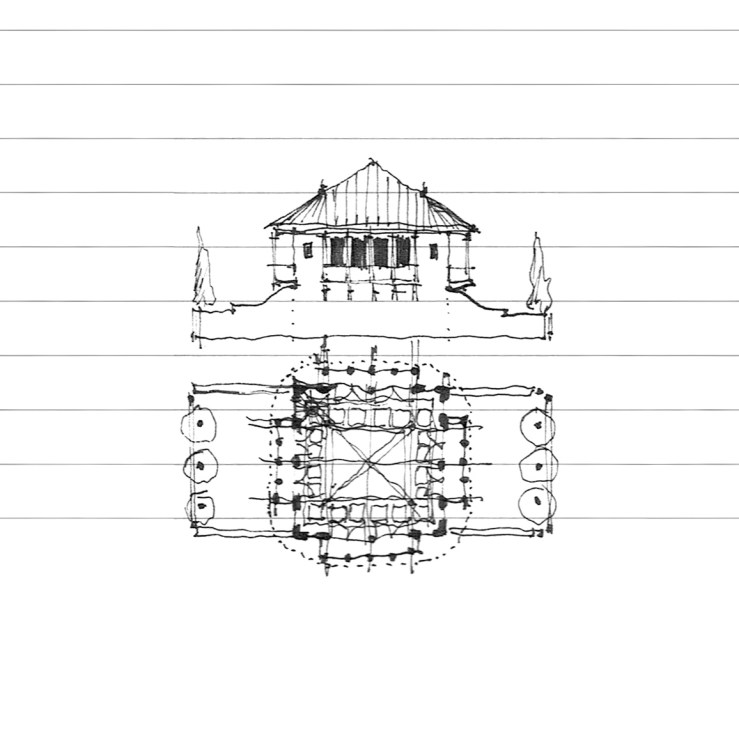
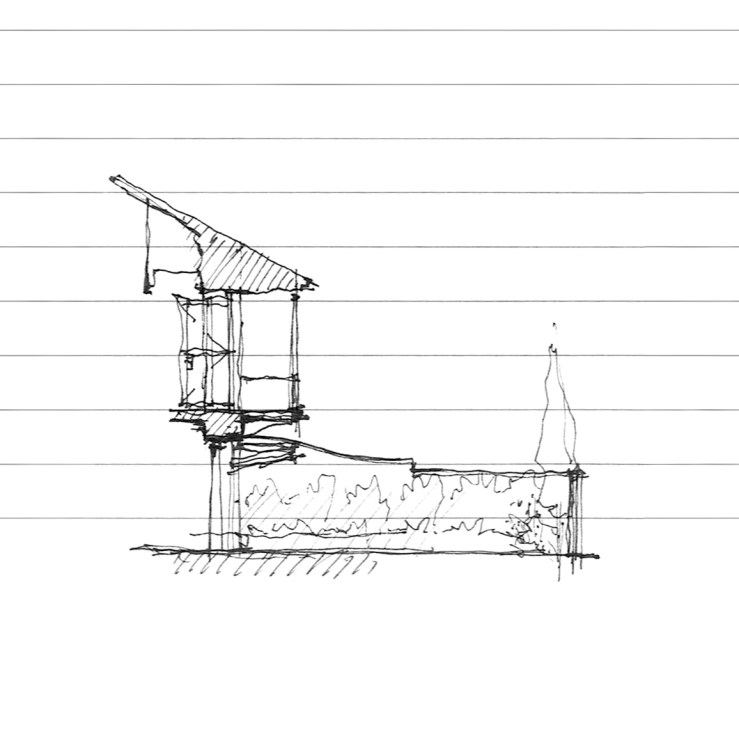
A square volume set upon two long, cyma-ed walls, enclosing one garden per side, with deep eaves at the hip roof, and hung metal balconies at the second floor.  The ground floor walls bi-fold upward, to offer complete movement between the interior and the enclosed gardens.  Tall cypresses and vine-covered lattices complete the garden walls at either end.  I really should flesh this one out a bit more, methinks.

GARDEN-HOUSE_02


a longhouse

LONGHOUSE_01

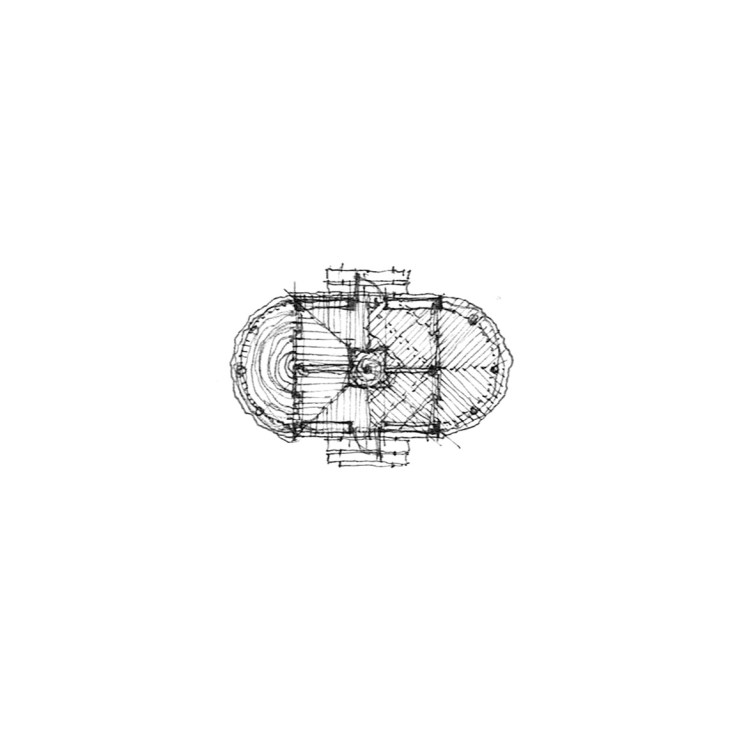
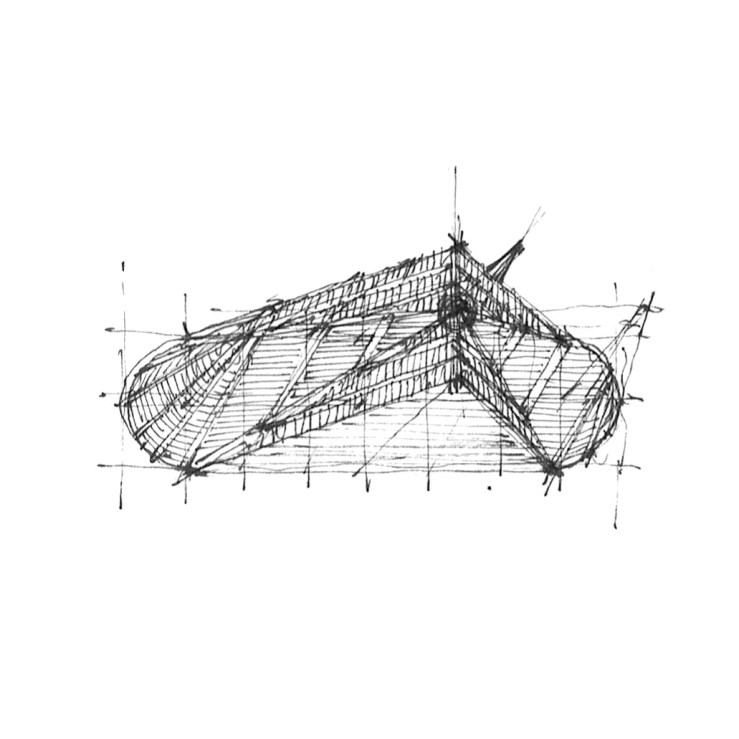
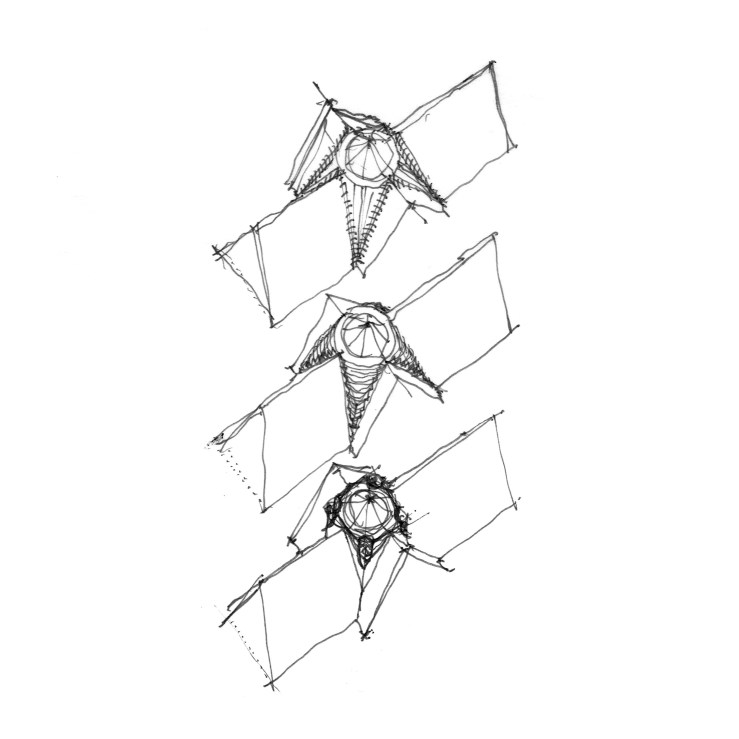
Maybe today’s project is not a longhouse perse, but definitely a domestic form that is quite elongated, with long solid brick gabled walls making up the length of the volume, and a hipped apsoidal colonnaded porches on the ends.  I think that the roof itself would be particularly interesting, with the intersecting gables at different pitches, and a generous Rossi-inspired conical skylight.

LONGHOUSE_05

LONGHOUSE_02

LONGHOUSE_03

LONGHOUSE_04

the courtyard variations

COURTYARD-HOUSE_18

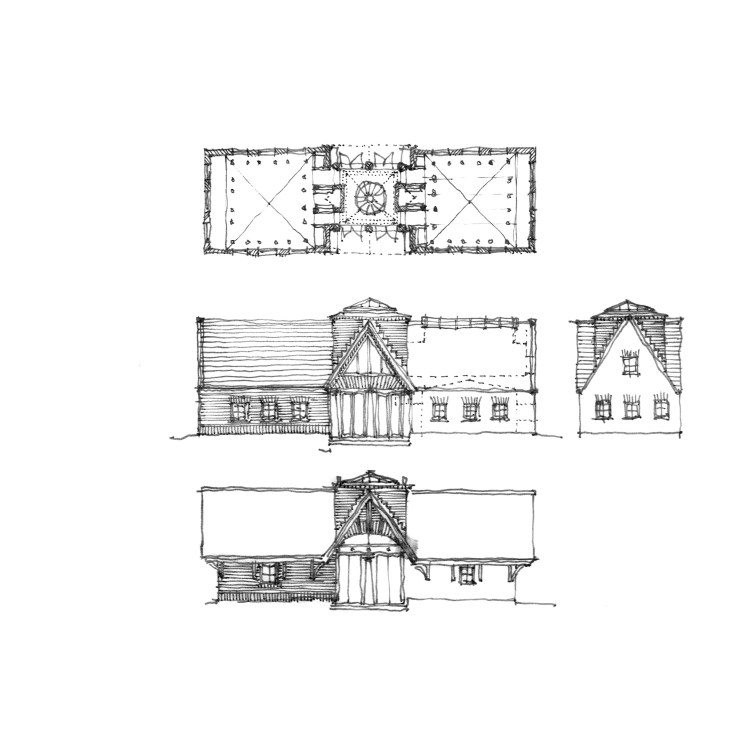
More than just a Bach reference, that title could really be the title of this entire blog, since the vast majority of what I post here are really just different takes on courtyards.  Blame it on my being a SoCal native, blame it on my love of squares, palazzi, and any other architectural trope you can.  I love me some courtyards.  So here we go again.  At the top, a more detailed elevation of a previous project, and below, a different take on that same floor plan, this time more loudly echoing Giorgio Grassi and Louis Kahn.

COURTYARD-HOUSE_17

a retreat

RETREAT_02

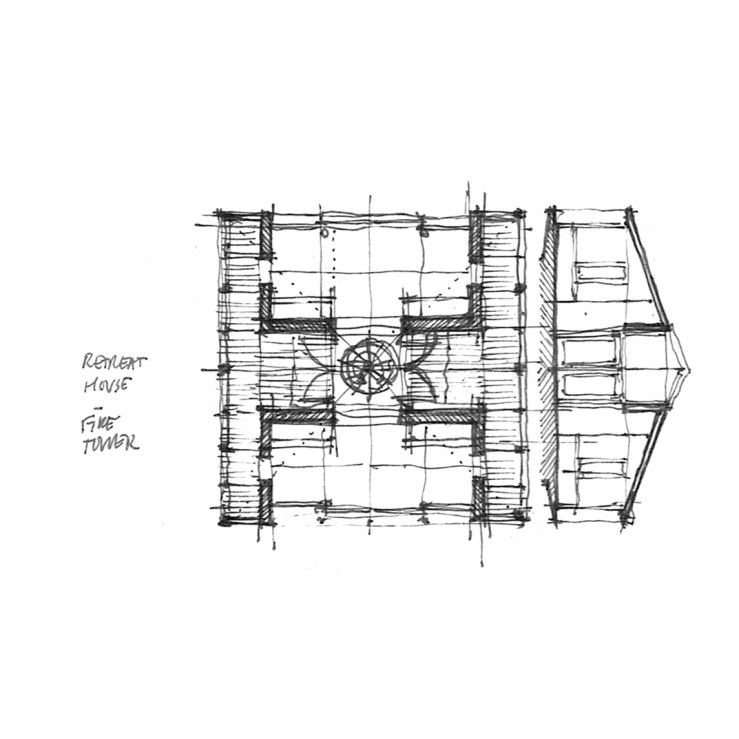
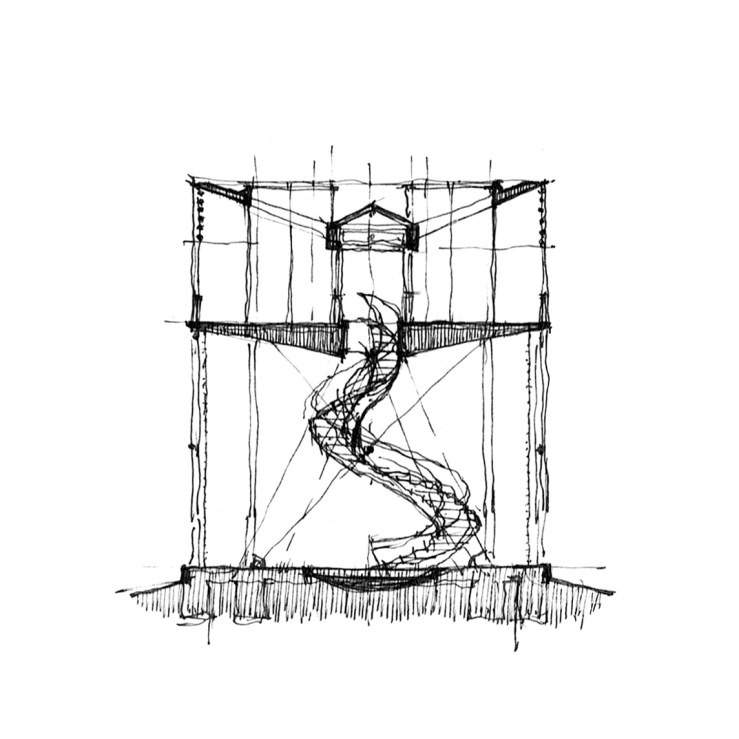
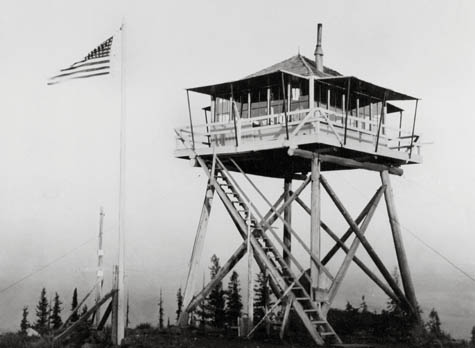
This began as a small retreat house, in two halves connected by a central skylit entry, with full-height sliding doors on two sides and blank walls on the entry facades.  But, then I got to thinking, and decided to put it on stilts up in the air, like the fire lookout towers that dot the American West’s forests.  Obviously, this necessitates a staircase, which I suggest making a conical spiral.  To increase livable space in what would be an otherwise stuffy cabin, the entire steel structure has been wrapped to create an over-sized screened porch.  While I started with a butterfly roof and tried out a hip roof, I find the dichotomy of the butterfly against the spindly supports to be rather compelling.
RETREAT_01RETREAT_03RETREAT_04RETREAT_05RETREAT_06

a house in four towers

FOUR-TOWERS_01

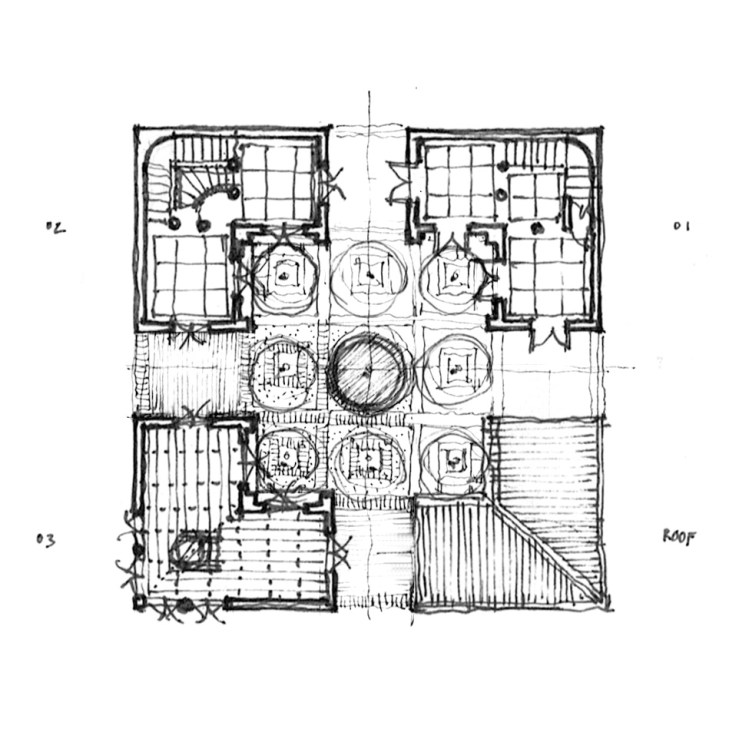
Today, I’ve got something a little odd here at frame, four ‘L’-shaped towers surrounding a nine-square cubic courtyard.  The exterior walls are bare brick, but for small observatories in the upper corners.  The ‘house’ itself is broken into four independent towers, with public spaces grouped on the ground floor, connected via the large tree-filled courtyard, which acts as the main living room of the house, with baths and bedrooms located on the upper tower floors.  In contrast to the bare brick exterior, the courtyard walls are detailed in a strict classical vocabulary, with pilaster colonnades wrapping floor upon floor.

FOUR-TOWERS_03

FOUR-TOWERS_04

FOUR-TOWERS_02

FOUR-TOWERS_05

cruciforms & dogtrots

TWO-WINGS_06

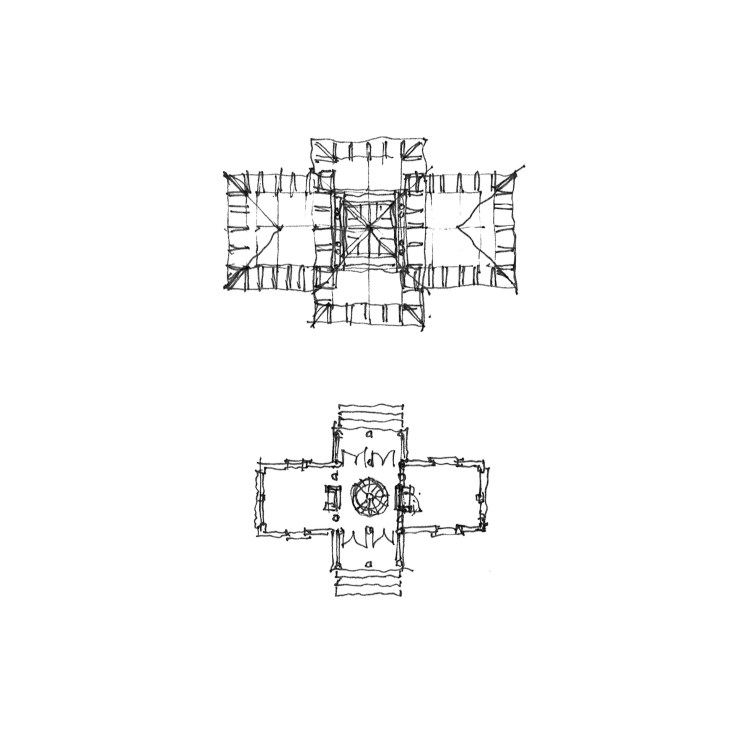
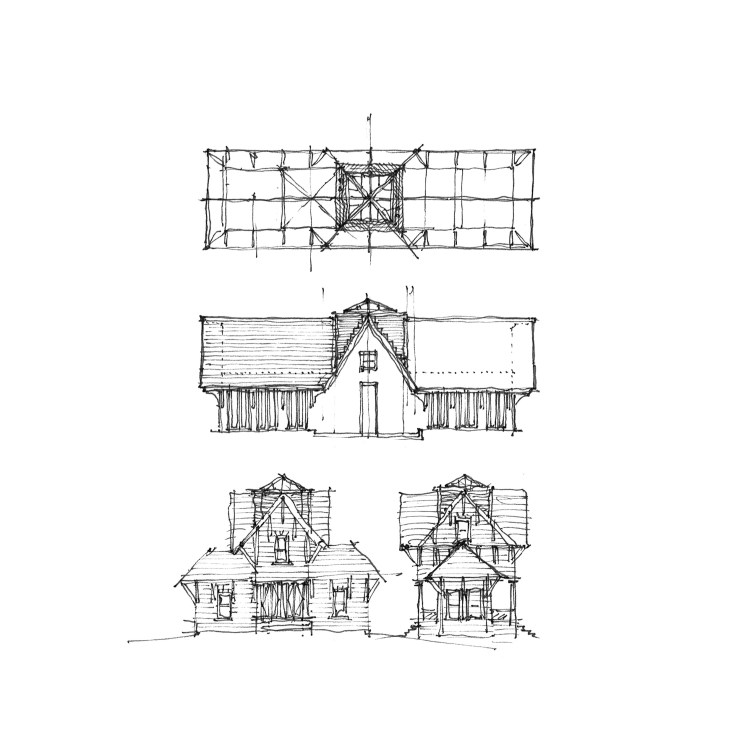
It began easily enough, a simple linear plan with two entrance porticoes per side, opening onto a square central hall with a circular stair its center, flanked by two sitting rooms, all sitting beneath two large deep-eaved hip roofs.  But then my love of iterations got the best of me, and I began to chop off the side porticoes, play with roof forms, and open up the central hall into a dogtrot type house. . .

TWO-WINGS_05

TWO-WINGS_04

TWO-WINGS_01

TWO-WINGS_02

TWO-WINGS_03

elevating a courtyard

courtyard-house_16

A week or so ago I promised elevations for a courtyard plan.  Well, here they be.  The front and back feature vernacular porches, complete with columns and hip roofs.  The sides, however belie the modernist floor plan inside, with floor-to-ceiling Mies-ian windows at the dining room and bedroom (what’s privacy?), and counter-height butt-glazed windows at the kitchen.  The roof forms cannot be seen from the exterior, as they all slope inward to the impluvium-like courtyard.  I really aught to do some sections. . .

a gate

gate_02

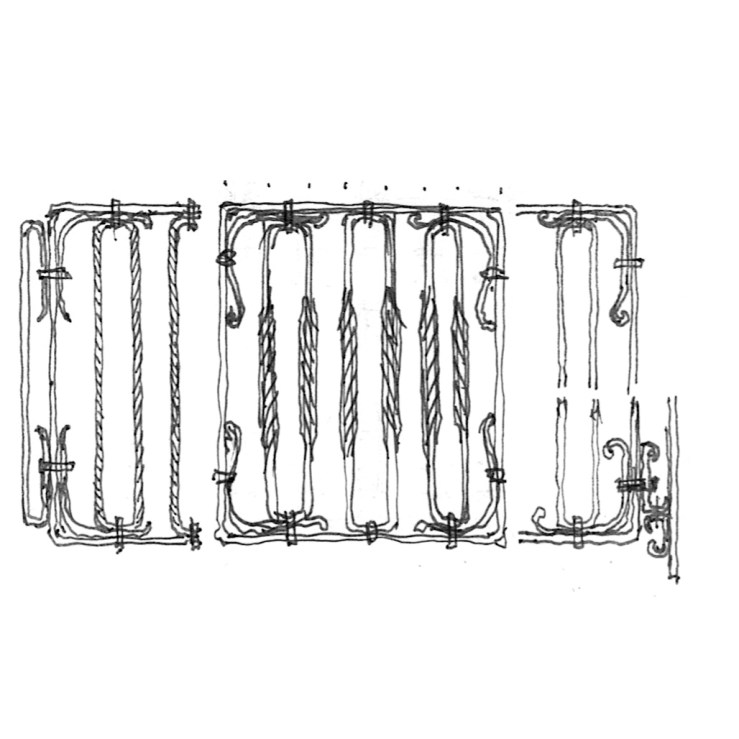
A friend and I were out exploring the local architectural haunts here in the Los Angeles area, which in this case included Pasadena’s Gamble House of 1908 as well as the other Greene & Greene homes studding the neighborhood.  One of these sits kitty-corner to Frank Lloyd Wright’s La Miniatura (or Millard House) of 1923, and I noticed a lovely wrought iron gate at the rear of the property, almost coyly unimpressive against dynamic klinker brick wall.  I began to think of my own home, and if a similar wrought iron gate would work against its Spanish revival aesthetic, with some details massaged here and there.  Not a building per se, but a linguistic study nonetheless.  Now if I can just find a blacksmith and a few dollars. . .

gate_03

gate_04

gate_06