some silos

SILO_03

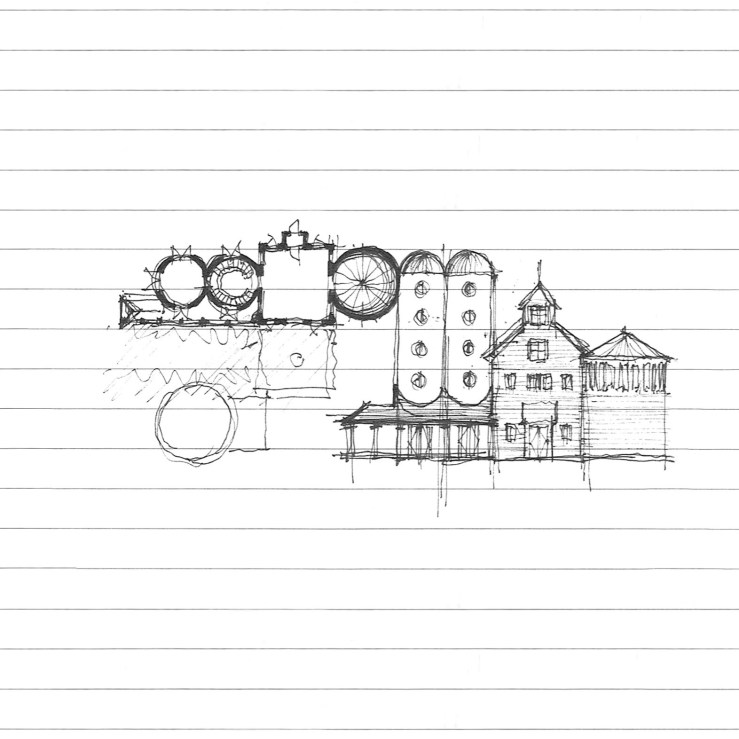
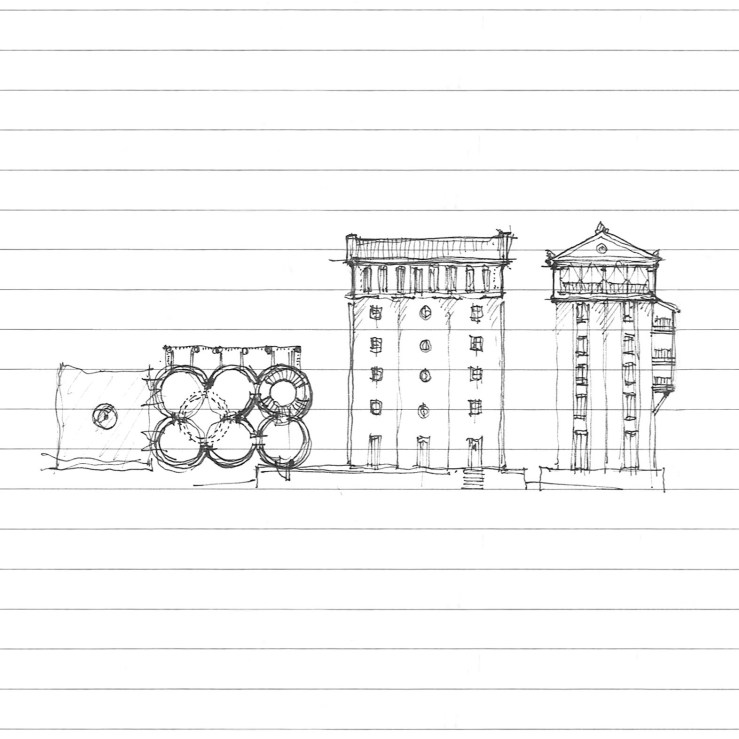
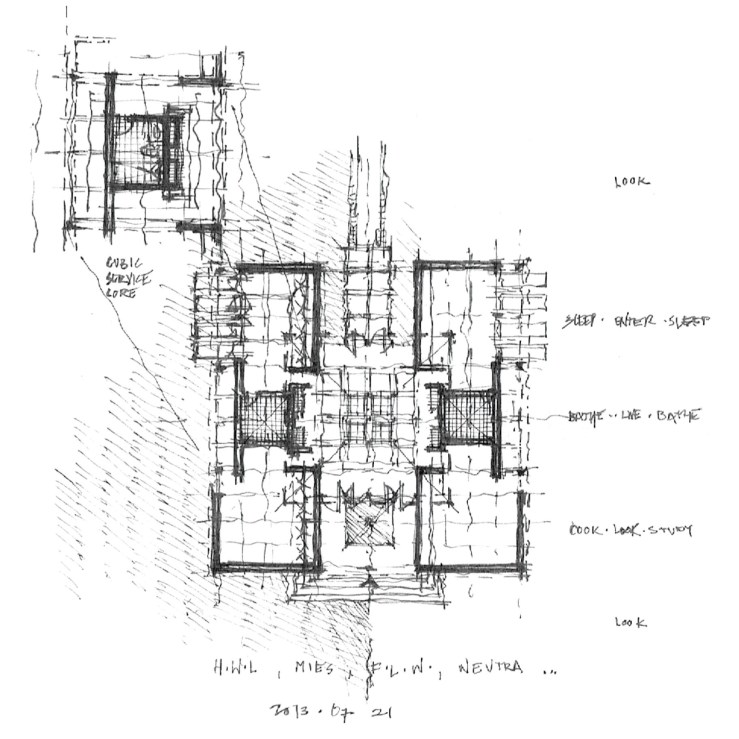
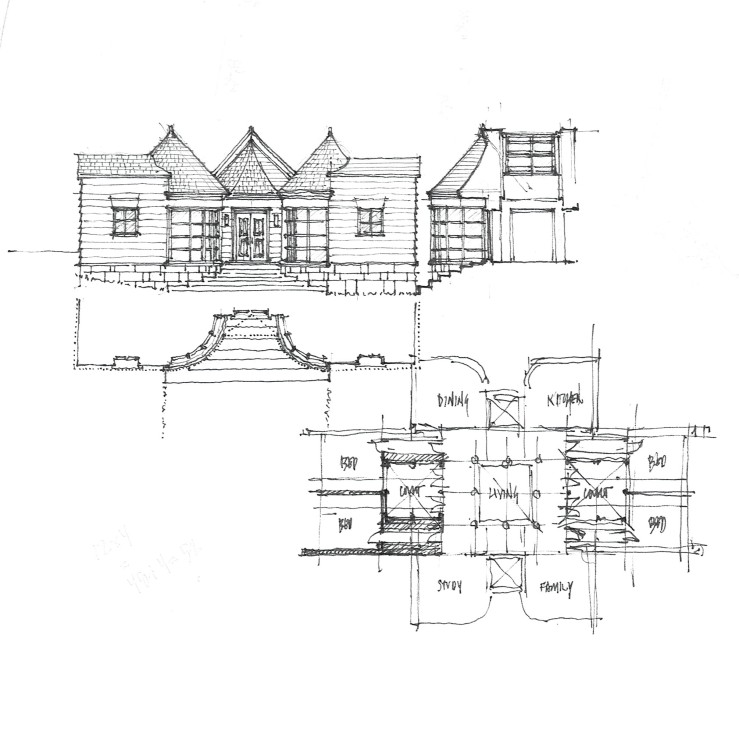
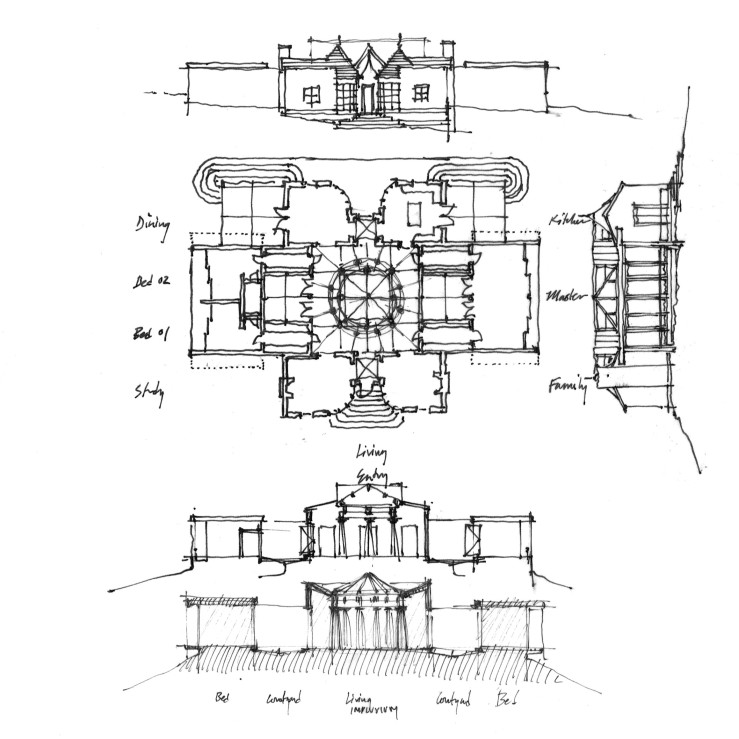
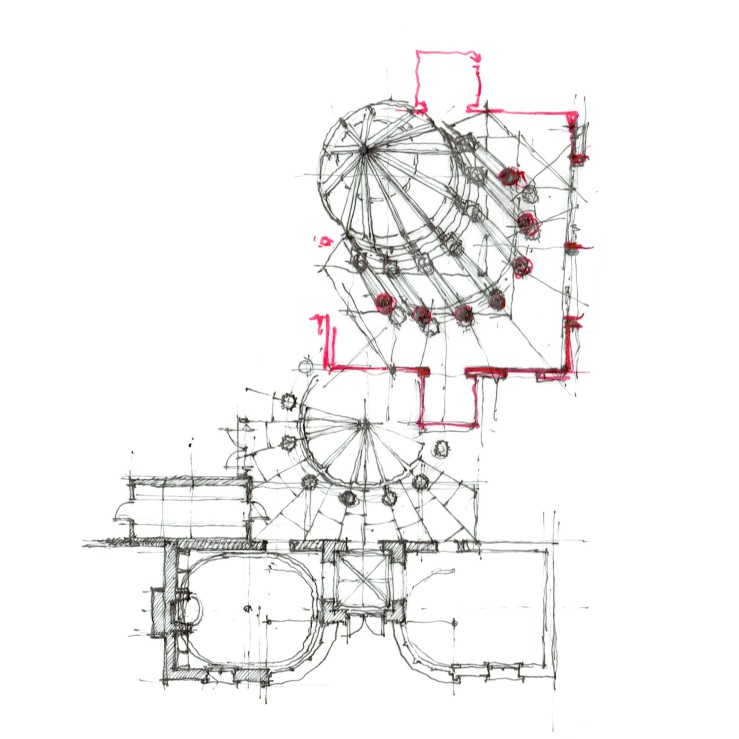
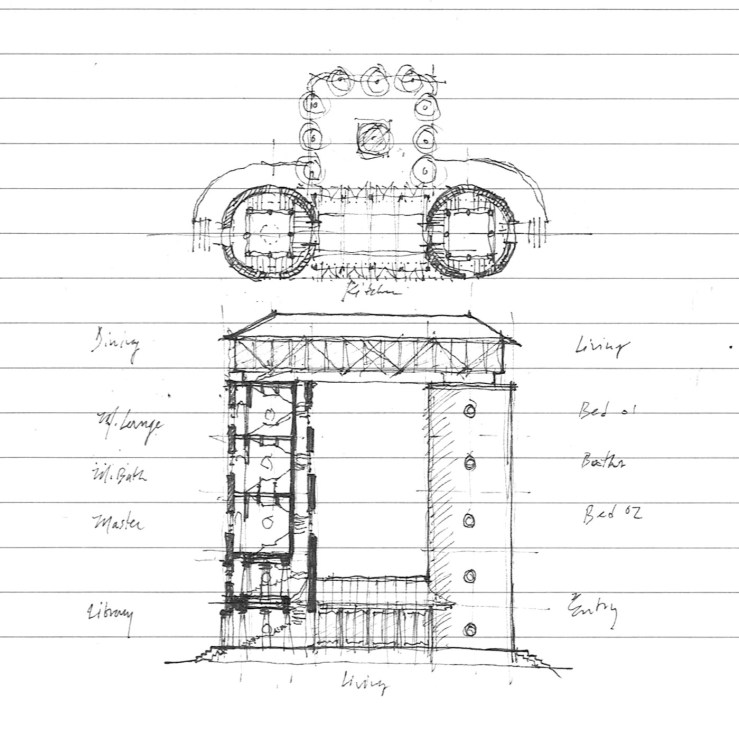
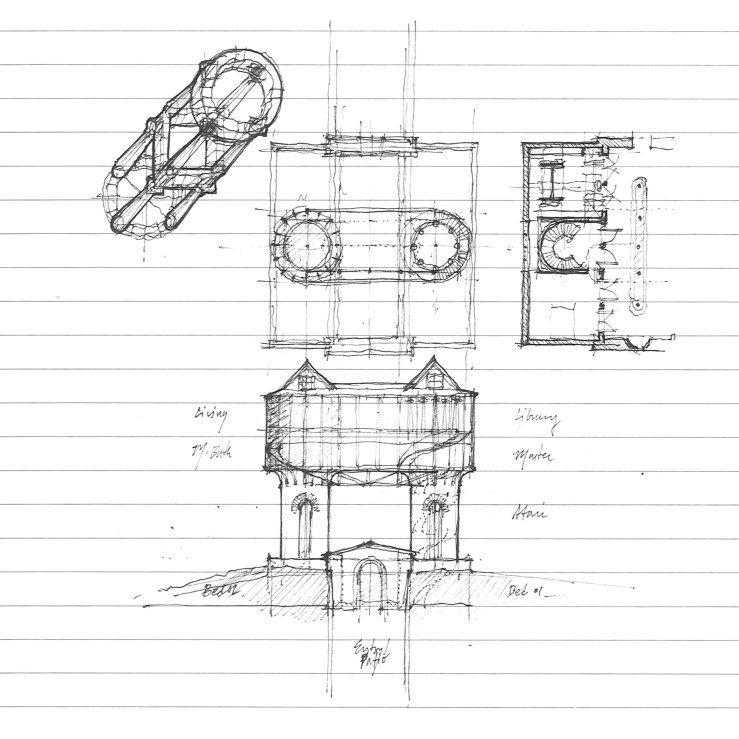
Driving on I-5 through northern California takes you through a lot of farm land, and reminds  you just how much of the American economy is agriculture.  This means silos – lots of silos, which of course got me thinking. . . From top to bottom: Two silos bridged by a glass Miesian volume; Two silos on a courtyard base, bridged at the top; a picturesque collection of three silos and a grain elevator; a  battery of six silos, spaces cut between them, topped with a temple form.
SILO_01

SILO_02

SILO_04

another round court

COURT_02

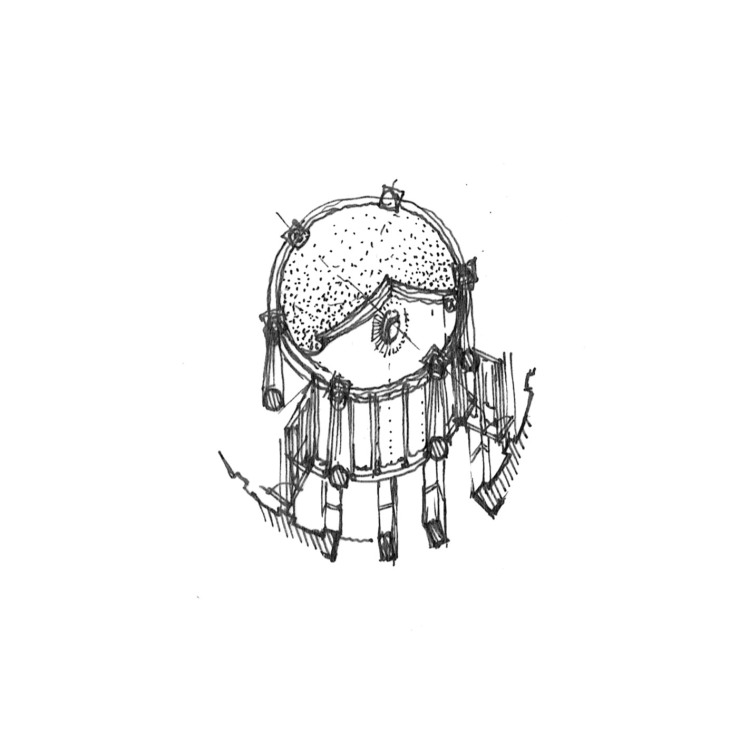
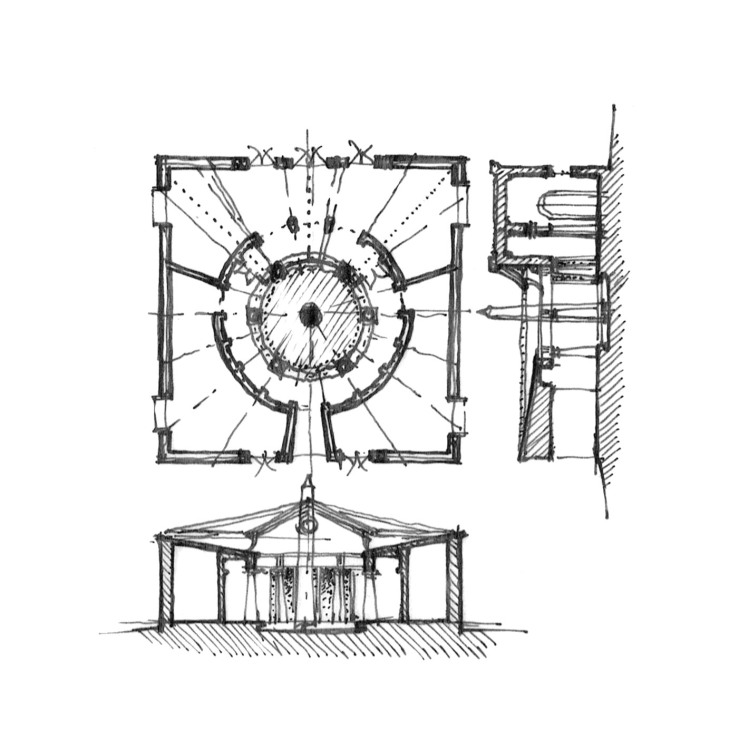
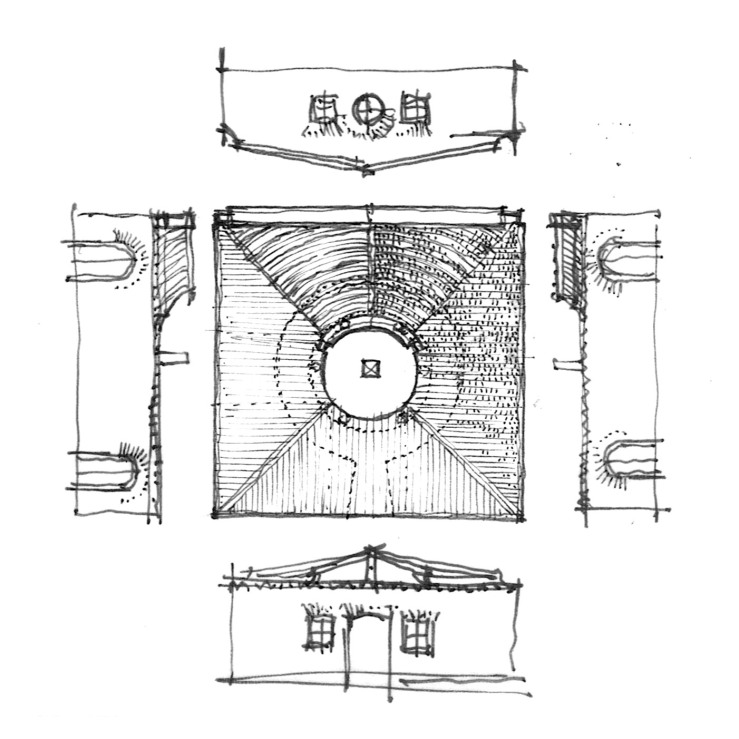
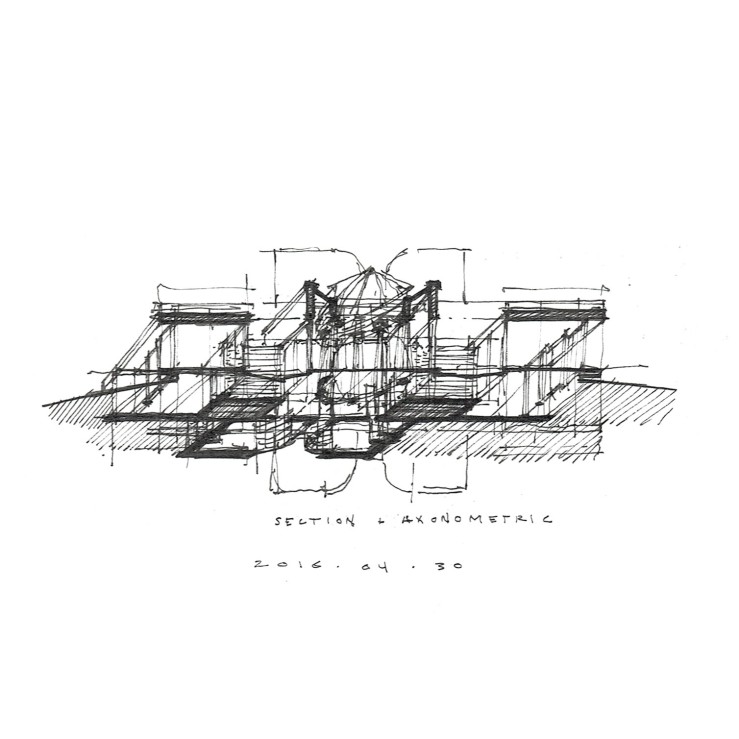
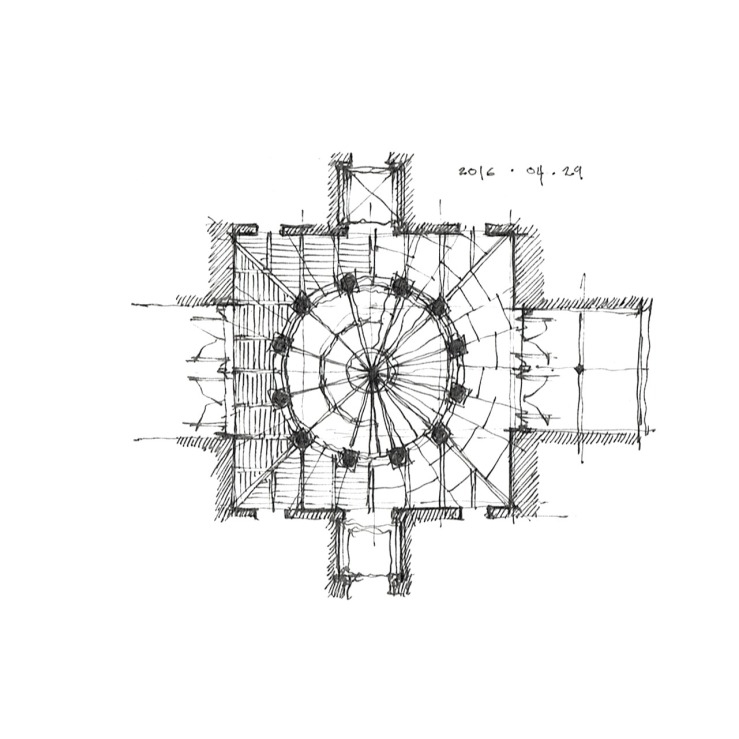
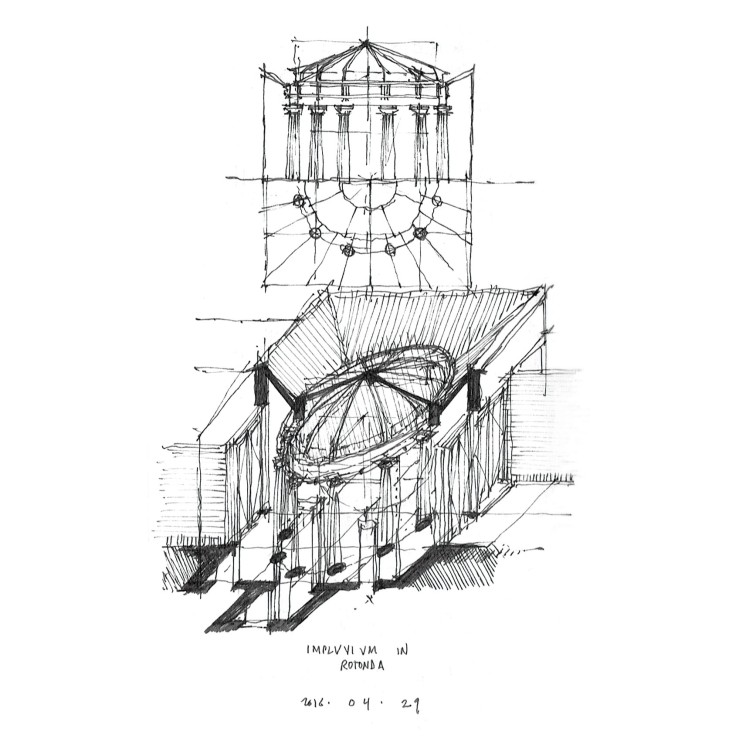
Yesterday’s circular courtyard influenced this take, along with a small fountain I passed by in Beverly Hills the other day.  Six columns make up a circular courtyard, filled with a pool and floating obelisk, while one side of the circular entablature rises to a pediment on one side, hidden from the entry tunnel.  The focus is obviously interior, but that doesn’t mean that the exterior is devoid of a little fun and asymmetry.  A wormseye axonometric above, sections and floor plan below, elevations and roof plan beneath.

COURT_03

COURT_04

a round court

CORTILE-HOUSE_03

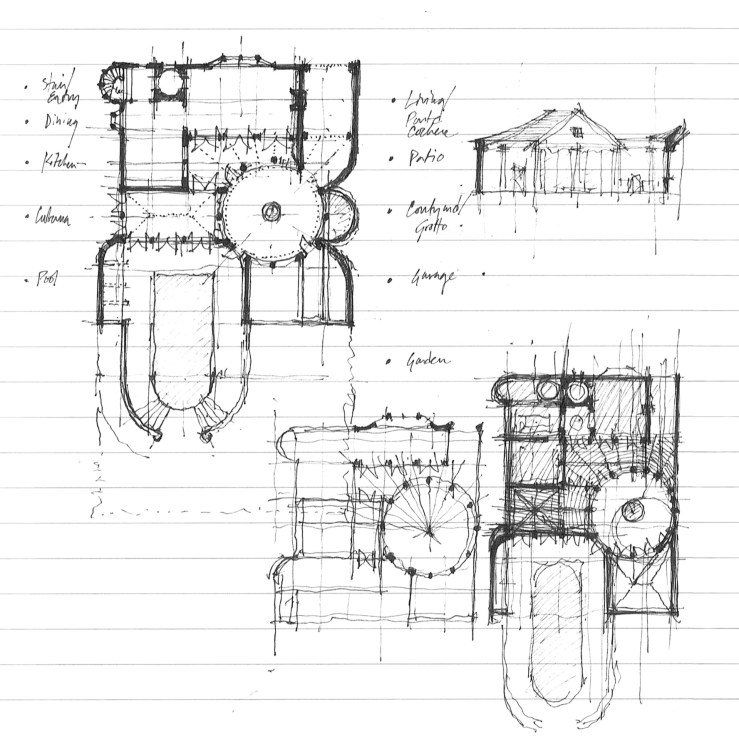
I’ve had circles on the brain recently.  Here’s an example of a small project that stemmed from a little single family residential remodel I’m working on, where we’re turning a nondescript backyard into a courtyard, uniting three distinct structures into one in the process.  My version objectifies that courtyard, an off-center circular motor court, with a peristyle all around – porches, porticos, patios, garages, and alleys all spiral off of this singular form.

CORTILE-HOUSE_02CORTILE-HOUSE_01CORTILE-HOUSE_04

yet another basilica

KIRCHE_03

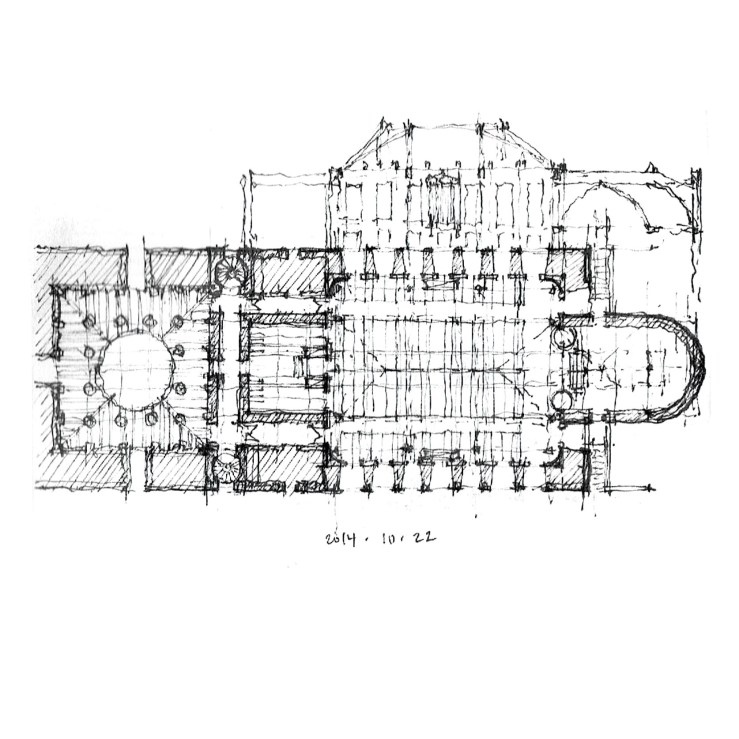
O. M. Ungers and Richard Meier play the primary instigators in terms of language of this basilica – minus the Doric impluvium entry courtyard, of course.  The front elevation/plan drawing shows shadows that hint at both wormseye and oblique axonometric projections.  Structure and tectonics play a central role where pipe and wide flange columns slide back and forth next to one another, while small circular side chapels cut into the deep poche of the stone walls.

KIRCHE_04

KIRCHE_01

KIRCHE_02

a mountain-side courtyard home

COURTYARD-HOUSE_03

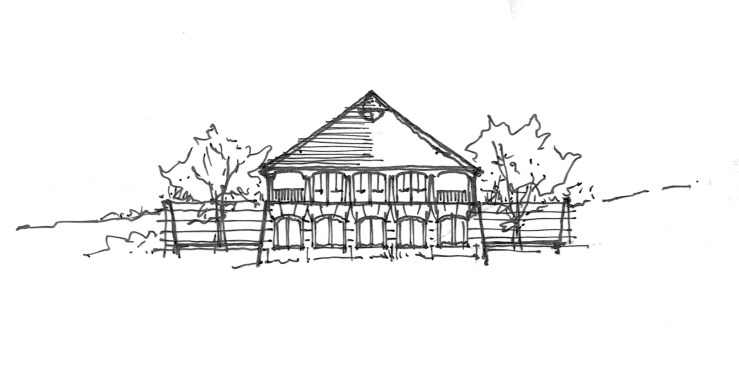
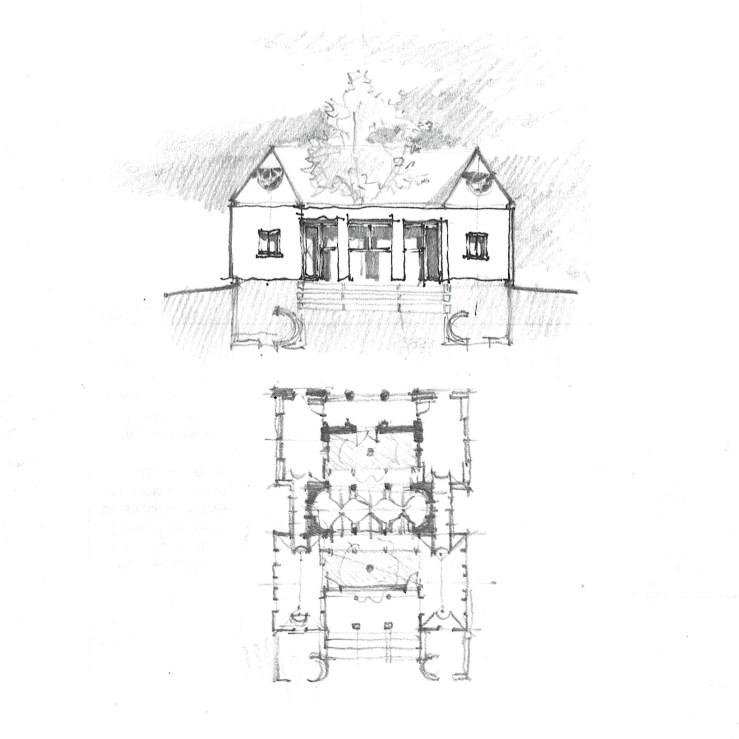
This house is a line of three squares: a central tree-filled courtyard flanked by a garage/studio impluvium volume on one end, and a large, hip-roofed residence on the other.  The rafters of this roof extend to encapsulate a long porch, the majority of which is screened.  A spiral staircase descends to the bedrooms, which are located below.  The complex is imagined to be sited on a hillside, with the garage square nearly underground, and the residence looking out over the valley below.

COURTYARD-HOUSE_04

COURTYARD-HOUSE_05

COURTYARD-HOUSE_01


kirk, meeting house, and basilica

MEETING-HOUSE_04

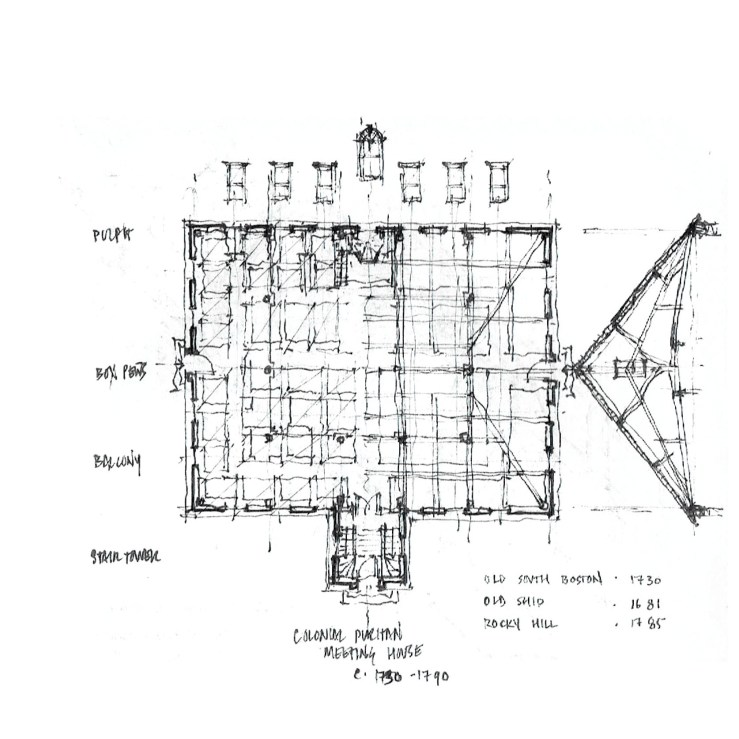
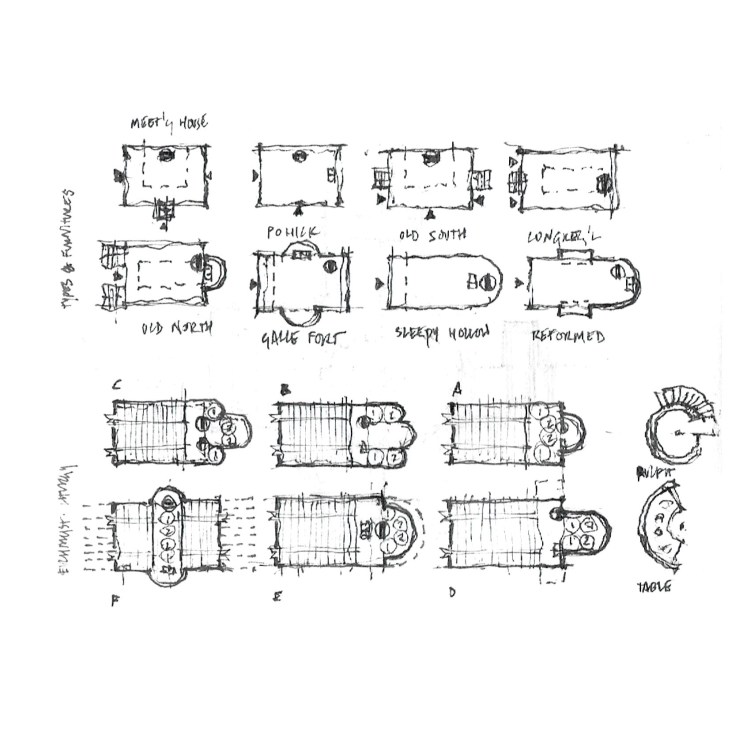
This church type is actually a collection of types – a Colonial American meeting house makes up the sanctuary, while flanked with the choir and apse of a more traditional Anglican church, accessed by an almost domestic-scaled atrium.  The level of detail and poche changes with each individual element.

MEETING-HOUSE_02

MEETING-HOUSE_01

MEETING-HOUSE_03


putting the pieces together

MUSEUM_01

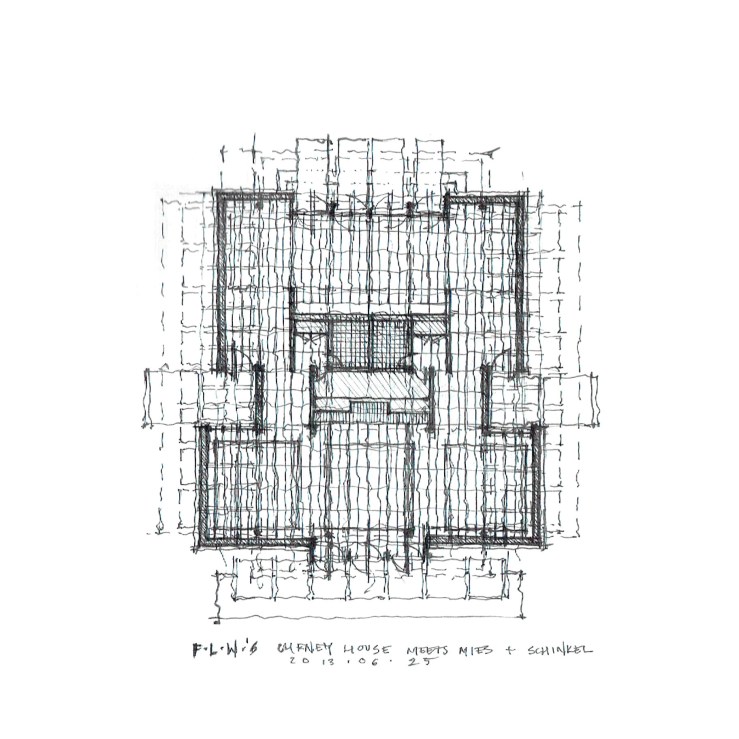
Lacking any particular program (that is, use), this courtyard structure plays on several ideas: the plan is neither a true double-courtyard, neither is it truly H-shaped (where the courts would be open on one side); one half of the project is more abstract modernist while the other is more expressly traditional; glass walls sit next to Classical colonnades; all the while the two side volumes are topped with that dormer I posted a few weeks back.

a bungalow court

COURT_01

A typical typology of Southern California, the bungalow court is typified by a series of low, one-story units arrayed around a small courtyard, all fit onto a single residential lot.  Most often, the structures were fitted in the Spanish Colonial Revival, Moderne, or (less frequently) the Arts and Crafts styles.  My interpretation favors a hybrid language of the Moderne with hints of Gill.  After drawing a perfectly fine elevation, I couldn’t help myself but to fit out a delightful little tiempetto on the corner. . . working a bit of Michael Graves back into things – because, why not?

impluvium house

RESIDENCE_03

I’ve been fascinated with the impluvium for some time now – a large roughly cubic room with an inverted roof that is open to the sky at the center, an essential feature of the Roman domus house typology.  This project places a large impluvium at its center, with modern courtyards and bedrooms flaking it, and more traditionally-scaled living spaces at the entry.  Formal echoes of Irving Gill, H. H. Richardson, Richard Neutra, and Michael Graves abound.

RESIDENCE_04

RESIDENCE_05RESIDENCE_02RESIDENCE_06RESIDENCE_01