a bowtruss roof

BOW-TRUSS_04

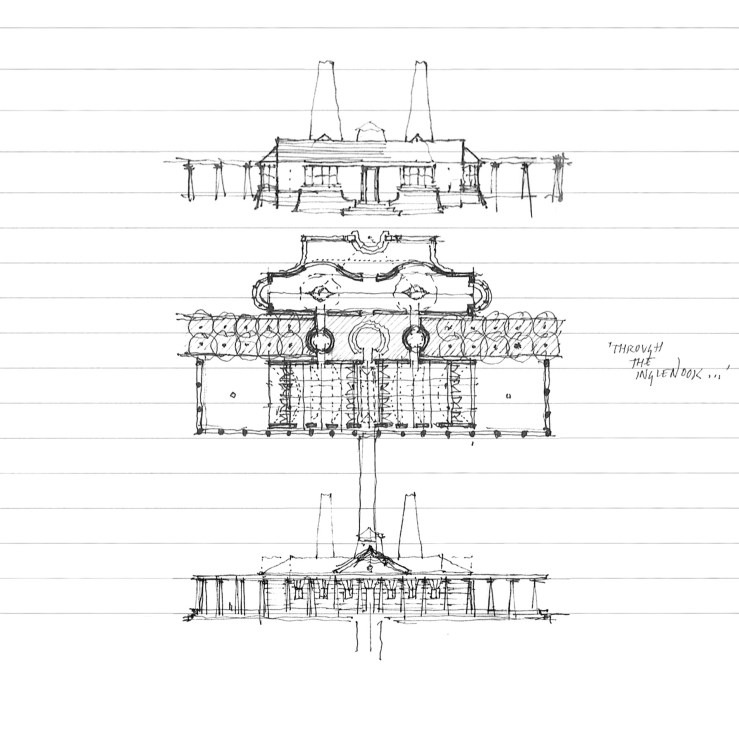
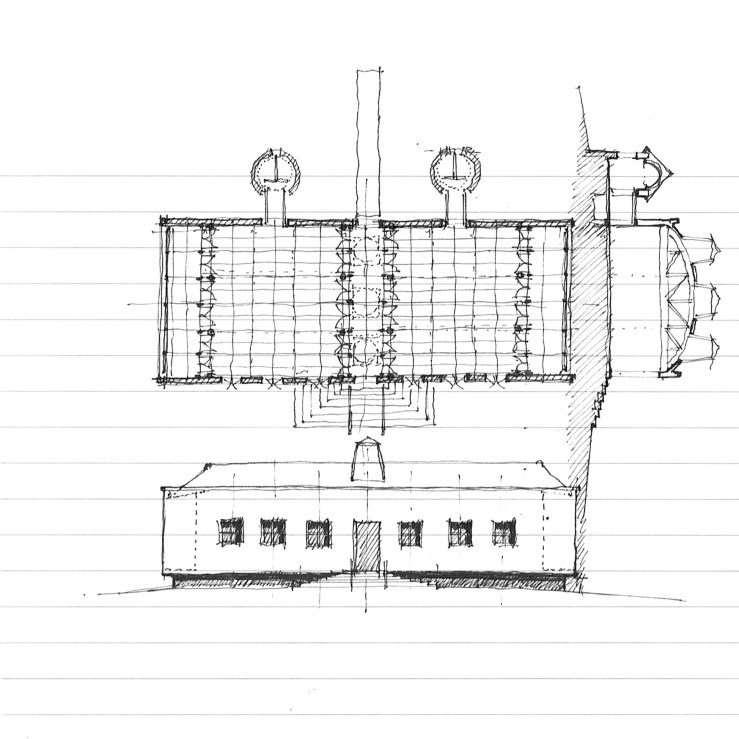
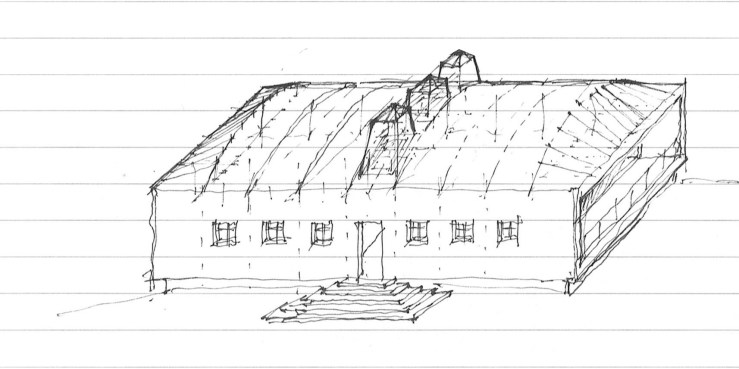
A building type that was very common in the western United States in the decades before World War II, the bowtruss-roofed industrial building was a single story brick or concrete masonry shell, topped with a long-span wood truss roof that resembled a bow in section – hence the name.  Many of these stand throughout the Los Angeles basin, which are the originators of this project.  The brick volume is open to the short sides, pedimented on the approach, and takes hints of Hejduk’s Wall House, where bathrooms stand as separate, formally distinct, elements.  A more elaborate exploration is at the bottom, where the restrooms become chimney-inglenook pieces, and the bowtruss volume is surrounded with a peristyle among other things. . .
BOW-TRUSS_02

BOW-TRUSS_03

BOW-TRUSS_01

a music hall

MUSIC-HALL_01

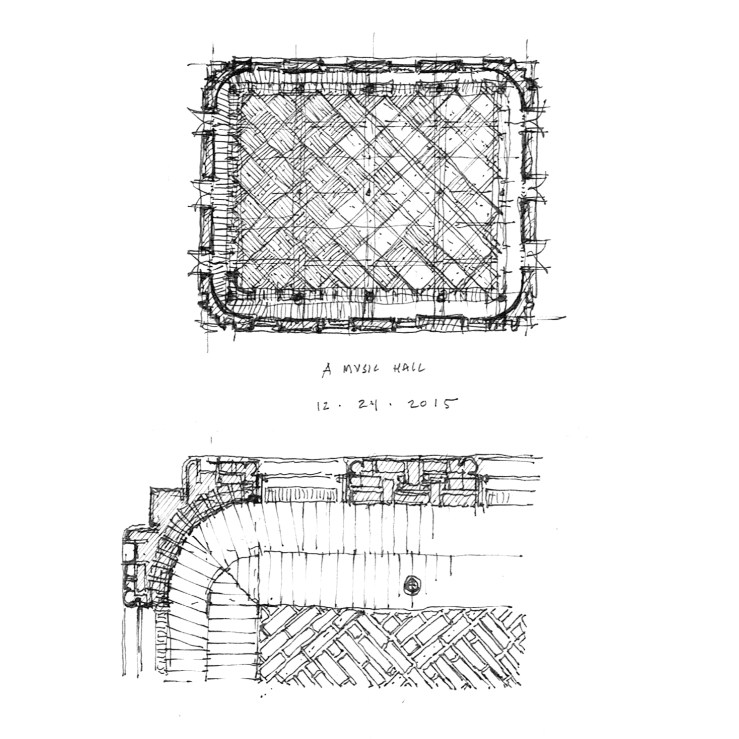
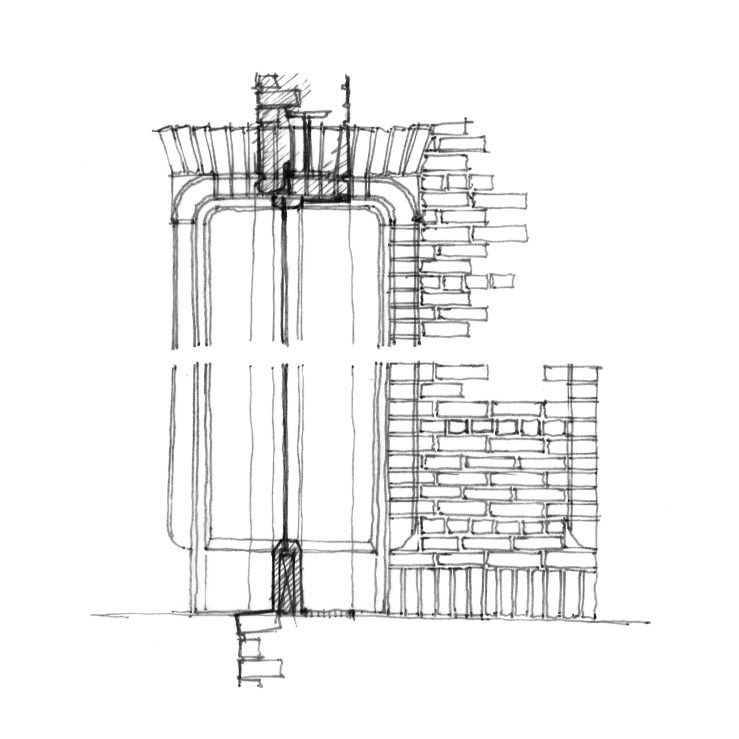
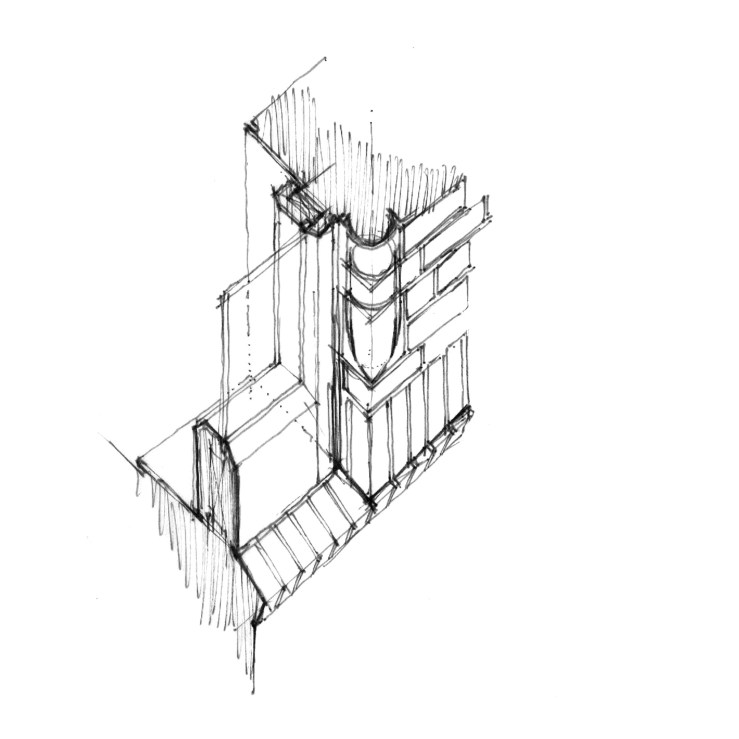
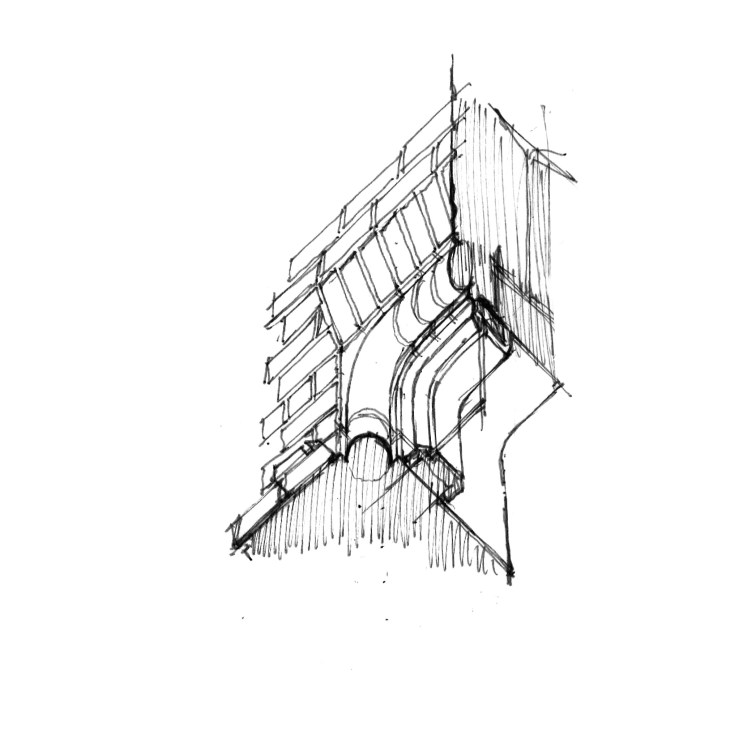
This small hall type has a basket-weave brick floor, the roof supported on pipe columns that float free of the brick walls.  The exterior corners are Mies-inspired, while the window treatments are a take on Richardson’s Sever Hall at Harvard.  Details of that window system are below: elevation/section, axon of the base, worm’s eye of the head.  I owe you roof-ceiling information – but the question remains, bow truss or hammer beam?  Or something altogether different?

MUSIC-HALL_02

MUSIC-HALL_03

MUSIC-HALL_04

a beach cottage

COTTAGE_01

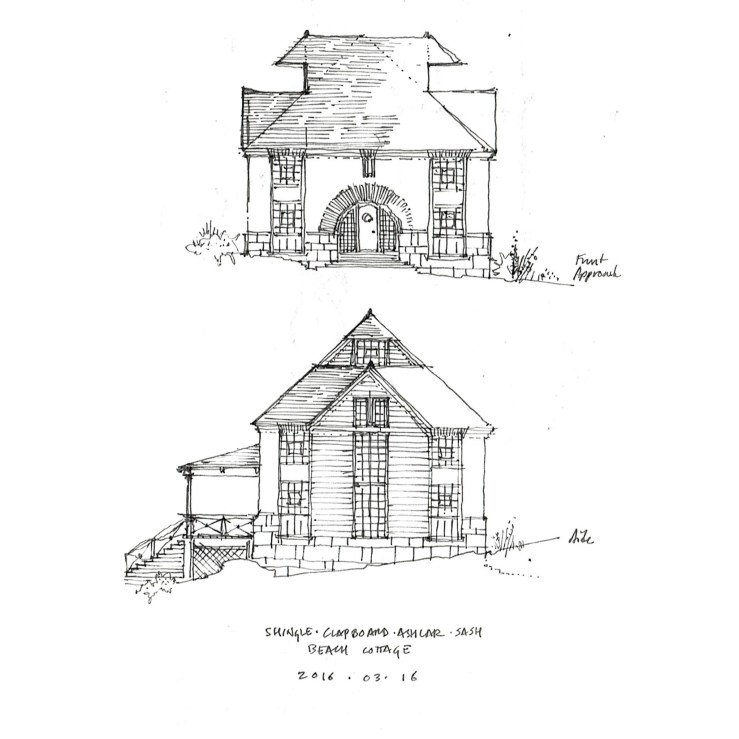
Taking cues from Shingle Style residences mixed with a fair amount of Richardson (red mortar on Flemish-bond brick and rough-faced ashlar masonry much?) and a bit of my own preferences for industrial sash windows and rigid geometries, this little cottage is organized around a nine-square plan, with cramped interior rooms and no central ‘Hall’, thereby favoring the large screened porch at the rear.

COTTAGE_02

mies at iit

MIES_13

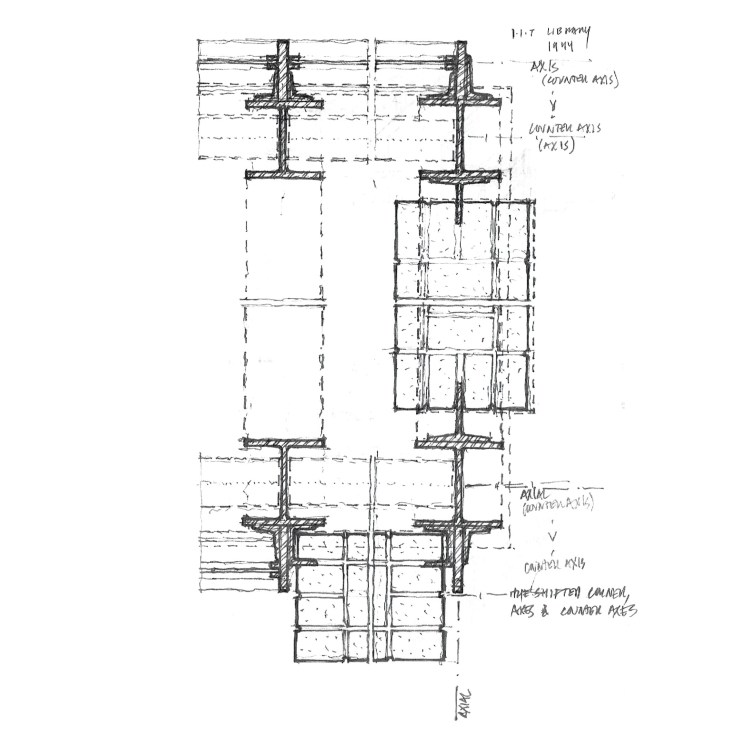
In contrast to yesterday’s post, I’m featuring Mies’ earliest work in the United States (and his first experimentation with the ‘revealed’ corner, where the exterior envelope is set off of the structural grid), classrooms at IIT, for which Mies also completed the masterplan.  Here, the frame is still made up of wide flange steel sections, but with buff brick infill panels.  The window systems are still solid steel bars welded together – the thermal break found in the aluminum and bronze curtainwall systems was still a long way off.

MIES_14MIES_12MIES_15