half house

half-house_01

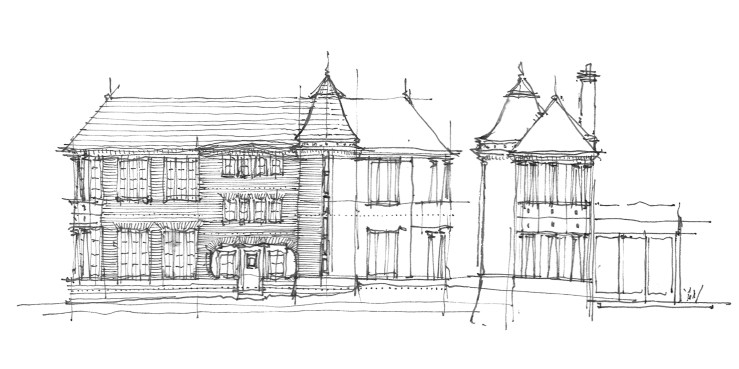
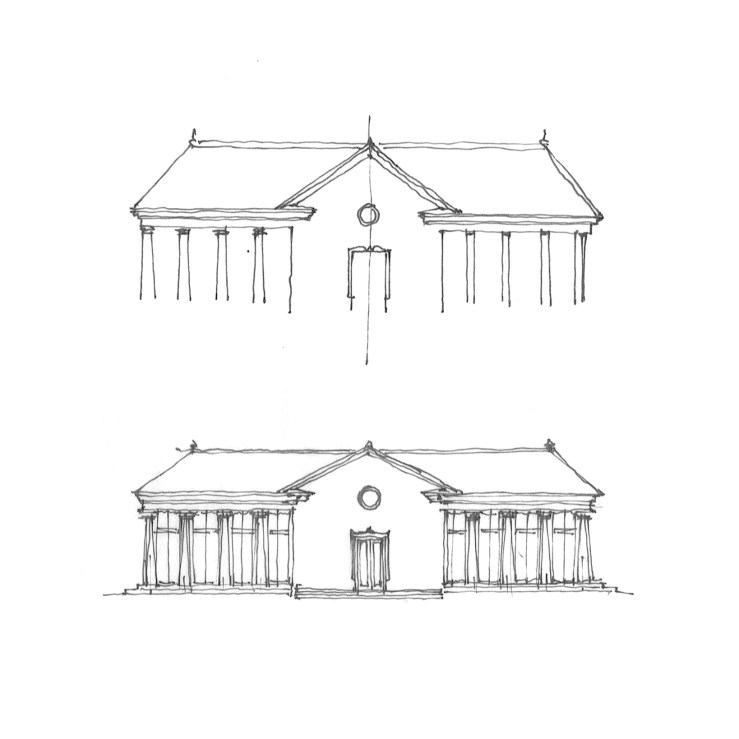
While taking its name from one of John Hejduk’s many unbuilt projects, the One-Half House, this project offers a different interpretation of an architecture of halves.  One half-plan of Richardson meets one half-plan of Neutra.  The entry portico is recessed into the building line, and takes cues from some vernacular Angeleno tract homes from the 1930’s (concurrent with Neutra’s earlier formal explorations).  I do think that the stucco variation at the bottom is much more convincing than the overtly Richardsonian brick variant – but maybe it needs to be weaned of a little too much Krier (Miami, or Windsor).

half-house_02

half-house_03

half-house_05

half-house_06

triangle meets circle

gallery_05

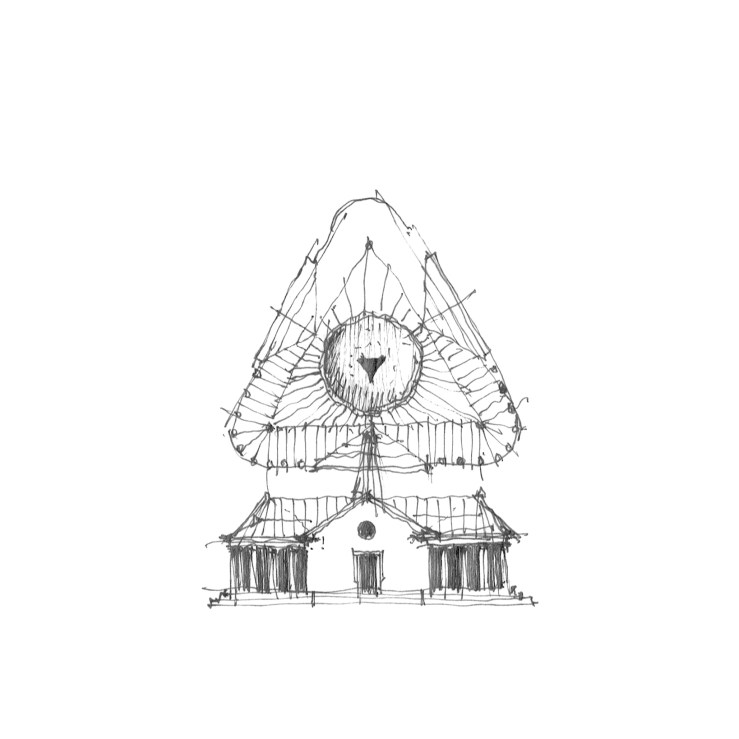
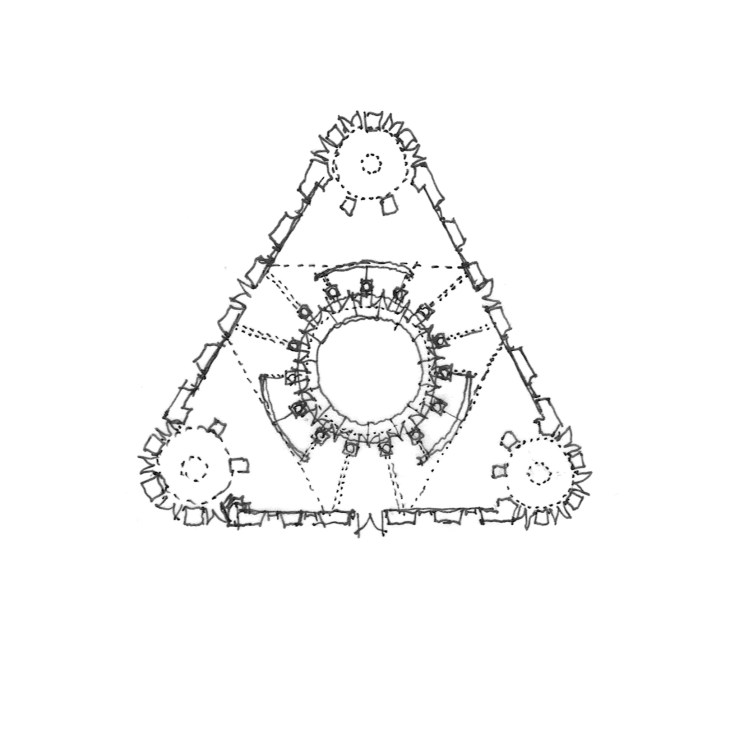
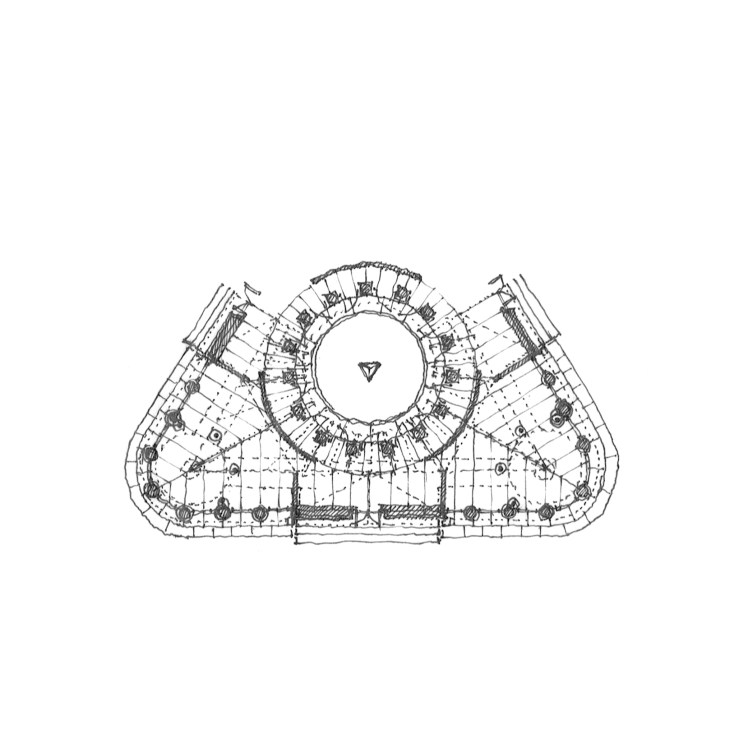
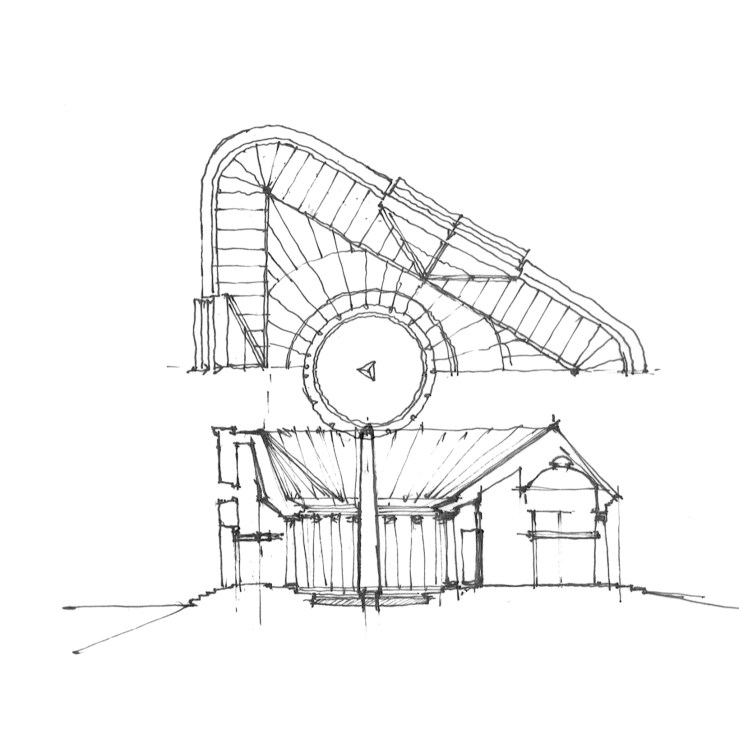
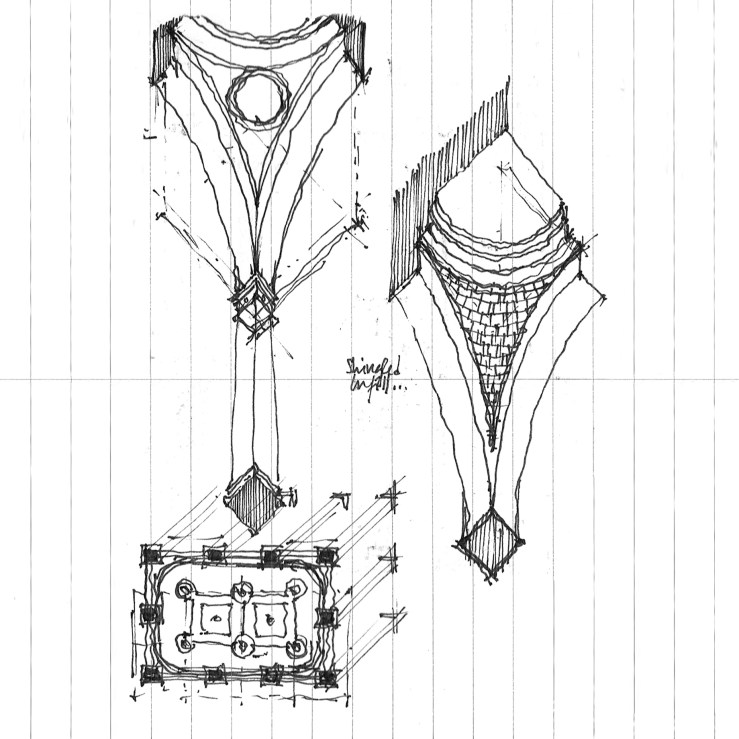
Further pulling the thread of hidden circular courtyards (here, here, & here), this exploration introduces yet another platonic geometry: the triangle.  Low gables on each facade take the center, allowing colonnades to wrap the acute corners, while a circular colonnade sits in the middle, centered on a triangular obelisk in a circular pool.  Interior spaces are fluid, with low walls and pipe columns hinting at spatial division.  The dialogue between the round courtyard and the triangular roof ridges creates a dynamic interior roof form with exposed rafters throughout.

gallery_06

gallery_07

gallery_08

gallery_09

double gables

two-gables_01

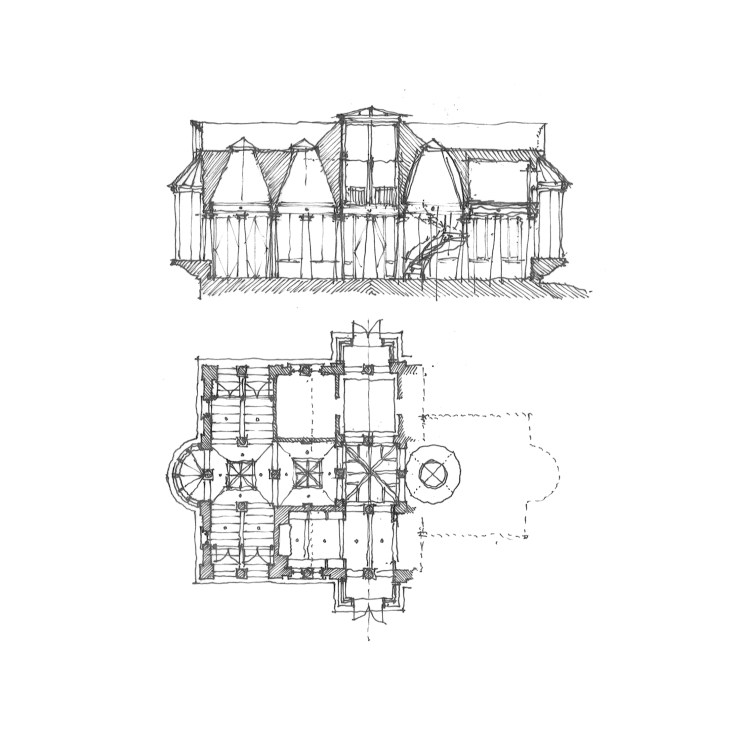
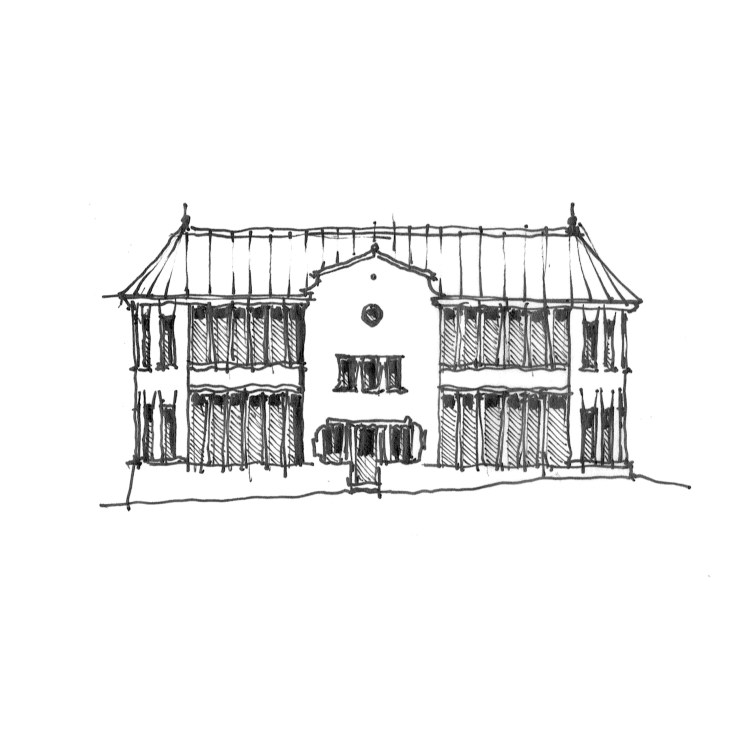
This house plays a game of symmetry, where the magnificent double gable of Lutyens’ Homewood is played on every facade, but punches out by one module on the east and west facades.  The stair is set off-center, with a tall square atrium (Craig Ellwood of two posts back), and an asymmetrical collage of symmetrical rooms inside.  My first plan (above) had double columns throughout, the second plan (below) favors the single centered column.

two-gables_02

taking a spin with ellwood

ellwood_01

From last Friday’s foray into Craig Ellwood’s Scientific Data Systems building, I offer a revised take, with a large standing seam copper hip roof, and a skylit rotunda in place of the cubic atrium, and rounded out the panelled masonry walls along the east and west axes.  Placing a large hip roof on a square form may be a subtle nod to Thomas Beeby’s Baker Institute at Rice University. The detail at right shows a new cornice with dentils and beads rendered in brick.  Maybe something fun could be done with those columns. . .

a garden gate

GATE_01

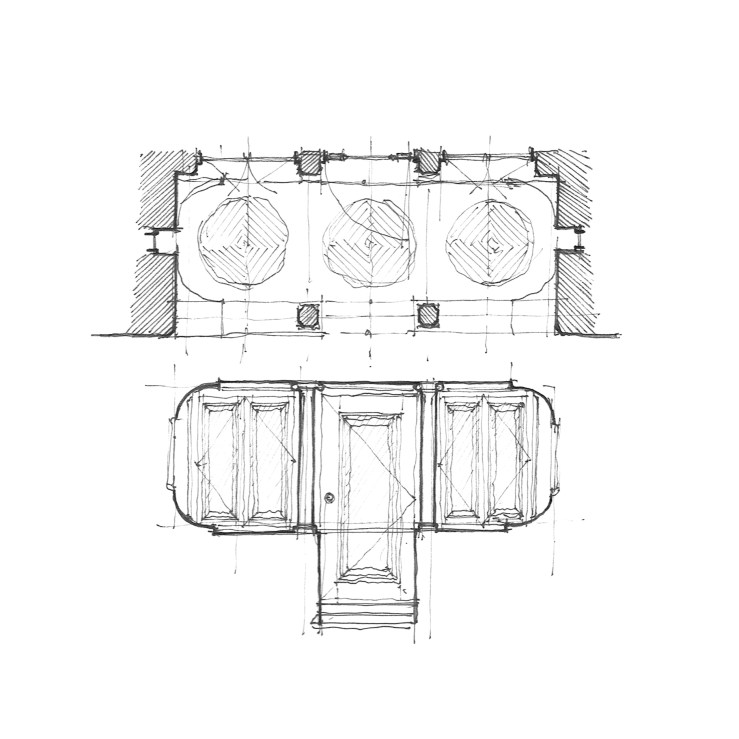
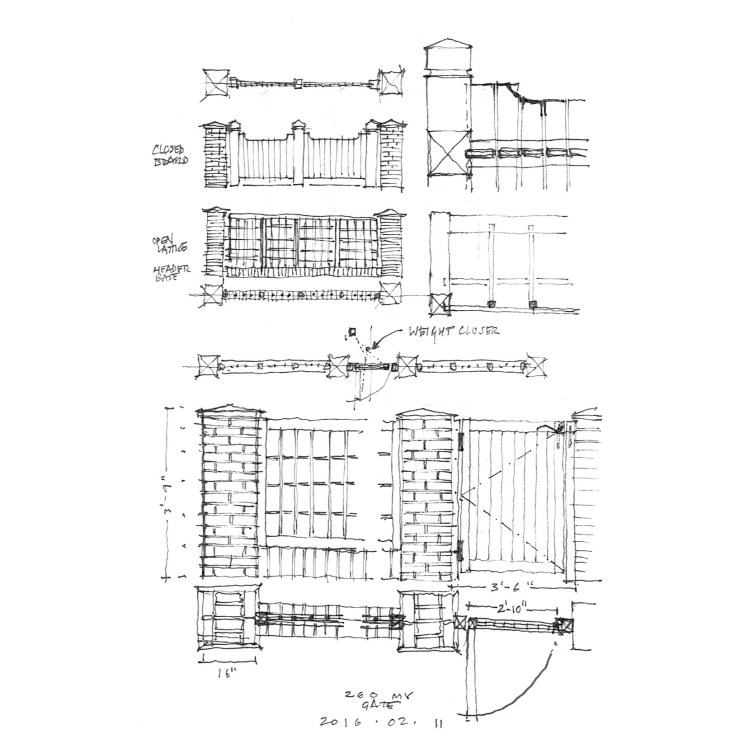
Because even the most mundane of elements deserve to be thoughtfully and appropriately considered, I’m featuring a series of details and design considerations for a gate at my house, fronting a small garden courtyard.  Typical wood rails span brick piers, with a weighted chain closer to keep things tidy.

lutyens and an arcade

lutyens_01

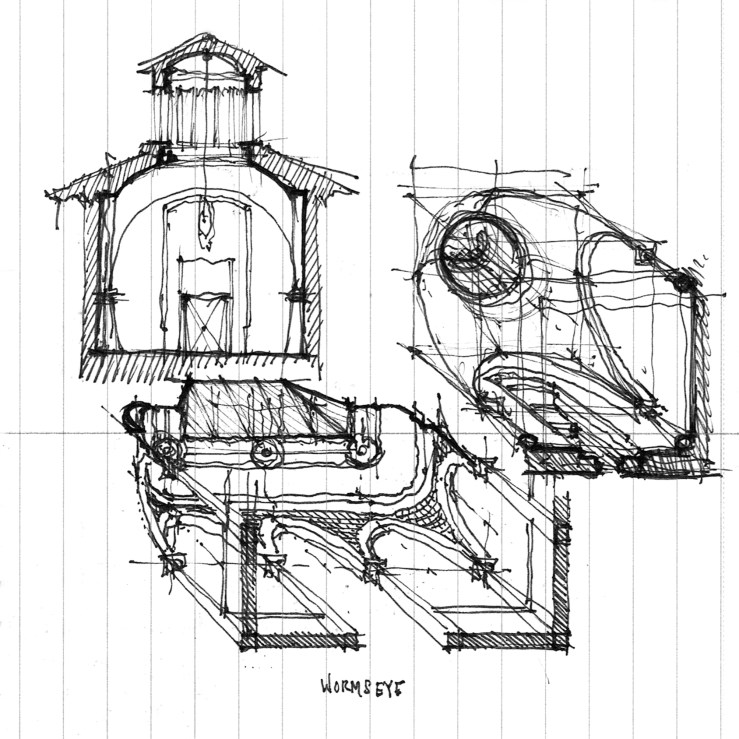
Returning to the work of Lutyens, this small room takes its primary cue from a detail in a stair hall at Viceroy’s House, New Delhi, where an arcade is topped with a small pendentive at the corner, curving the profile of the ceiling.  Wormseye axonometric views follow – the bottom image also has sectional and wormseye studies of another Lutyens-inspired previous post.

lutyens_02

lutyens_03

a house with a hall

hall-house_01

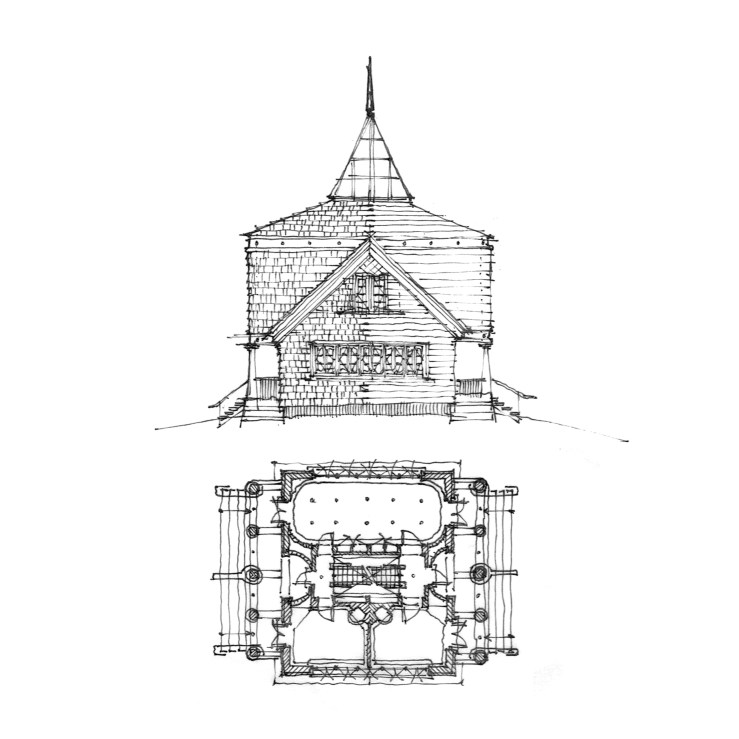
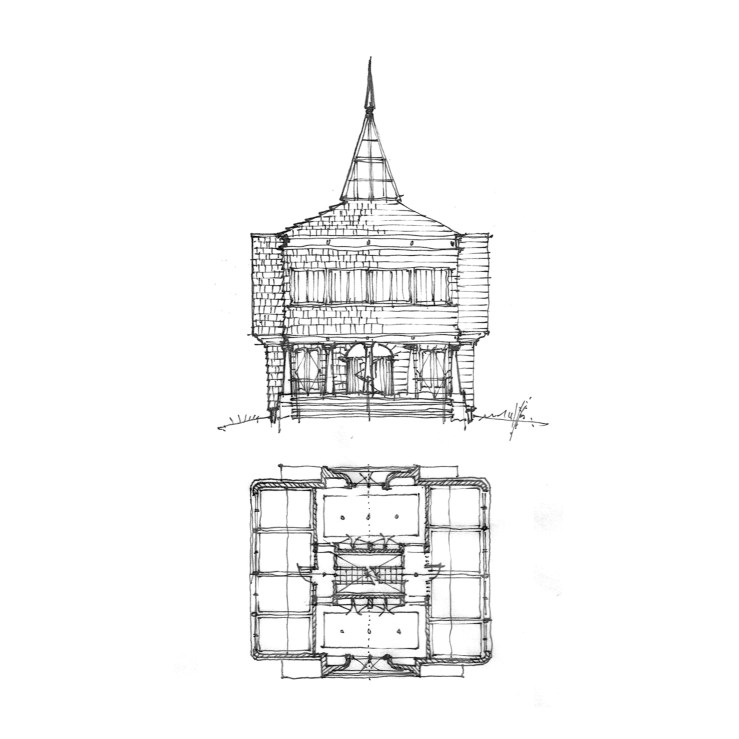
Plan as generator (aka, ‘floor plan comes first, elevations second’), with a long hallway bisecting a semi-cubic volume, colonnades at either end.  Now a staircase – centered on the hallway, one half of the house takes a large ballroom, while the other is bisected into two smaller drawing rooms. The second floor, two long, windowed rooms sit over the porches, while a tall pyramidal skylight tops the stair hall.

hall-house_02

circles, courtyards, colonnades: a coda

court_05

A study in pure form, this project is a derivative of a previous post, with a curved pediment sits coplanar with the colonnade-cum-pergola that surrounds a circular pool, and some admittedly quirky curved glass-block walls mediating between the three bays of the facade with the smaller volume behind.

asymmetry in the country

country-house_01

Today’s installment is something a little idiosyncratic – this one didn’t begin with a square, but rather a triangle.  From that, came a rotunda, and two arms, one of which I furnished with a square.  This project takes more precedence from the picturesque traditions, but is still rather rigorous in module and geometry.  References stem from Robert A M Stern to Samuel Vosper’s work with the Army Corps of Engineers and a touch of Lutyens.

country-house_02