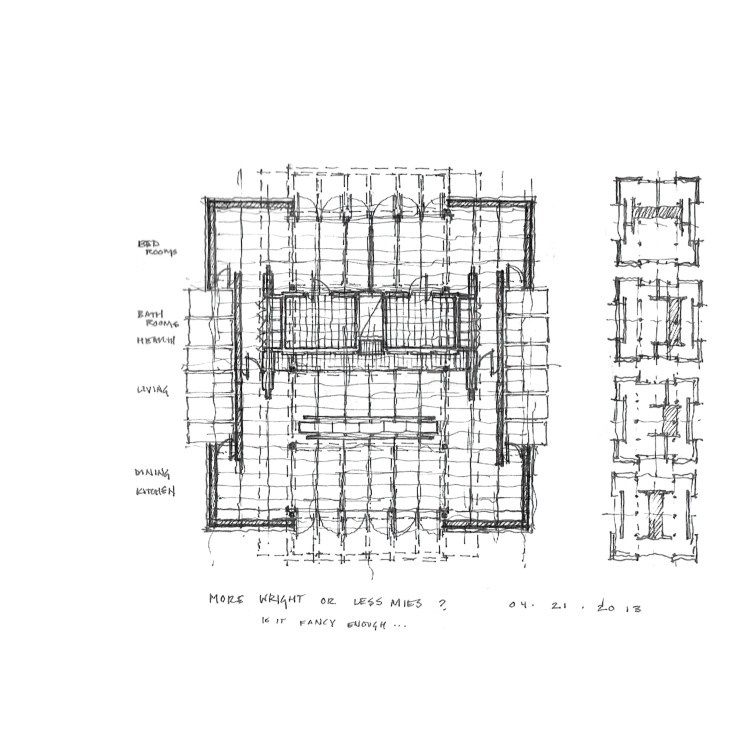
Yet another take on the theme, this time with a symmetrical wrapper, with studies on how the core might sit within the volume. The thought was to more directly synthesize Wright’s Usonian Houses with Mies’ 50X50 House. But more on those later.
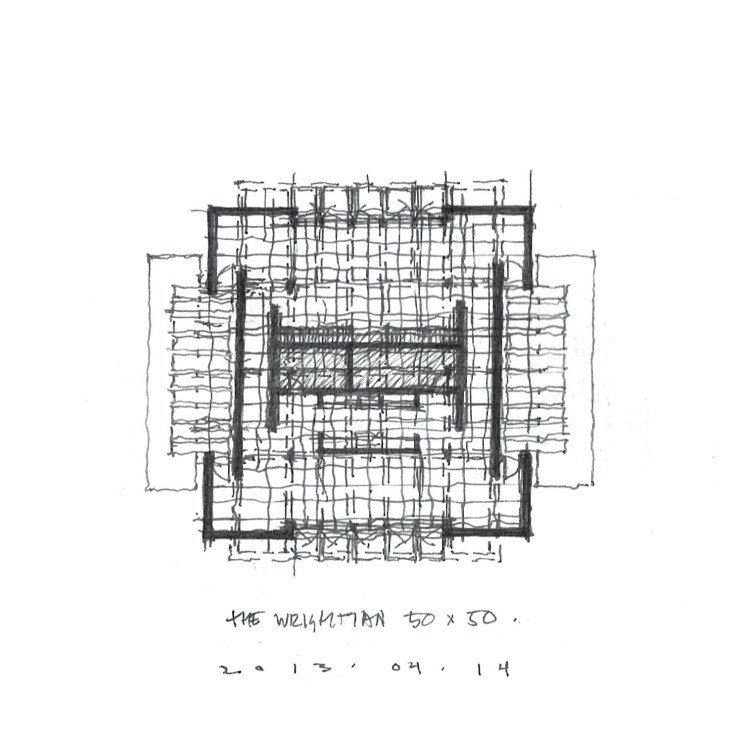
Yet another take on the theme, this time with a symmetrical wrapper, with studies on how the core might sit within the volume. The thought was to more directly synthesize Wright’s Usonian Houses with Mies’ 50X50 House. But more on those later.

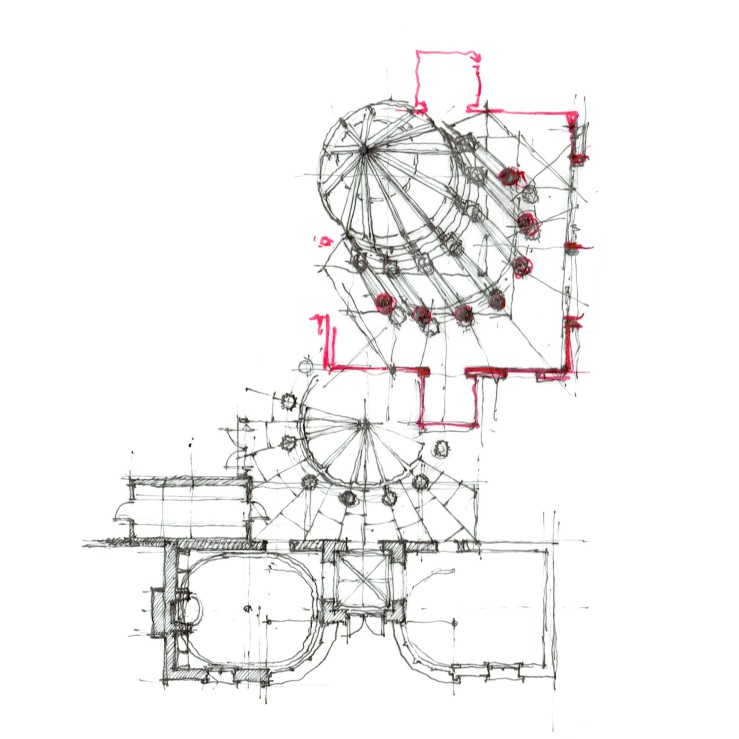
Continuing yesterday’s Miesian Cheney (and derivatives), this example pulls its plan directly from Schinkel’s Neue Wache in Berlin, which I’ve drawn below.

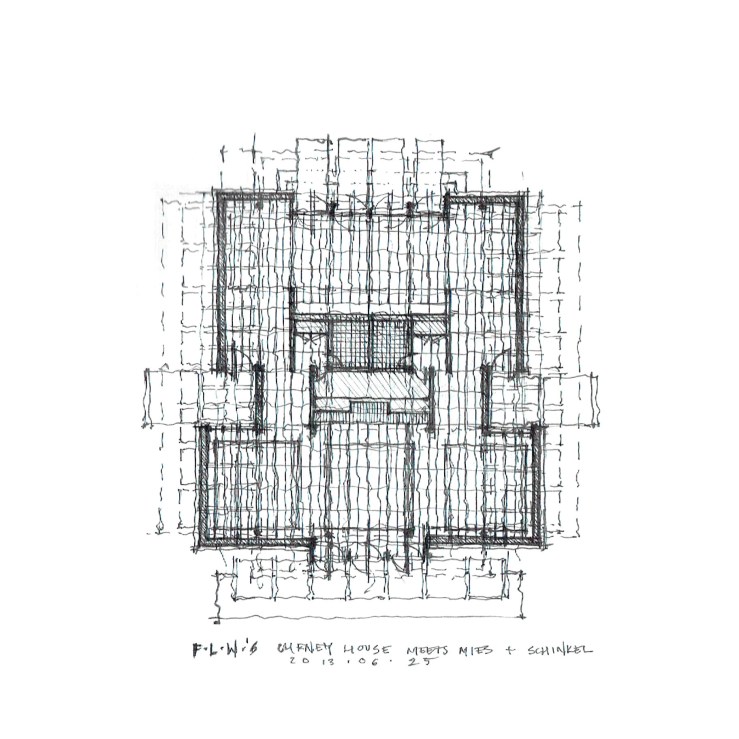
So I took the Cheney house plan and put it on Mies’ module, replaced the central hearth with a modified Farnsworth core just to see what happened. Iterations ensued, and even Schinkel reared his head.

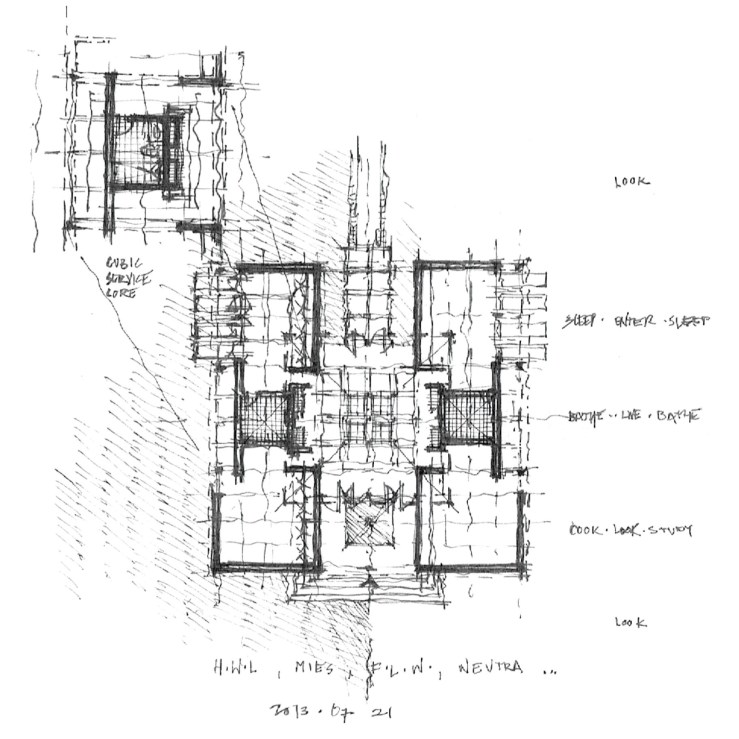
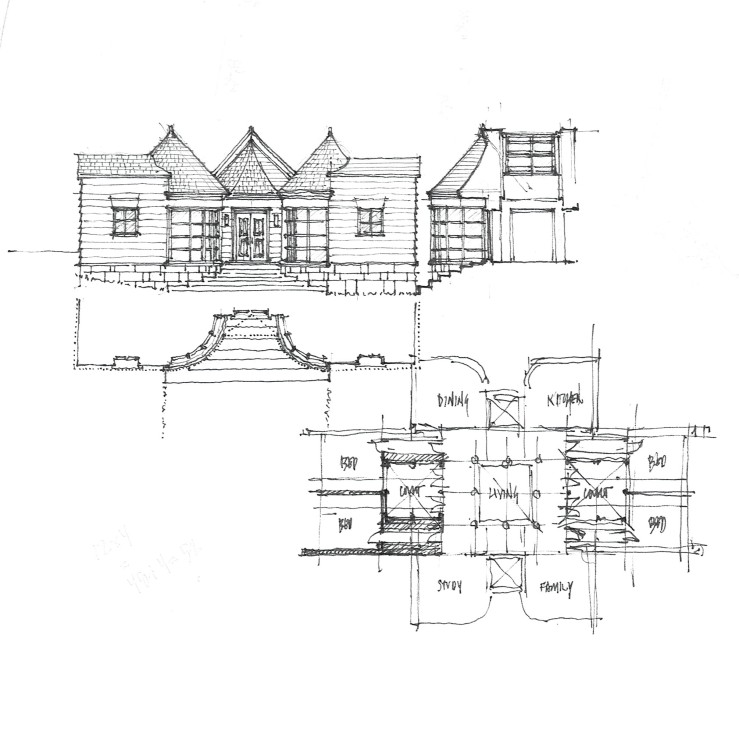
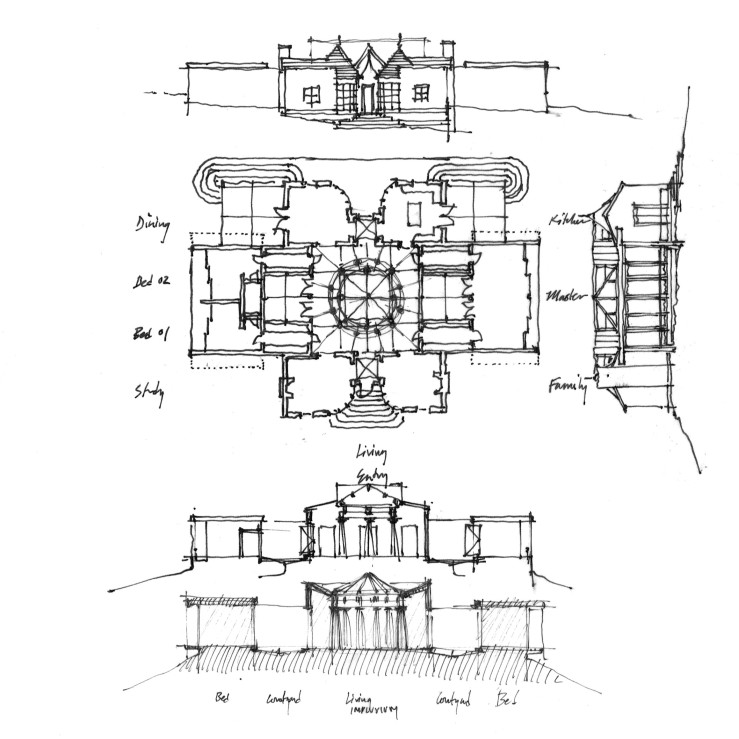
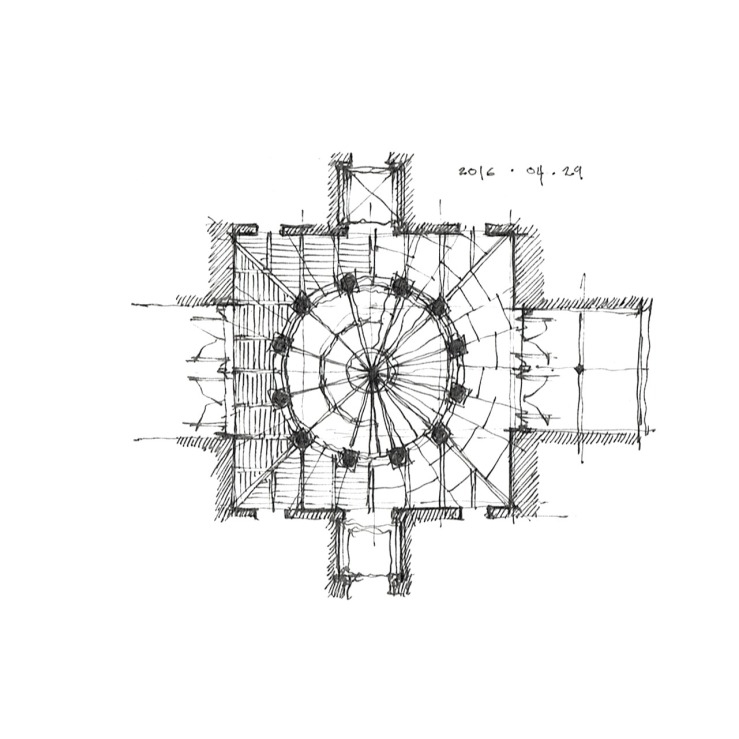
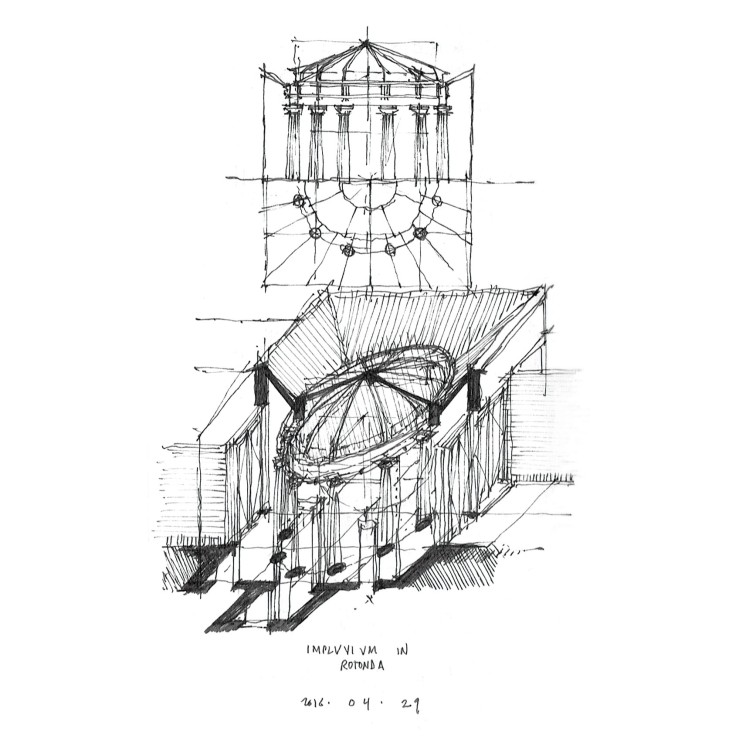
I’ve been fascinated with the impluvium for some time now – a large roughly cubic room with an inverted roof that is open to the sky at the center, an essential feature of the Roman domus house typology. This project places a large impluvium at its center, with modern courtyards and bedrooms flaking it, and more traditionally-scaled living spaces at the entry. Formal echoes of Irving Gill, H. H. Richardson, Richard Neutra, and Michael Graves abound.
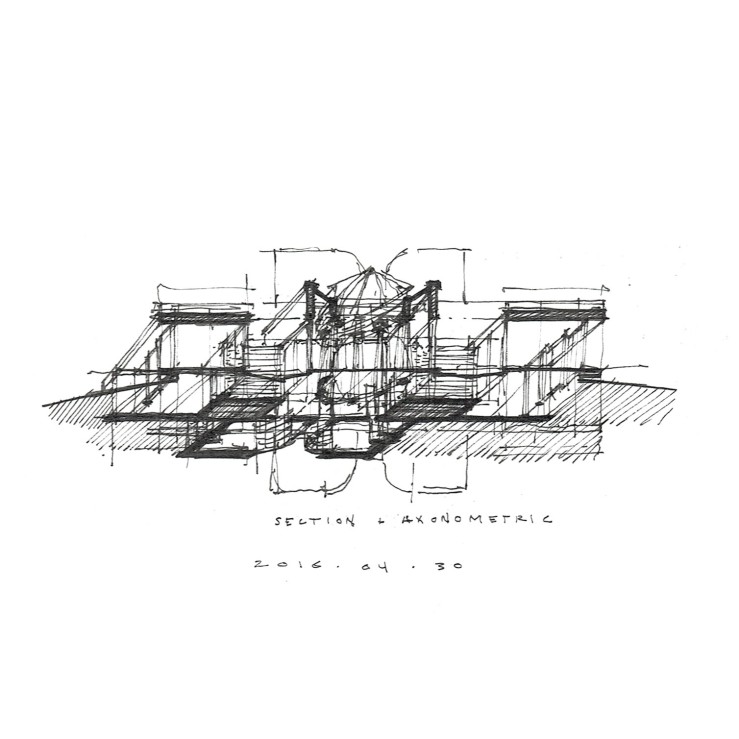
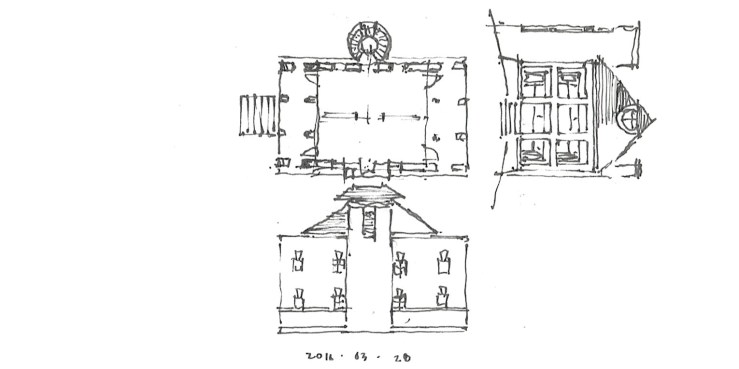
 Two outer walls are traditionally detailed, while the porticos between them take on an abstract formalist language. The cubic volume of the villa proper is more Mies-ian, and is topped with large shingled hip roof (with the dormer I featured yesterday), while a round stair tower sits on the other side of the far wall (alla John Hejduk’s ‘Wall House’ series).
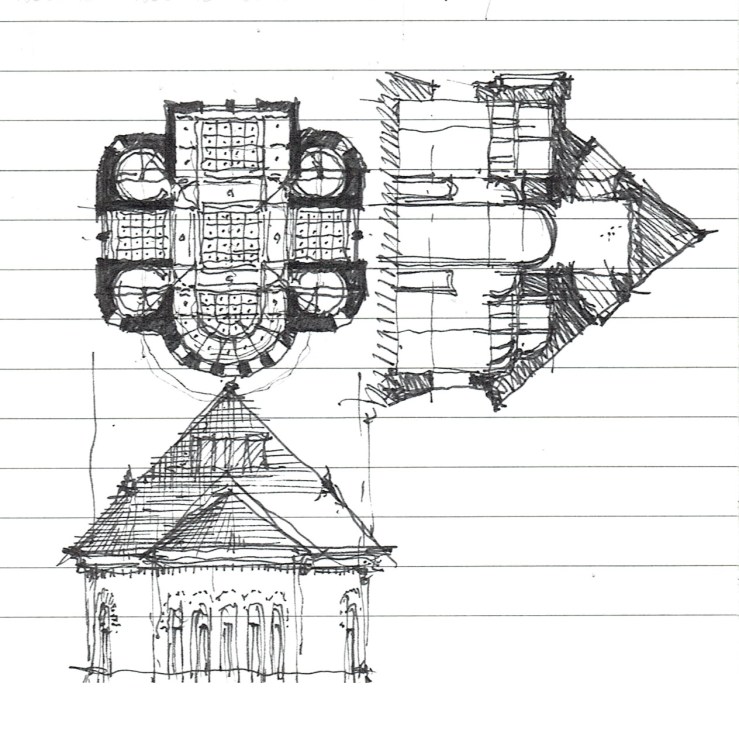
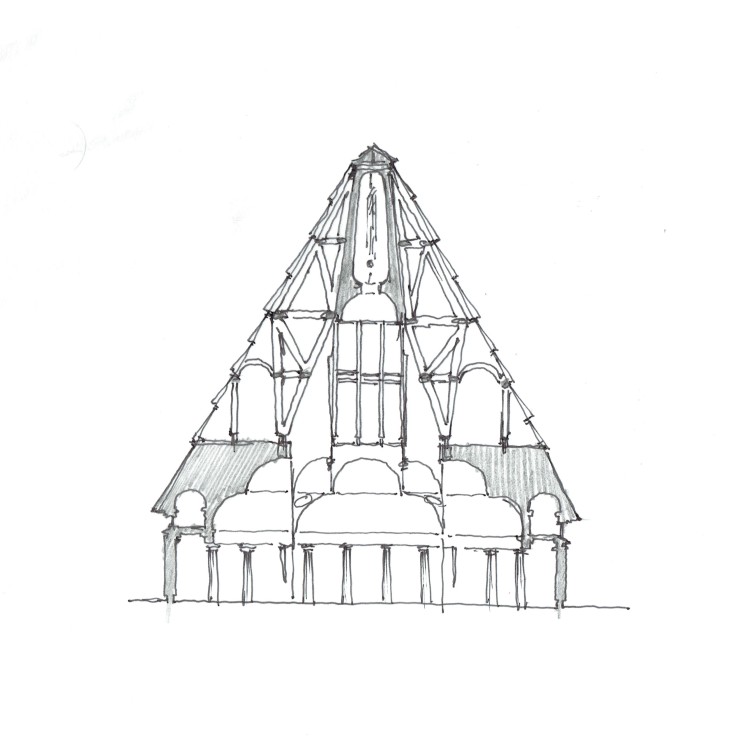
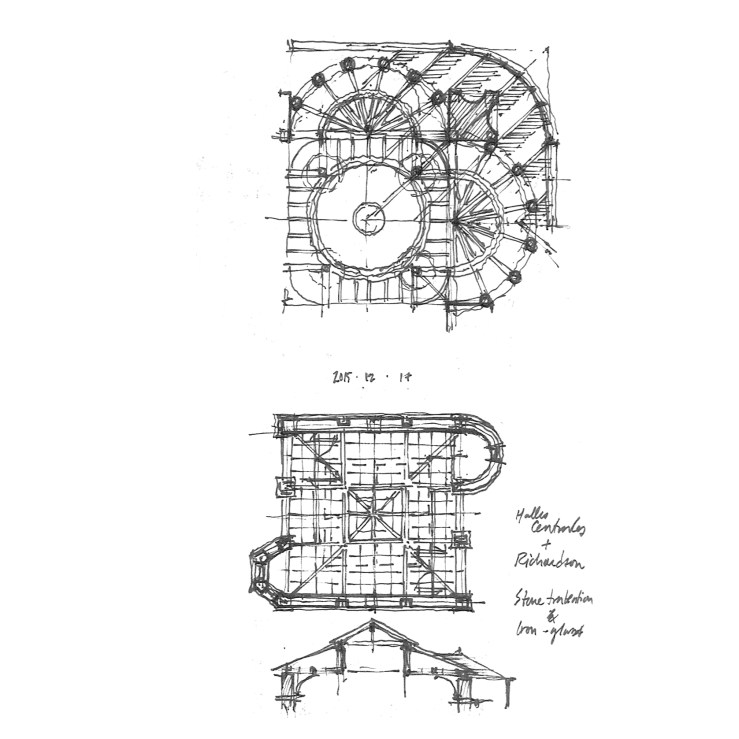
Where the previous project offered more of a synthesis between the modern and the classical in terms of style, this one poses a synthesis between types – structuring a basilica form with equal transepts, similar to a Greek cross. This hybrid typology is not new, and can be found in early Christian churches, such as San Nazaro in Brolo or the Basilica di San Marco in Venice. Stylistically, my interpretation takes cues from H. H. Richardson, with thick masonry walls, continuous cornice lines, and a large hip roof, which obscures the tower over the crossing from the outside. Below are earlier studies of a similar plan with much different attitudes towards envelope.

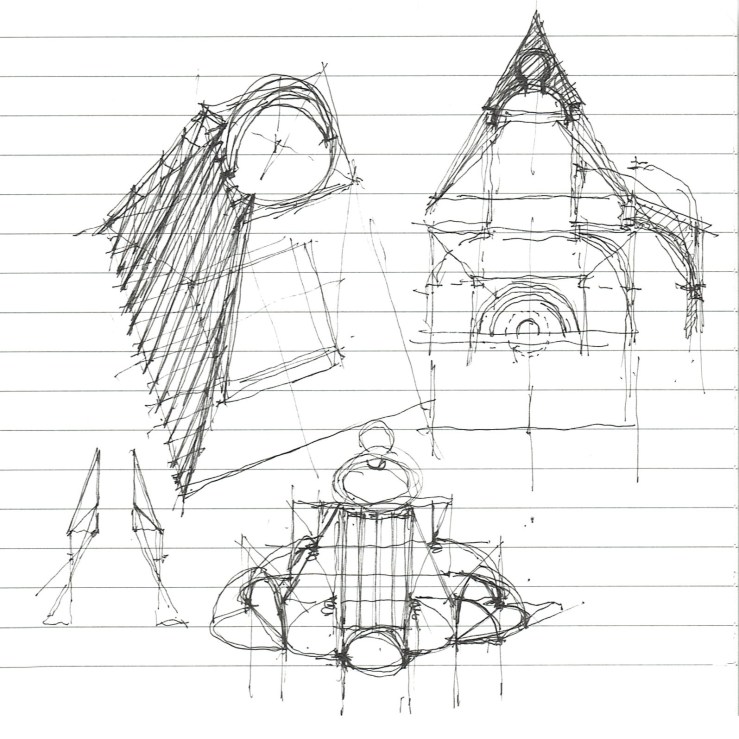
Looking through my sketchbooks, I stumbled across further drawings for the project I featured yesterday. These are studies of the tower, the interior pendentives (the triangular surfaces that mediate between the arches and the tower corners), and the apses themselves.


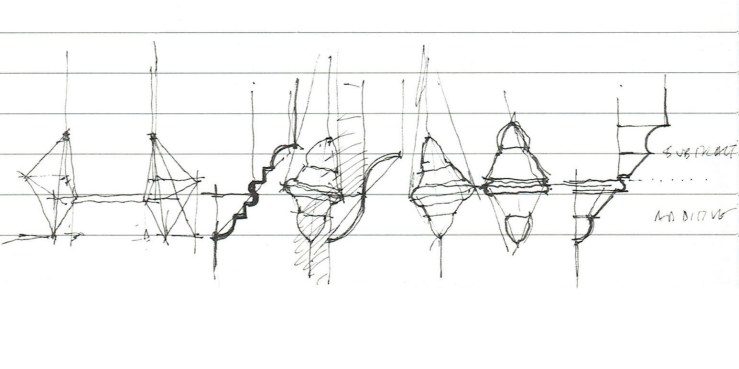

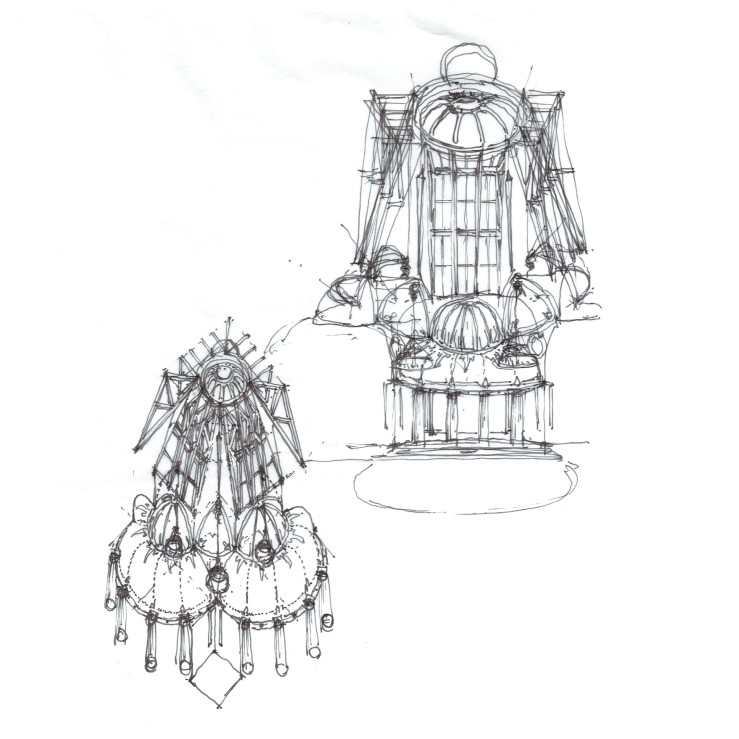
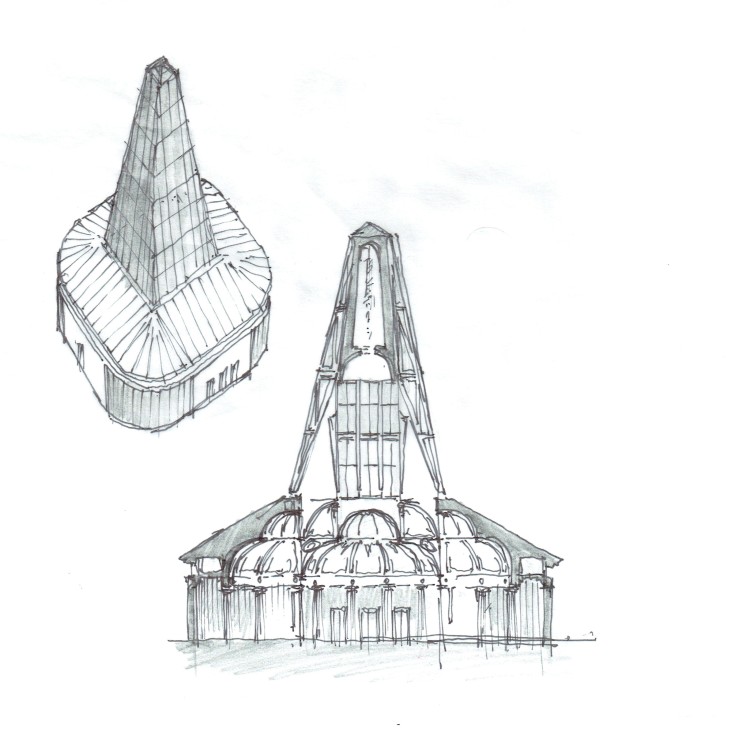
Taking cues from both the Nervi and Richardson projects, this church places a large tower campanile at the crossing. The circular geometries owe more to Trinity, but the glass corners and spatial fluidity are direct quotes of St. Mary. The tower transitions from a square at its base to a circle at the crown, paying homage to Nervi’s typical hyperbolic paraboloid surfaces.


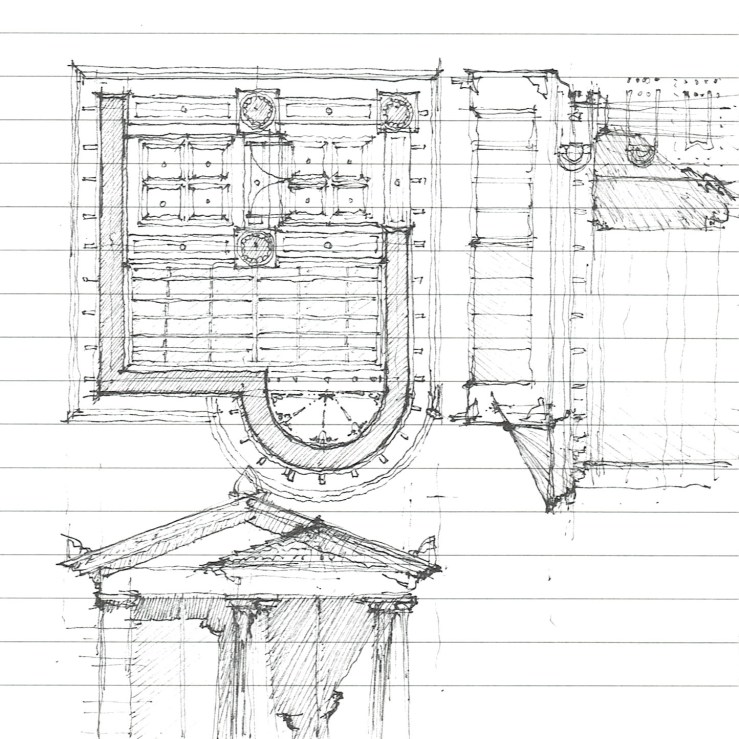
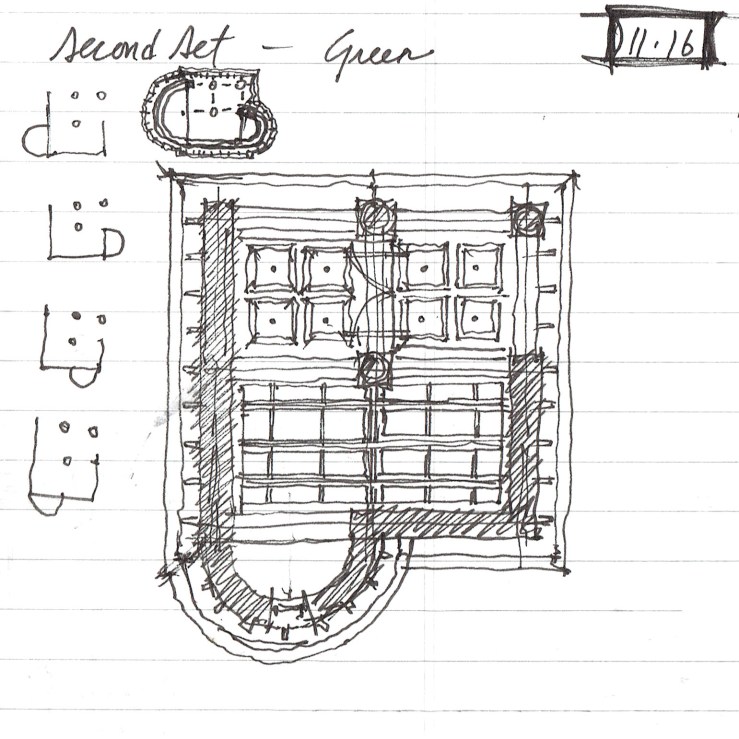
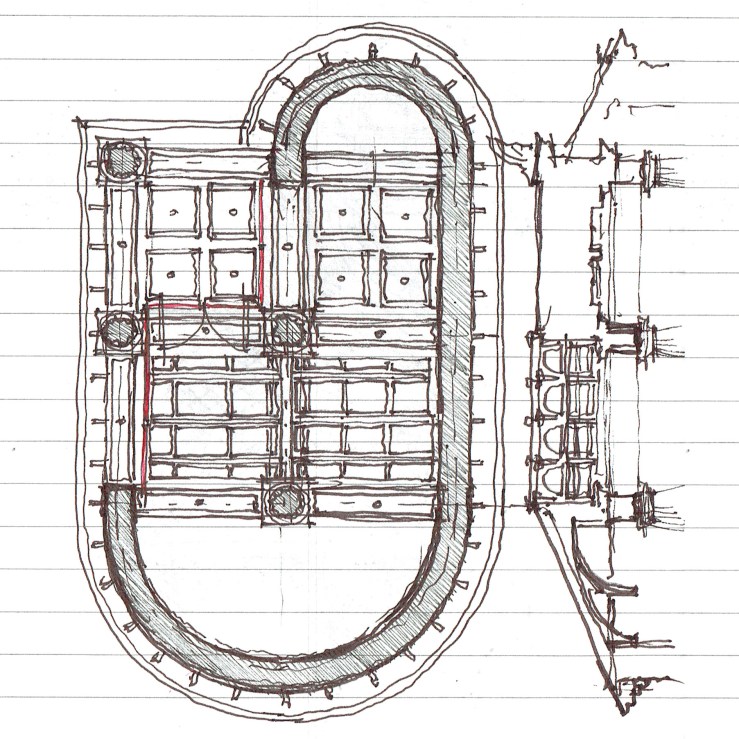
Though taking its detailing from Greek antiquity, with a Doric portico in antis, this small structure is thoroughly modern in its four-square plan. One enters off-center, in fact, the center is occupied by a column, and the front portico is only made of two columns, with one corner being a bearing wall (this wall is the in antis part). An exedra flanks the main skylit volume. Two variations follow.
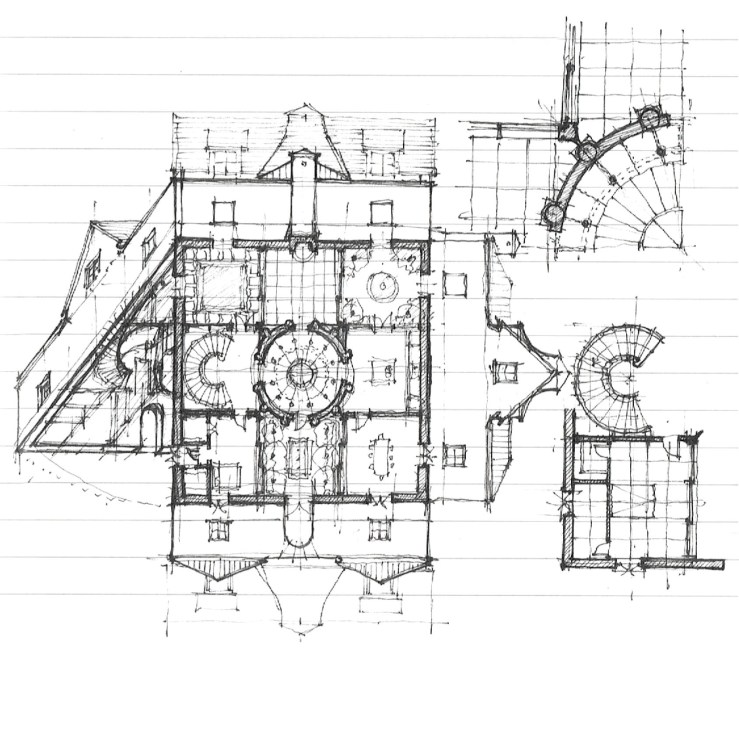
As per the request of one commentor, I spent some time this weekend fleshing out the project featured in last week’s post ‘courtyards, nine squares, and robert a. m. stern‘. Plan with elevations, enlarged plans and axon above; perspective, details, and roof plan below.


 frame
frame 
.GIF)
