not-so-lightly sketched

sketch_03

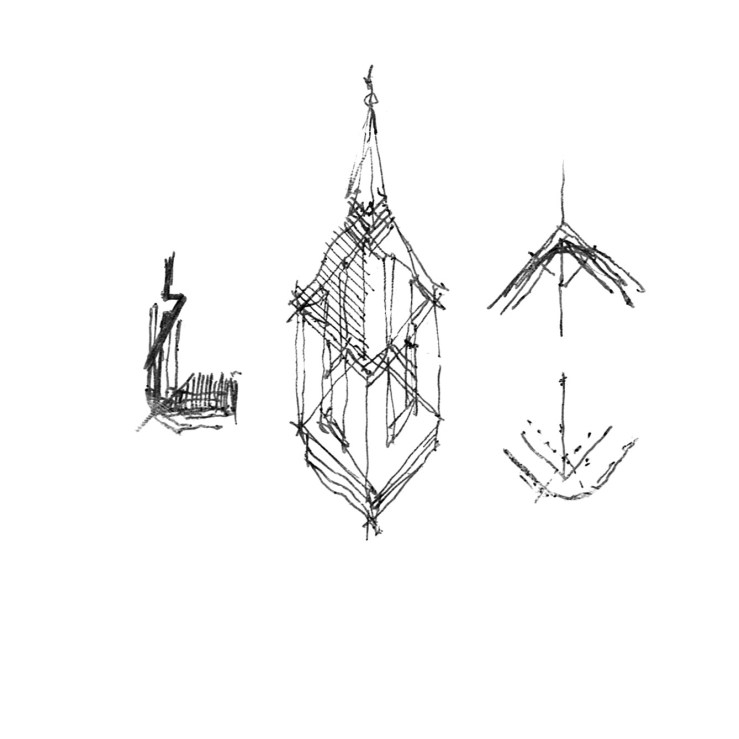
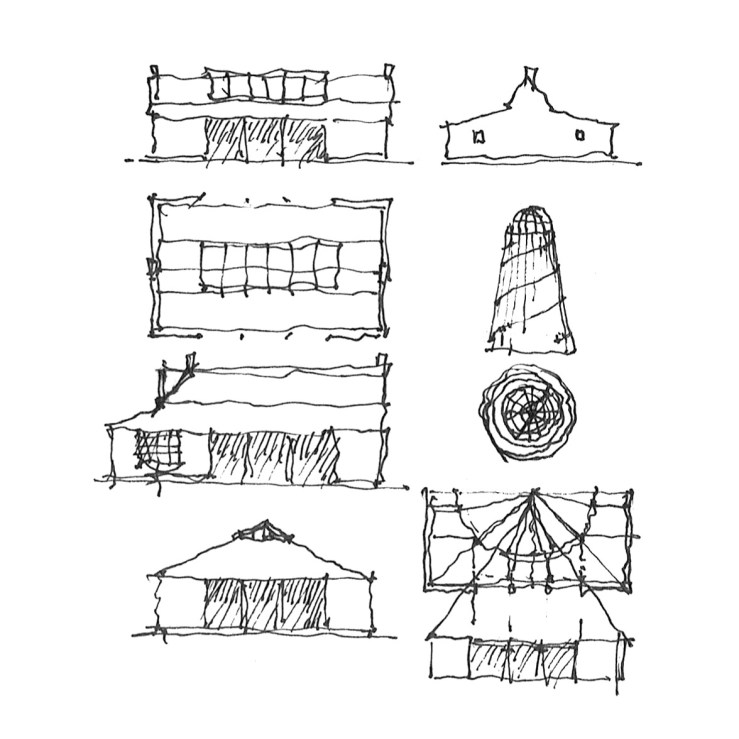
Most of the time, the drawings I post on frame are more complete, polished, and thought out.  Often, they are the reworking of previous ideas, or different ways of representing an already designed form.  But that is not to say that I never do quicker, rougher, sketches.  Indeed, often these early sketches lie buried underneath more ‘finished’ drawings.  But today, I thought I’d share a few nascient ideas before they got worked through:

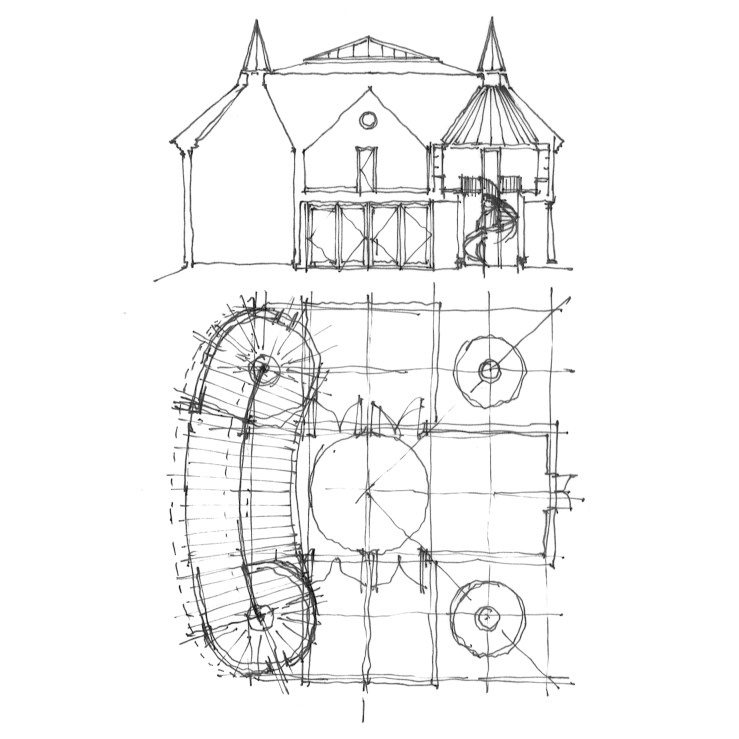
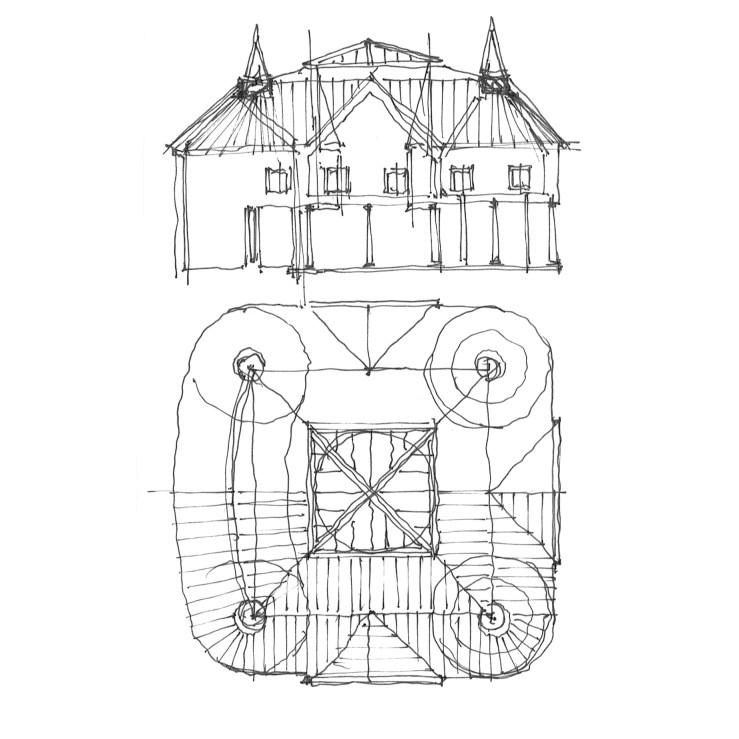
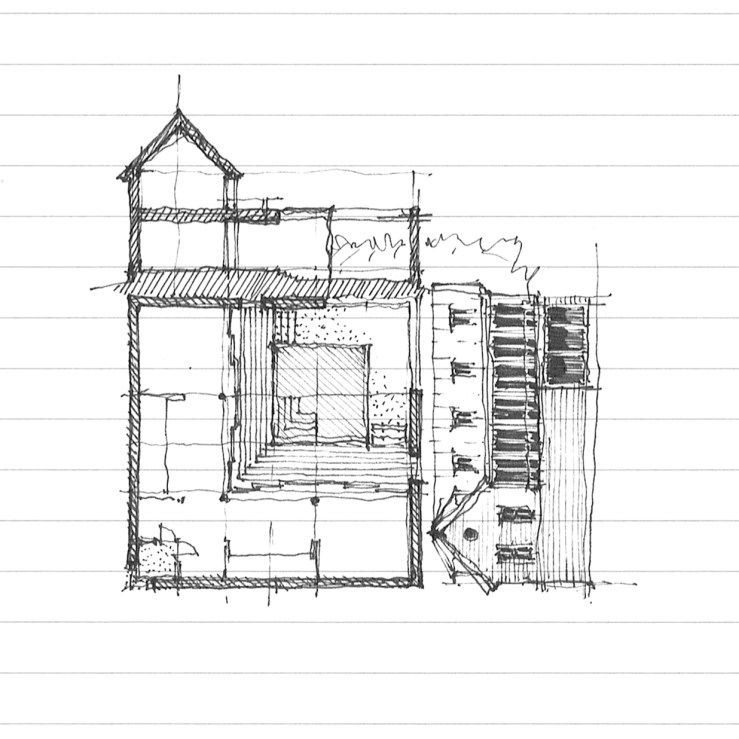
The top drawing began two discussions of halls-and-hearths (here and here); the below sketches reflect some agricultural forms I encountered on a long road-trip; a small cubic ‘house’ with a telescoping tower; another small cubic structure, with a large spire and a funky base condition; and a constructed mesa, a futile and humble attempt to capture the grandeur of those immense landforms (and not wholly unalike Hans Hollein’s landscrapers).
sketch_01

sketch_02

sketch_04

sketch_05

more dueling hearths

hall_16

Following the last post, this long hall also features two heaths, though here they’re in the form of the modernist cone fireplaces popular in the 60’s, and are placed along the length of the structure rather than at its ends.  The most defining characteristic of this project though are the long roof rafters that are extended past the walls but without carrying any projecting eave of the roof itself.  This was taken from a derelict barn building I drove past over the winter break, where the eaves had been completely bereft of their roofing, leaving only bare joists.

hall_17

hall_18

a hall with two hearths

hall_13

My apologies for a lack of posting in recent months, between the holidays and another licensing exam, my drawing and posting output has been admittedly underwhelming.

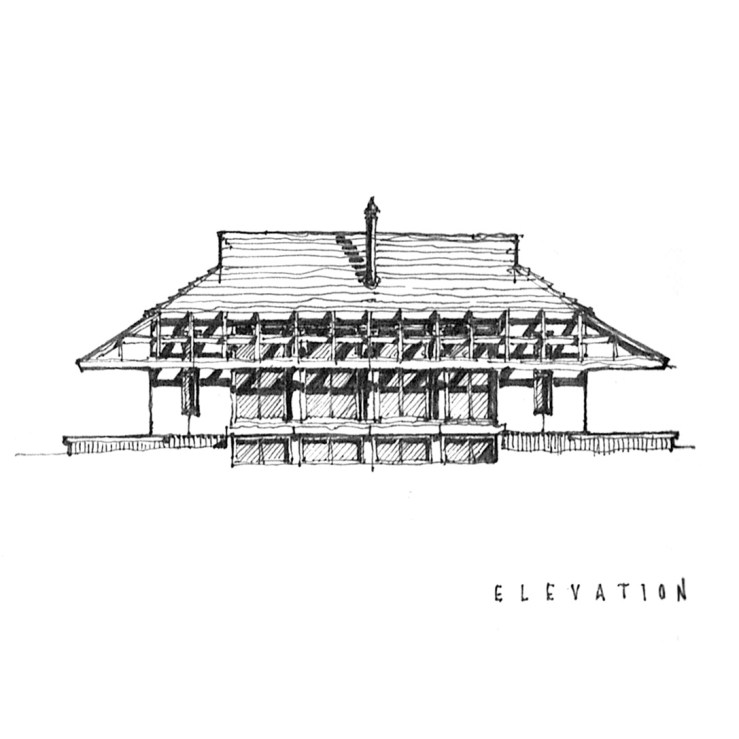
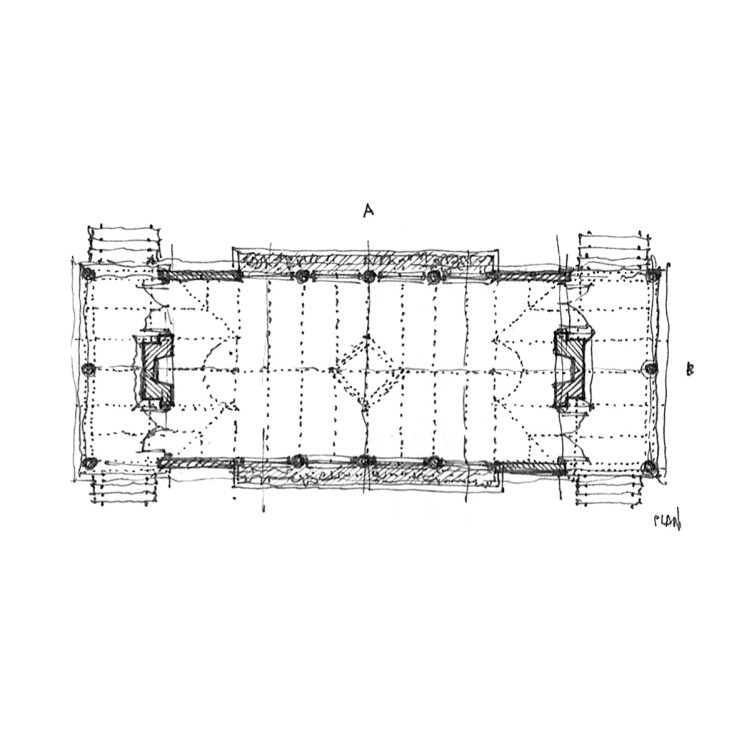
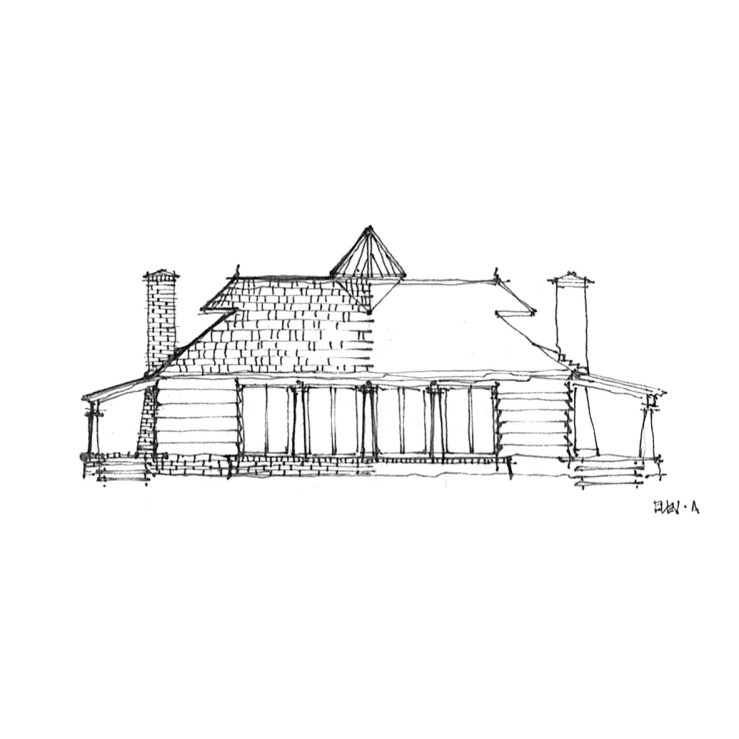
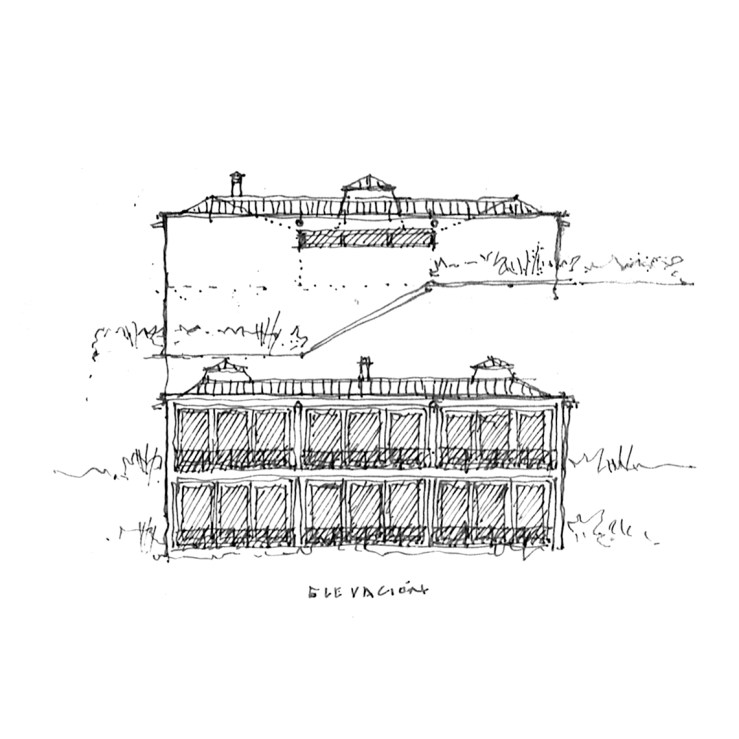
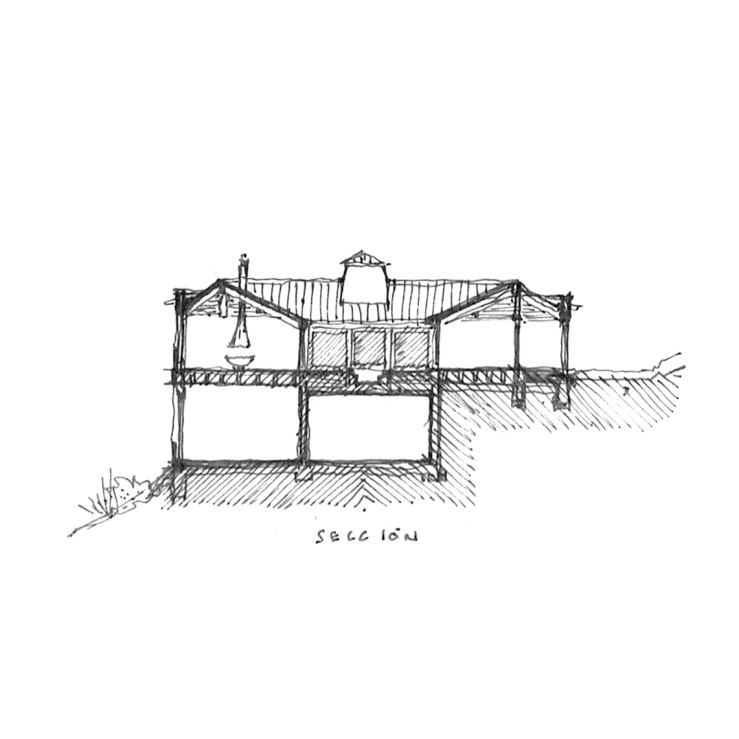
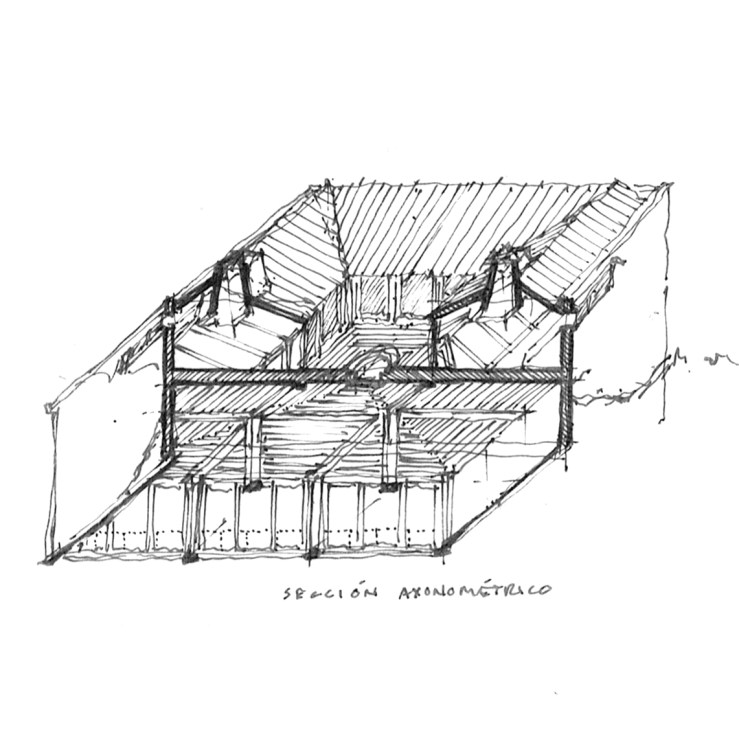
But enough of that.  This is a long, gabled hall with a large hearth dominating the principal axis and full-height windows along the middle, topped with a square pyramidal skylight set at a diagonal.  Entry is by low porches at either end, flanking the hearths.  Formally, this takes influence from the main dining room at Charles Whittlesey’s El Tovar hotel along the south rim of the Grand Canyon, where my wife and I enjoyed a Boxing Day brunch.  My own predilection for Mies-ian staircases, the diagonally-placed skylight, and the half-round dormer windows make it worthy of a post on frame.  Elevations follow.

hall_14

hall_15

cabins & courtyards

courtyard-cabin_01

As a part of my Christmas traditions, my family and I spend a weekend in the mountains here in Southern California, where we can play ‘winter’ and ‘snow’ and safely return to our warm weather when our fingers are sufficiently numb.  The so-called ‘cabins’ we stay in are often over-sized log mansions, and kitschy as can be expected.

This project is an answer to them: a simple nine-square plan with a central courtyard, and a circular infinity-edge spa at the middle; the kitchen-dining-living trio lines the north edge, with sliding glass walls fronting a supposed lake view; and private sleeping quarters located on the lower level.

courtyard-cabin_02

courtyard-cabin_04

courtyard-cabin_03

square church, once more

square-church_06

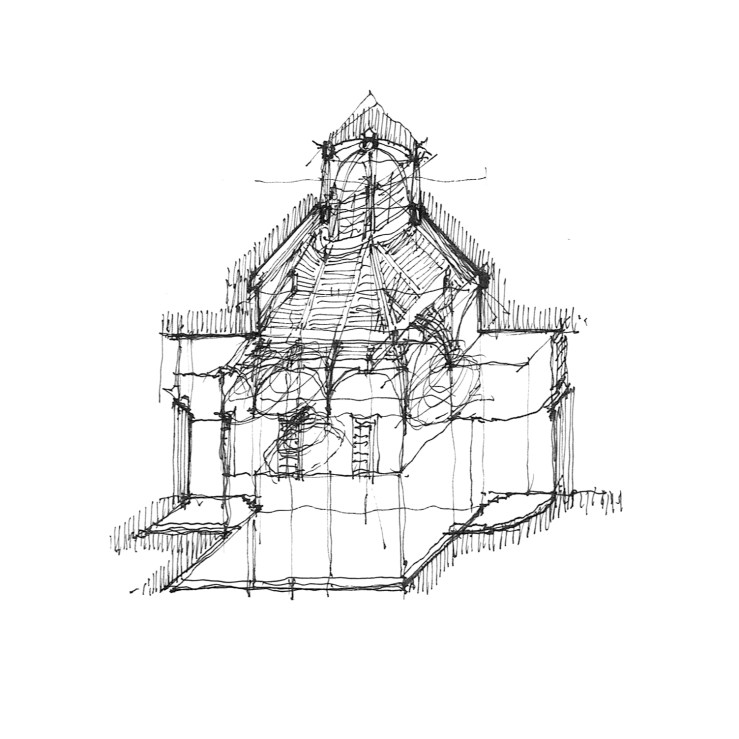
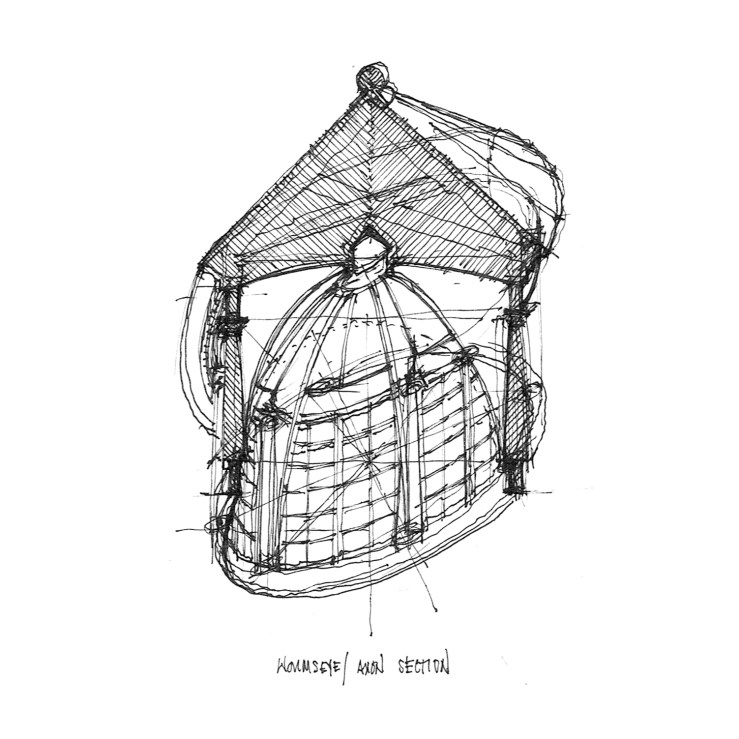
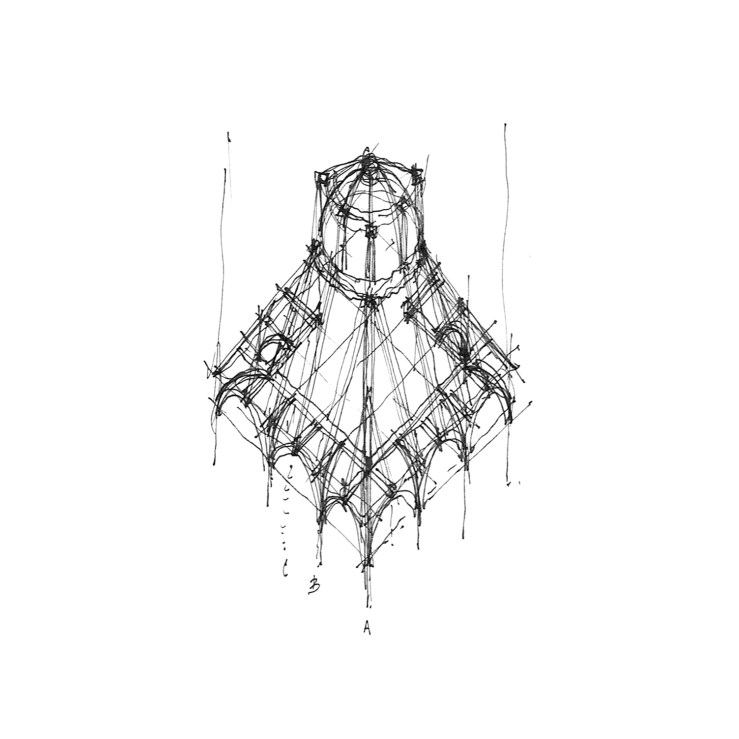
Continuing the formal explorations of the German hallenkirche typology of a few weeks ago, today I’ll share some more detailed takes: from a traditional half plan and section to oblique wormseye axonometrics and a section of the Brunelleschi-esque cupola with half a traditional oblique axon on one side and a womseye axon on the other.  These interrogations of representation are not just fun to draw, but actually aid in figuring out exactly how the timber roof is made up, and how that roof relates to the overall modular system.

square-church_08

square-church_09

square-church_11

square-church_10

square-church_07

a ranch home

ranch-house_02

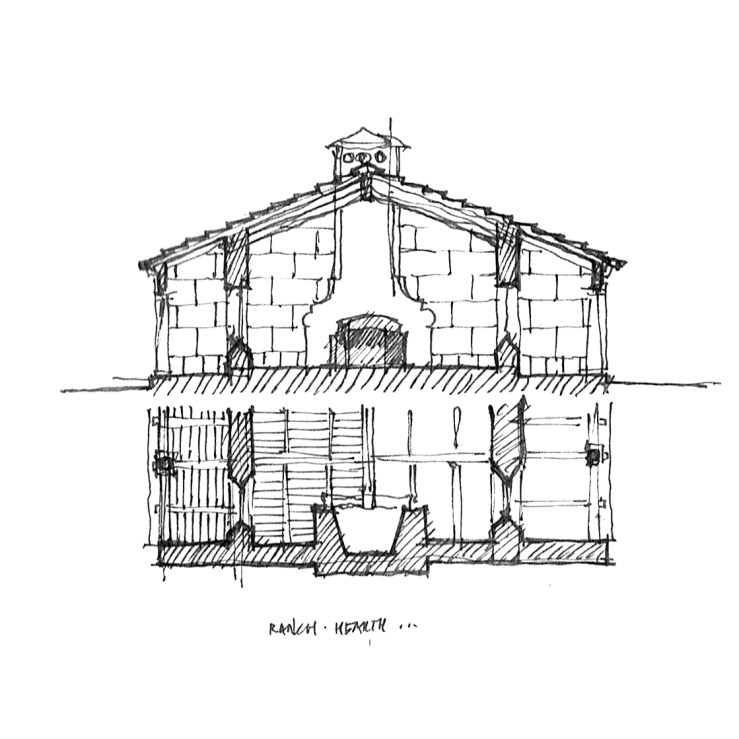
While studying for my latest licensure exam, I came across a simple section of a ranch-style home, which I couldn’t resist but take stab at.  The hearth above is the result of that drawing, and the plans below are the further explorations thereof.  The floorplan references Mies’ linear homes of the mid 1950’s (McCormick, 1952 & Greenwald, 1955), with a linear series of kitchen, dining, and living spaces separated by casework storage and toilet units, while long porches flank full-height doors.  Because my first plan neglected to include the bathroom in particular, the bottom sketch notes how the bath, murphy bed, and storage unit works out.

ranch-house_01

ranch-house_03

nine squares, a few circles, and a couple piloti

ionic-house_01

The story of where these ideas come from is a hodgepodge, so let’s just talk about what this is: a circular atrium in the middle of a nine-square plan demarcated with Corbusian piloti-cum-columns, with its four corners filled with circles: two circles are set up as objects, while two others are strung together with a larger radius.  All of this sits below a blank square volume, continuing the allusion to Villa Savoy, with a strong gable at the roof line.

ionic-house_02

ionic-house_03

ionic-house_04

churches and squares

SQUARE-CHURCH_03.jpg

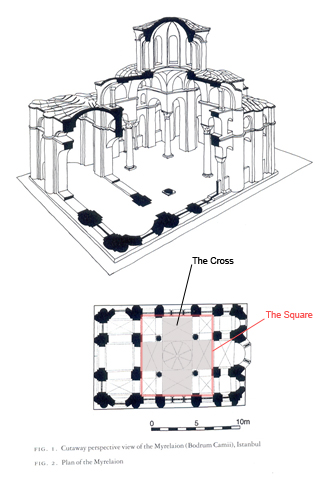
Most of the church forms I’ve featured have been basilicas – that is, long linear rooms with clearly defined axes and a higher central nave with lower side aisles.  But recently, I tried to reconcile my basilican interests with my predilection for squares.  Enter two historical church types based on the nine-square motif: the German hallenkirche (hall church), where there is no clear distinction between nave and aisles, but rather a large, open ‘hall’ of columns with extensive windows on all sides, and the Greek cross-in-squarein which a cruciform church plan is contained in a square form, with a large dome over the central crossing.  This project fuses the two, with an intense wood roof structure that attempts to read as both the hallenkirche and the cross-in-square in one, and goes even further to render the space as a cube.

square-church_02

square-church_01