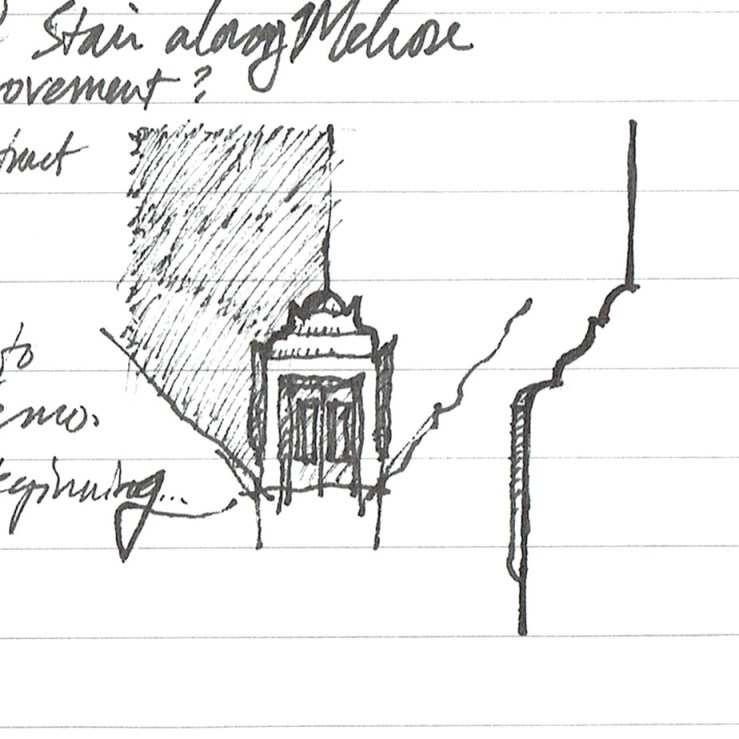
A simple detail: a corner entry door under a decorative chamfer, which offers protection for the doorway while negotiating the full corner above. Two small lambs-tongue chamfers further detail the edges.
A simple detail: a corner entry door under a decorative chamfer, which offers protection for the doorway while negotiating the full corner above. Two small lambs-tongue chamfers further detail the edges.
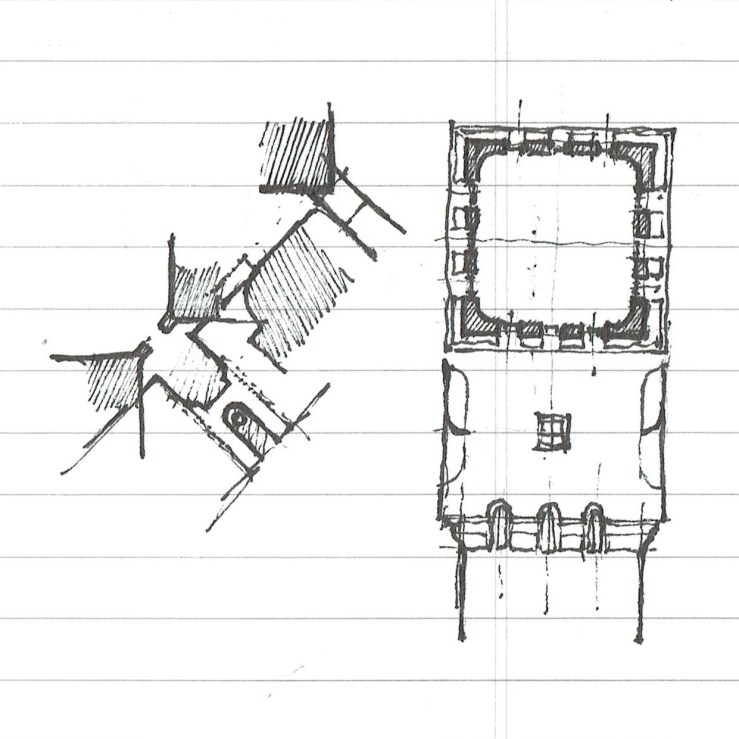
Taking cues from a small apartment complex south of Wilshire Boulevard, this small tower features an upper story that steps out over the lower floor, with a large, oversized ogee profile between the two, cut through with arched windows. The resulting effect is reminiscent of machicolation found on medieval embattlements.


Today’s drawing is a spiral staircase, hidden within a panellized Mies-inspired cube. Vertical wood slats make up the walls of the interior circle, and are repeated on the balustrade. The risers themselves are thin-gague blackened steel, with a structural stringer running on the exterior, leaving the inner circle a ragged black spiral of teeth-like treads.
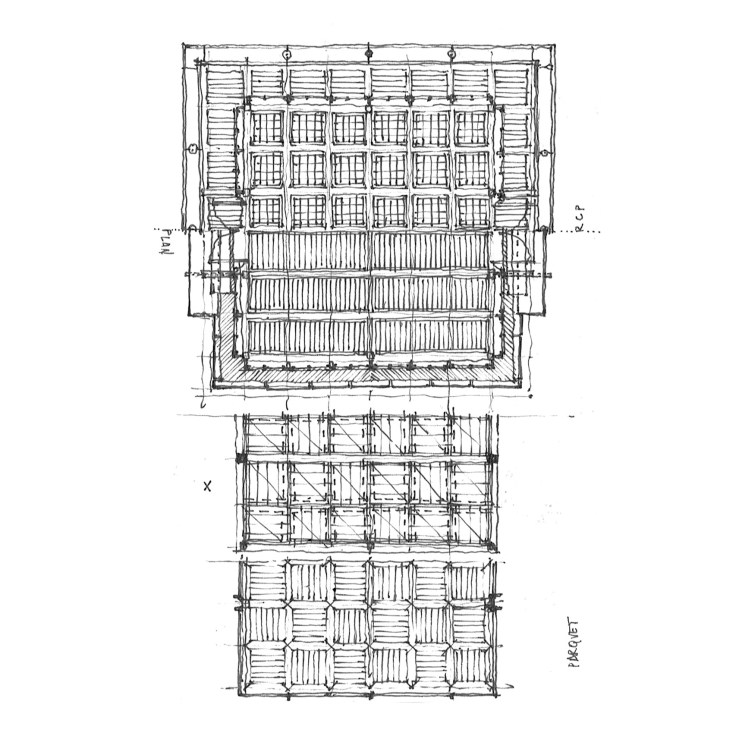
frame has been up and running for four months now, with new drawings featured daily, with nearly 90 posts and over 240 individual drawings. Some projects are new, others have been resuscitations of old sketches and long-forgotten partis. Often, after I’ve made a nice new shiny post, I’ll stumble upon a relevant detail hidden away in one of my many sketchbooks (or worse, loose sheets of paper fluttering about…). Such is the case with today’s post, which further elaborate upon the very first project featured on frame: mies + neutra.

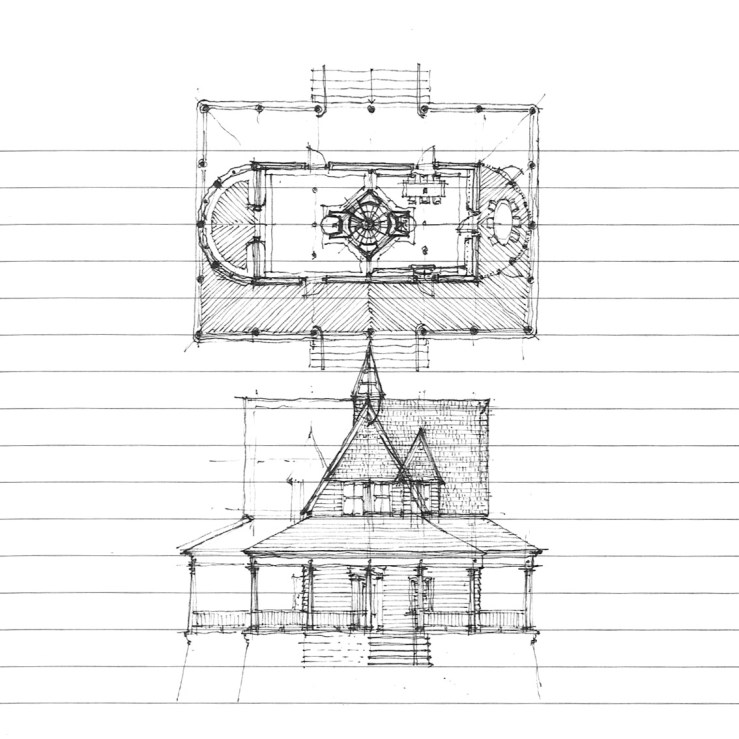
The parti is simple: two squares topped with a tall gable, surrounded by a wrap-around porch. A skylit stair occupies the very center, flanked by hearths. A semi-circular screened porch fills in one end, while an enclosed patio becomes a library at the other.
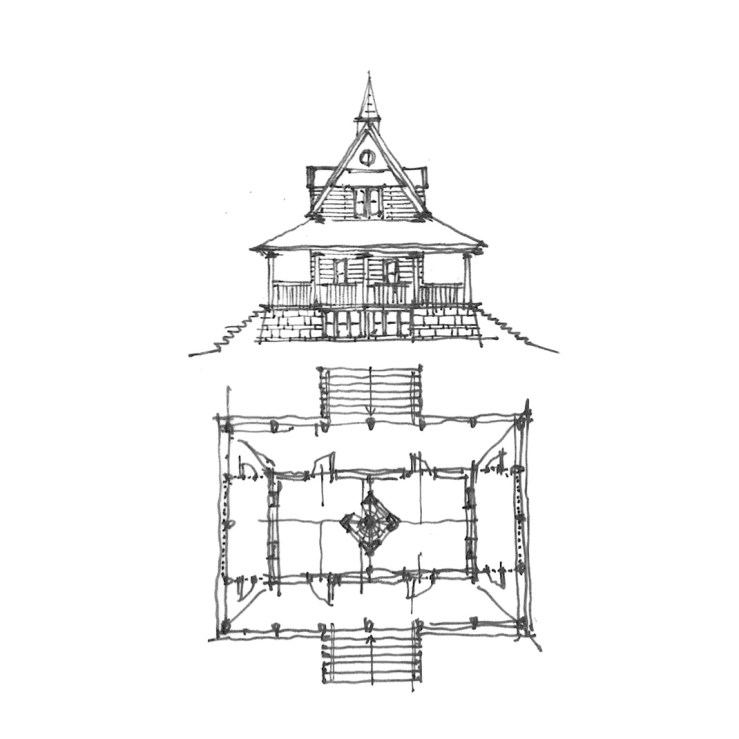
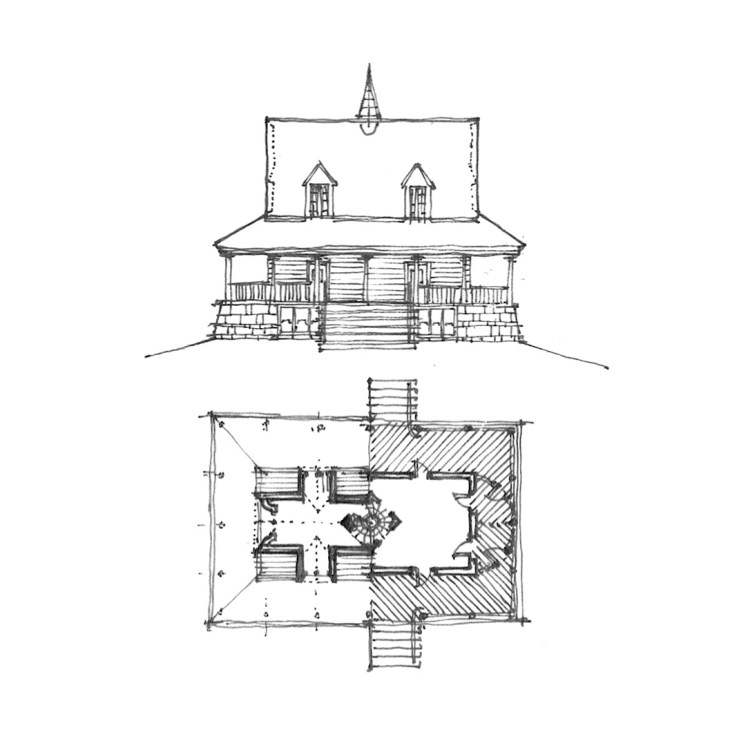

In another rift on Bruce Price’s library at Tuxedo Park, this project takes one long gabled volume, with trabeated Doric aedicules on either end, and meets it with a second gable on the short axis. These two volumes don’t meet with a 90° corner, but are filleted with a quarter-round, in a nod to Stanley Tigerman’s Daisy House (among others). The variations below ditch the primary gable for a low one running in the opposite direction, and the aedicules take up the difference in geometry.

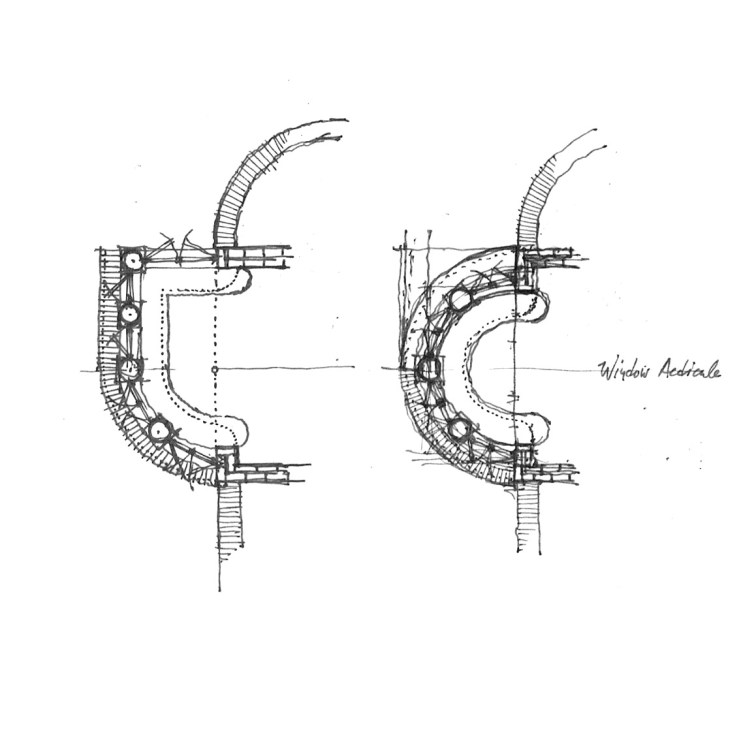
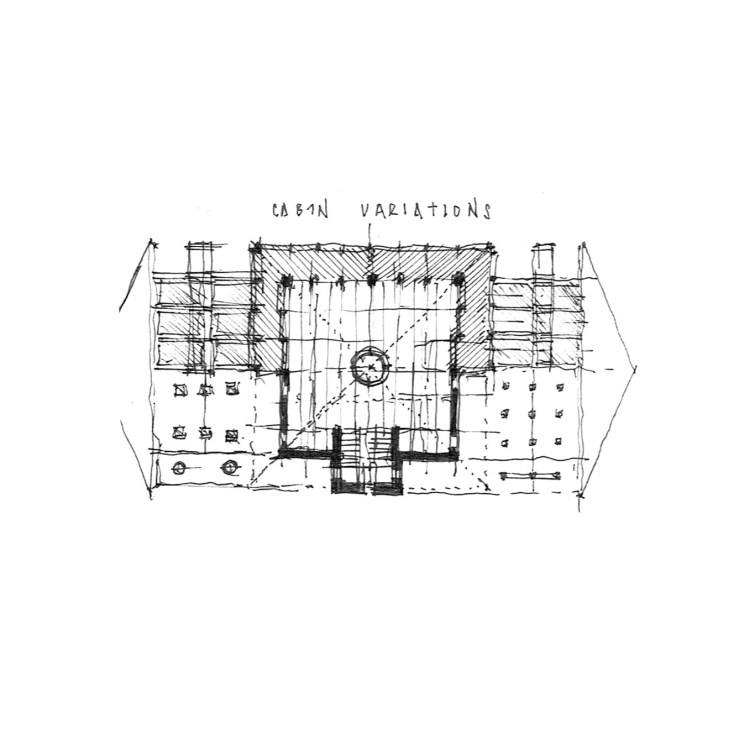
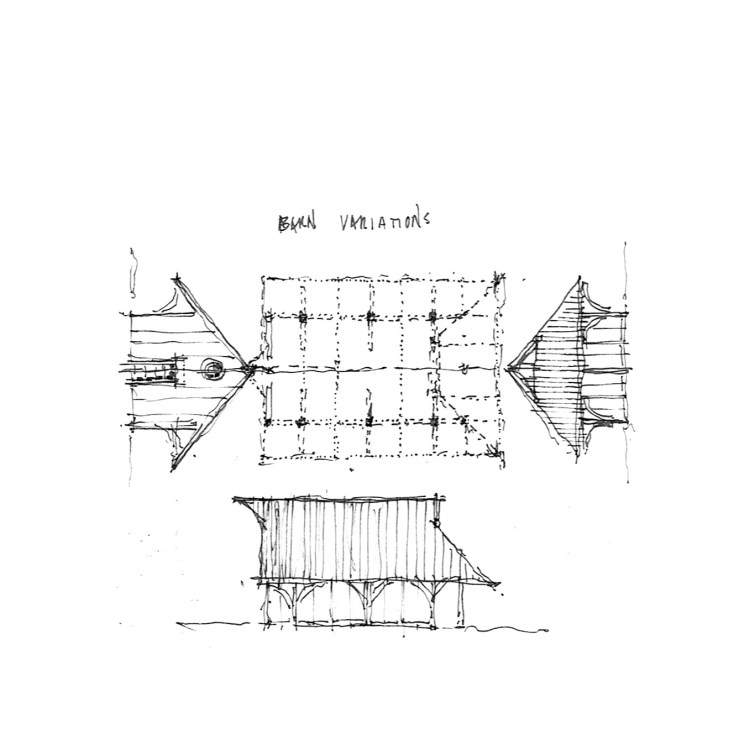
Following up on two themes from my northward journey, I’m giving you a look into two ideas, both alike in simplicity. The Coast: a cabin, square with a large hip roof over a wrap-around porch, and elevations that need a good fleshing out. Farmland: a barn, with deep eaves on three sides, enclosed in glass behind.
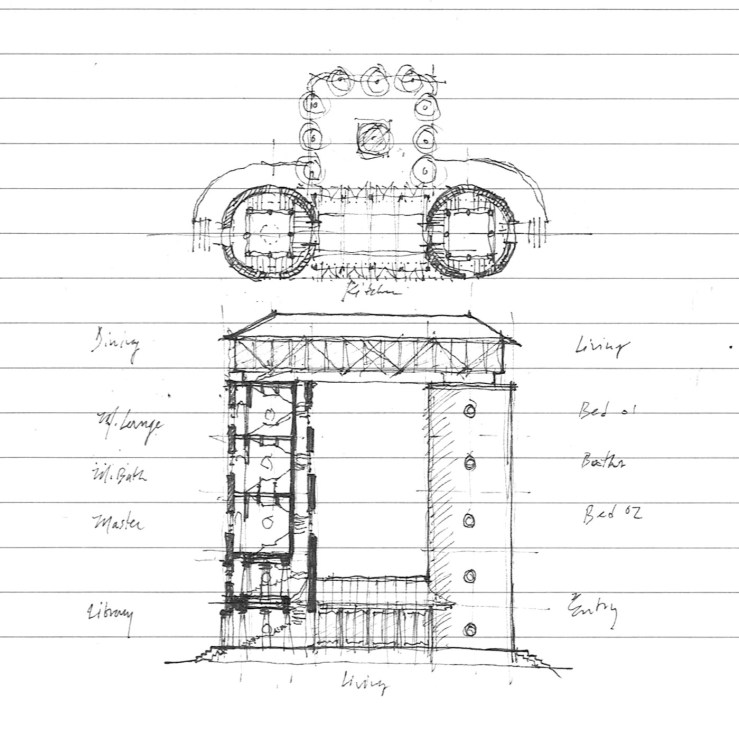
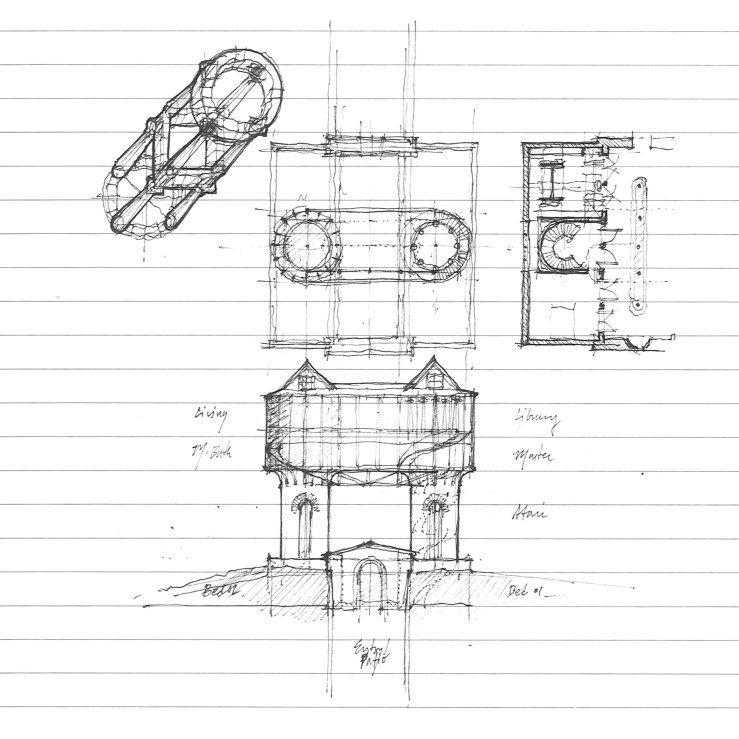
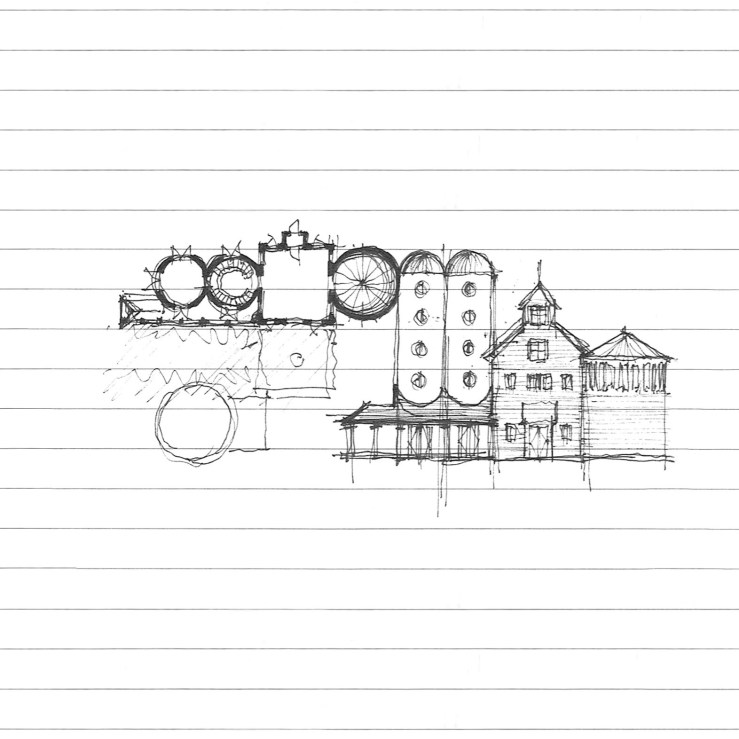
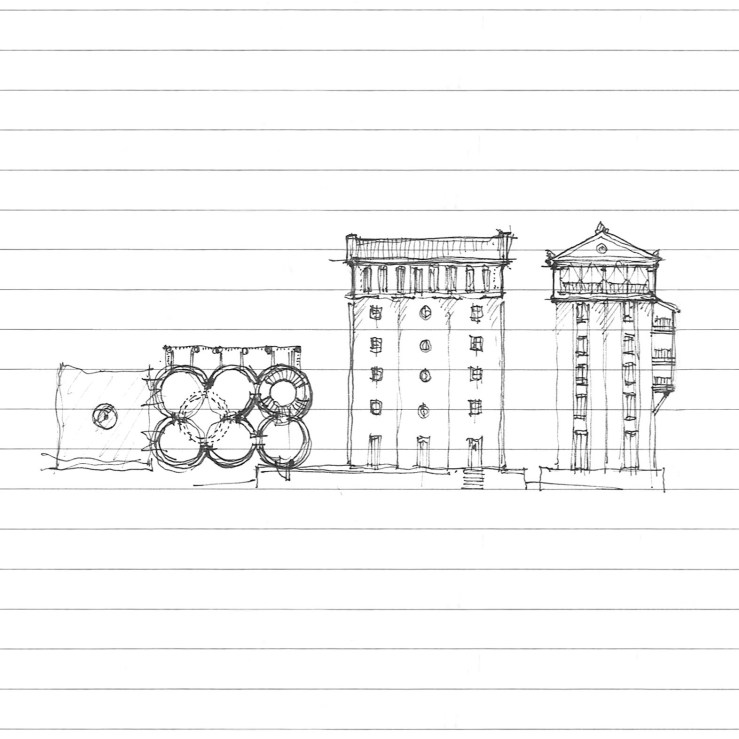
Driving on I-5 through northern California takes you through a lot of farm land, and reminds you just how much of the American economy is agriculture. This means silos – lots of silos, which of course got me thinking. . . From top to bottom: Two silos bridged by a glass Miesian volume; Two silos on a courtyard base, bridged at the top; a picturesque collection of three silos and a grain elevator; a battery of six silos, spaces cut between them, topped with a temple form.
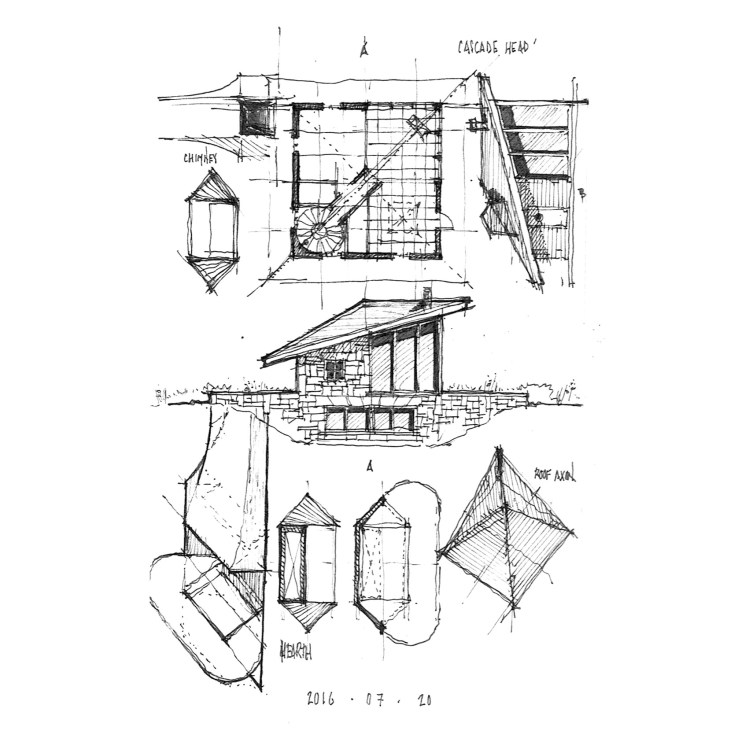
Diagonally symmetrical, this small cabin type is a riff on the minimal, mid-century cabin we spent a week in on the Oregon coast. The plan is four-square, with the living room occupying one corner, fully glazed, with the hearth as a corner-focused object: this is a direct quote of our cabin, down to the thin-gauge blackened steel hearth. The rest of the plan stems from this single move, with the circular stair opposite, a study and kitchen flanking. The roof runs a single gable along the diagonal toward the living room, but tapers back into a typical hip for the two other facades.
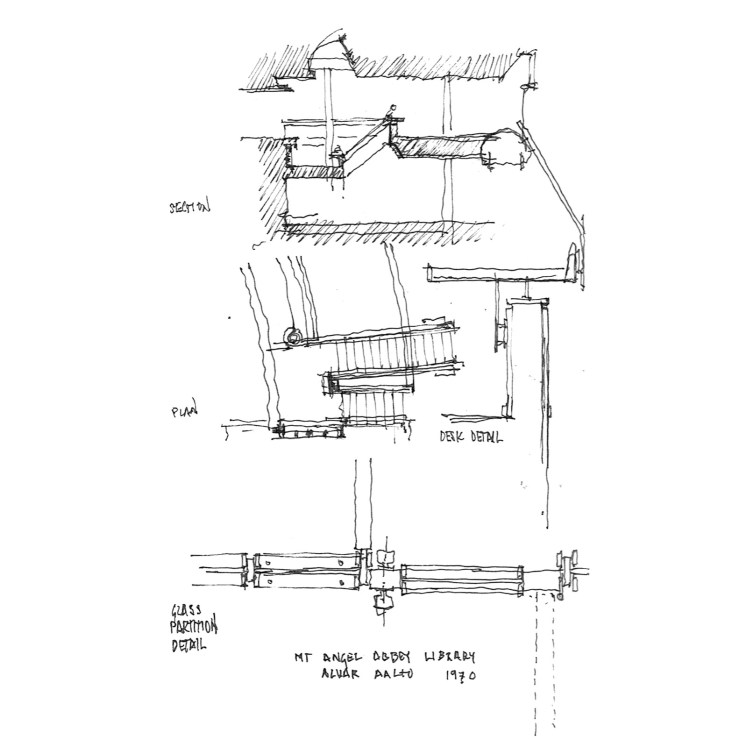
Alvar Aalto has only three built structures in the United States: a dormitory at MIT, an interior on Manhattan, and a library at a Benedictine Abbey in Mount Angel, Oregon. These few drawings are my rapid attempt to distill some important moments from the Abbey library, which I visited on a recent trip up the Pacific coast: A section through the skylit split-level reading room, and a plan beneath; a detail section through a typical study desk, which run the length of the double-height spaces, eliminating a traditional guardrail; and a detailed plan of a glass partition at independent study carrels, with hollow-steel-section framing members and wood stops – a beautiful, humane, change to the typical Miesian system. There was so much more, but unfortunately so little time.
 frame
frame 